Roof Fascia Materials: A Practical Selection Framework
Evaluate roof fascia materials using our selection framework. Compare wood, aluminum, PVC, and fiber cement by cost, climate resilience, and lifespan.

The Functional Role of Roof Fascia
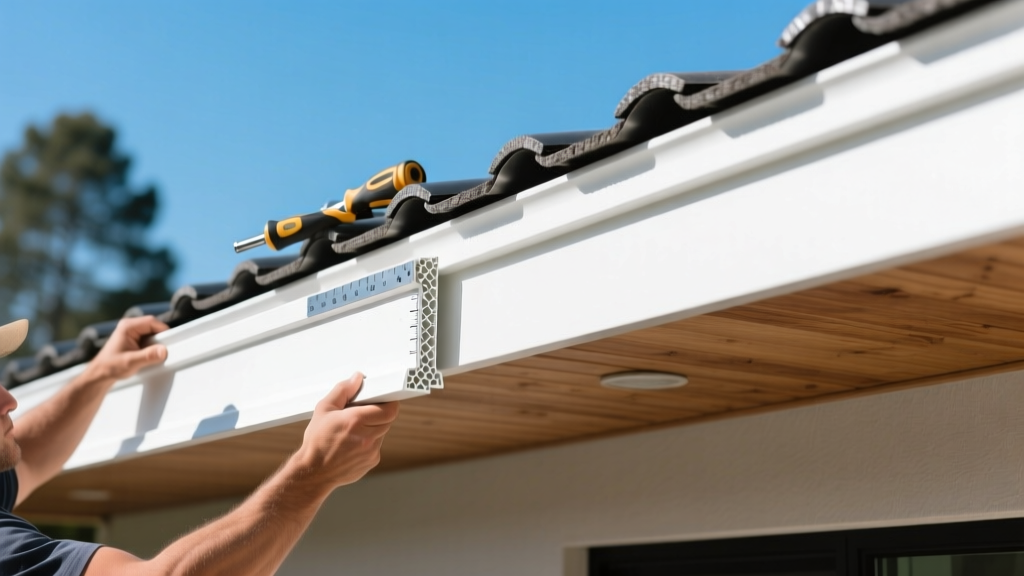
The fascia board is the critical transitional element between the roof decking and the soffit system. Beyond its aesthetic role in capping the rafter tails, it bears the dead load of the gutter system and the live load of trapped snow, ice, and water runoff. A failed fascia compromises roof ventilation, invites wood-destroying organisms into the attic space, and causes gutter detachment. Selecting the correct roof fascia materials requires moving beyond basic aesthetics and evaluating structural load capacity, moisture resilience, and thermal movement.
The 4-Pillar Fascia Selection Framework
Core Evaluation Criteria
- Climate & Moisture Exposure: Determines the required moisture absorption rate and resistance to freeze-thaw spalling or salt-spray corrosion.
- Wildland-Urban Interface (WUI) Compliance: Dictates whether combustible materials are legally permissible under local fire codes.
- Thermal Expansion Coefficients: Influences fastening schedules and the necessity of expansion joints to prevent buckling.
- Sub-Fascia Integrity: The finish fascia material must be compatible with the existing 1x or 2x dimensional lumber sub-fascia in terms of weight and fastener pull-through strength.
Comprehensive Material Matrix
The following matrix compares the primary finish fascia materials available in 2026, factoring in current material costs, expected lifespans, and physical properties.
| Material | Standard Dimensions | Avg. Cost (Per Linear Ft.) | Lifespan | WUI Compliant |
|---|---|---|---|---|
| Western Red Cedar | 1x6, 1x8, 1x10 | $3.50 - $6.00 | 20-40 Years | No |
| Coil-Wrapped Aluminum | .019 to .024 Gauge | $4.00 - $7.50 | 30-50 Years | Yes |
| Cellular PVC | 5/8' or 3/4' Thick | $5.50 - $9.00 | 50+ Years | No |
| Fiber Cement | 5/4' x 6' or 8' | $2.50 - $4.50 | 50+ Years | Yes |
Climate-Specific Decision Trees
Choosing a fascia material based solely on budget leads to premature failure. The local microclimate must dictate the material specification.
Coastal & High-Salinity Zones
In environments within 5 miles of saltwater, aluminum fascia is highly susceptible to pitting and oxidation unless treated with a specialized marine-grade fluoropolymer coating (such as a PVDF/Kynar finish). For coastal applications, Cellular PVC is the optimal choice. It is entirely impervious to salt spray and will not corrode. If aluminum must be used, ensure it is separated from any copper flashing or copper gutters using a rubberized membrane to prevent galvanic corrosion.
Wildland-Urban Interface (WUI) Zones
According to FEMA and Ready.gov wildfire preparation guidelines, eaves and fascia are primary intrusion points for wind-blown embers. In WUI zones, building codes strictly prohibit combustible materials like wood and standard PVC. Fiber cement (e.g., James Hardie or Allura) and heavy-gauge steel or aluminum are mandatory. Fiber cement offers a Class A fire rating and will not ignite when exposed to direct ember impingement.
Extreme Thermal Cycling Regions
Regions experiencing severe temperature swings (e.g., -10°F in winter to 105°F in summer) cause massive expansion and contraction. The Cellular PVC Trim and Moulding Association notes that PVC expands and contracts at a rate of approximately 1/8 inch per 18 linear feet for every 50°F temperature change. In these climates, installers must leave 1/8-inch expansion gaps at all scarf joints and avoid pinning the center of the boards, allowing the material to float slightly on the fastener shanks.
Critical Installation Gotchas & Failure Modes
Even the most expensive fascia material will fail if installed without accounting for structural and hygroscopic realities. Avoid these common failure modes:
- Capillary Wicking in Wood: When installing wood fascia, the end grains act like straws, drawing moisture directly from the gutter troughs or adjacent roof valleys. Always back-prime all six sides of wood fascia with an oil-based or acrylic masonry primer before installation, and apply a heavy bead of polyurethane sealant to end cuts.
- Oil-Canning in Aluminum: 'Oil-canning' refers to the visible rippling or buckling of flat metal surfaces due to thermal expansion. To prevent this on aluminum fascia covers, installers must use a slip-cleat system or limit continuous runs to 16 feet, inserting color-matched expansion joints.
- Fiber Cement Moisture Intrusion: Fiber cement is highly porous at cut edges. If a board is ripped or cross-cut on-site, the exposed core will wick water and swell, causing the factory paint to delaminate. Every field cut must be immediately sealed with an approved fiber cement edge sealer or a high-quality exterior acrylic caulk.
- Gutter Load Sagging: Cellular PVC and hollow vinyl lack the sheer structural rigidity of wood or fiber cement. When supporting heavy K-style gutters filled with snow or ice, PVC fascia can bow outward. Always use hidden gutter hangers that bypass the finish fascia and anchor directly into the structural sub-fascia or rafter tails using 3-inch lag screws.
Expert Warning: Sub-Fascia Rot. Never install a new, impermeable finish fascia (like aluminum or PVC) directly over an existing wood sub-fascia without verifying its structural integrity. Trapping existing moisture beneath an aluminum wrap will accelerate hidden rot, eventually causing the entire eave system and gutter to detach from the home.
Fastener & Hardware Specifications
Fastener failure is the leading cause of fascia detachment. The USDA Forest Products Laboratory extensively documents how improper metallurgy leads to fastener degradation and subsequent timber rot. Adhere to these fastener specifications:
- Electroplated Zinc: Never use. The coating is too thin and will rust within 3 to 5 years, causing unsightly streaking on the fascia face.
- Hot-Dipped Galvanized (HDG): Acceptable for budget wood and fiber cement installations in dry, inland climates. Must meet ASTM A153 standards.
- 304 Stainless Steel: The mandatory minimum for all cellular PVC, coastal installations, and areas with high humidity. Use ring-shank or screw-shank nails for maximum withdrawal resistance.
- 316 Stainless Steel: Required for installations within 1 mile of the ocean to resist chloride-induced pitting.
Final Selection Checklist
Before procuring materials for your project, verify the following parameters:
- Confirm local WUI fire code restrictions regarding combustible eave materials.
- Measure the existing sub-fascia to ensure the new finish material's width (e.g., 1x8 vs 1x10) aligns with the roof drip edge and soffit receiving channels.
- Calculate the linear footage and add 10% for waste, plus specific allowances for thermal expansion gaps if using PVC or Aluminum.
- Specify the correct fastener metallurgy (304 or 316 stainless) based on the chosen fascia material and the geographic salt-air proximity.
- Ensure the gutter mounting strategy anchors into the rafters, not just the finish fascia board, to handle maximum snow and water live loads.
Written by
Marcus ChenMarcus Chen is a licensed structural engineer (PE) and building materials analyst with over 12 years of experience across residential, commercial, and industrial construction. He holds a Master of Science in Civil Engineering from UC Berkeley and spent six years at Thornton Tomasetti before transitioning to independent consulting and technical writing. Marcus specializes in material selection for seismic-prone regions, concrete reinforcement strategies, and lifecycle cost analysis. His work has been cited by the American Concrete Institute (ACI) and the Structural Engineers Association of California (SEAOC). When he is not on a job site or at his desk, you will find him hiking the Sierra Nevada or restoring a 1920s craftsman bungalow in Oakland, CA.
More from Marcus Chen
View all
Construction Cost
How Much Did the Eiffel Tower Cost to Build?
How much did the Eiffel Tower cost to build in 1889? We adjust for inflation and compare its budget to modern skyscraper construction.
Aug 4, 2026

Fire Resistance
What Is a Fire Resistant Material? Testing & Certification Guide
Discover what is a fire resistant material through ASTM and UL testing. Learn how fire ratings, certifications, and assemblies work in construction.
Aug 4, 2026

Construction Cost
How Much Did the Burj Khalifa Cost to Build?
How much did the Burj Khalifa cost to build? We break down the $1.5B project and extract 5 money-saving strategies for your next build.
Jul 30, 2026