Top Roof AC for Campers: 2026 Performance & BTU Specs
Compare the top roof AC for campers in 2026. Analyze BTU output, amp draw, weight limits, and EPDM roof compatibility for optimal cooling.
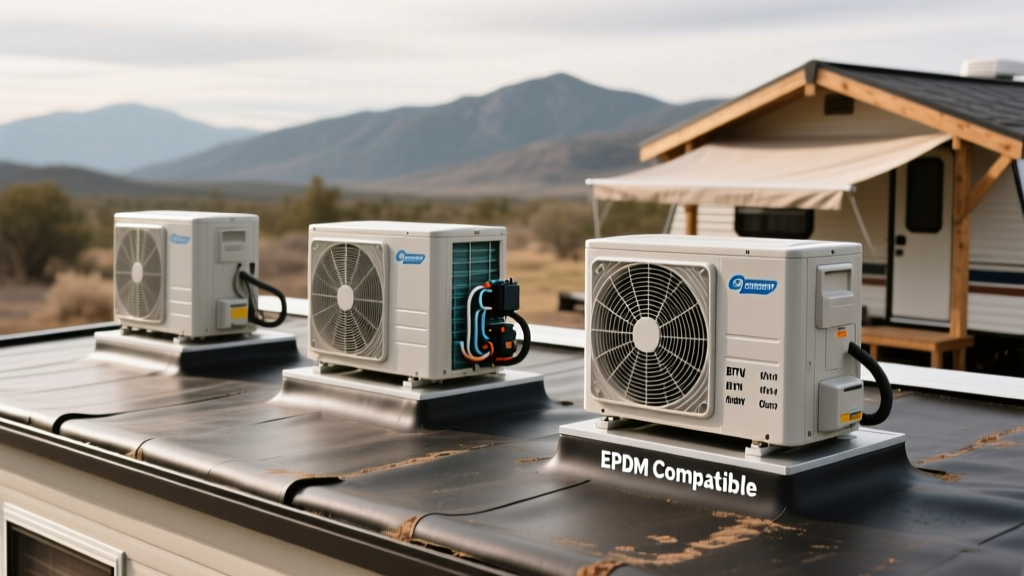
Understanding Camper Roof AC Performance Metrics
Selecting the right roof ac for campers requires looking past marketing claims and focusing on hard performance specifications. In 2026, the RV HVAC landscape has shifted significantly due to new refrigerant mandates and advancements in variable-speed compressors. To evaluate units accurately, you must analyze four core metrics: British Thermal Units (BTU), Energy Efficiency Ratio (EER), Cubic Feet per Minute (CFM), and Locked Rotor Amps (LRA).
Key Specification Definitions
- BTU (British Thermal Unit): The amount of heat the unit can remove from the air per hour. A 15,000 BTU unit is standard for campers up to 32 feet.
- EER (Energy Efficiency Ratio): Calculated by dividing BTU by wattage. A higher EER means less strain on your generator or shore power pedestal.
- CFM (Cubic Feet per Minute): Airflow volume. High CFM (350+) is critical for pushing cold air through long RV duct runs.
- LRA (Locked Rotor Amps): The massive spike in current required to start the compressor. This dictates your generator sizing requirements.
According to the ASHRAE testing standards, modern RV air conditioners must be evaluated under high-ambient temperature conditions (95°F outdoor / 80°F indoor). When reviewing 2026 spec sheets, prioritize units that publish their EER at these exact thresholds rather than idealized laboratory conditions.
2026 Specification Matrix: Leading Camper AC Models
The transition away from R-410A refrigerant toward lower Global Warming Potential (GWP) alternatives like R-454B and R-32 has forced manufacturers to redesign compressor coils. This shift, driven by the EPA HFC Phasedown Regulations, has resulted in lighter, more efficient units this year.
| Model | BTU Output | EER Rating | Weight | Amp Draw (RLA) | Refrigerant |
|---|---|---|---|---|---|
| Dometic BriskAir II | 15,000 | 11.5 | 72 lbs | 12.4A | R-454B |
| Furrion Chill Plus | 15,500 | 9.8 | 88 lbs | 14.1A | R-32 |
| RecPro Low Profile | 15,000 | 9.2 | 68 lbs | 13.5A | R-410A |
| Coleman Mach 3 Plus | 13,500 | 8.9 | 75 lbs | 11.8A | R-410A |
Weight Limits and Roof Decking Compatibility
The physical weight of the roof ac for campers is only half the structural equation. You must account for dynamic loading. A 75-pound AC unit exerts a static point load on the roof decking, but when a travel trailer hits a pothole at 65 MPH, the dynamic bounce can momentarily multiply that force by 3 to 4 times, creating a localized stress of over 250 pounds.
Most travel trailers and fifth wheels utilize 3/8-inch luan or oriented strand board (OSB) for roof decking, covered by EPDM rubber or TPO membranes. Luan lacks the shear strength to support an AC unit independently. If your camper roof lacks a factory-installed wooden truss directly beneath the 14x14 inch roof vent opening, you must install a structural backing plate.
Electrical Draw & Inverter Compatibility
Understanding the difference between Running Load Amps (RLA) and Locked Rotor Amps (LRA) is vital for off-grid campers running solar and inverter setups. While a 15,000 BTU unit may only draw 13.5 amps continuously (RLA), the compressor requires a massive surge of 45 to 60 amps for a fraction of a second to start spinning (LRA).
Sizing Generators and Inverters
- 30-Amp RV Service: A 15k BTU unit will consume roughly 40% of your total 3,600-watt capacity. Running a microwave or coffee maker simultaneously will trip the main pedestal breaker.
- Portable Generators: A 2,200-watt inverter generator (like the Honda EU2200i) cannot handle the 55-amp LRA spike natively. You must install a soft-start capacitor, such as the MicroAir EasyStart, which reduces the LRA spike by 65-75%, allowing a 15k unit to start on a 2kW generator.
- Solar/Inverter Rigs: For off-grid setups, your inverter must be rated for at least 3,000W continuous / 6,000W surge. Furthermore, the DC wiring from the battery bank to the inverter must be 2/0 AWG copper to prevent voltage sag during compressor startup.
Installation Torque and Sealant Specifications
Water intrusion is the leading cause of camper roof delamination. Proper installation of the roof ac for campers relies on exact torque specifications and the correct chemical sealants. The Department of Energy Cooling Efficiency Guidelines emphasize that poor sealing not only causes leaks but allows conditioned air to escape, dropping system efficiency by up to 15%.
The Sealant Protocol
Do not use silicone on EPDM or TPO rubber roofs; silicone will not adhere properly and will void the membrane warranty. The industry standard protocol requires a dual-sealant approach:
- Butyl Tape: Apply a 1/8-inch thick strip of butyl tape under the AC mounting flange. This creates the primary, permanent watertight gasket between the plastic flange and the roof membrane.
- Self-Leveling Lap Sealant: Use Dicor 501LSW-1 (for flat roofs) or 551LSW-1 (for vertical/sloped surfaces) to cover the perimeter of the flange and the mounting bolts. This acts as the secondary UV and weather barrier.
Flange Torque Limits
When tightening the four mounting bolts that sandwich the roof between the AC unit and the interior ceiling grille, use a calibrated torque wrench. The target torque is exactly 4 to 5 ft-lbs. Over-torquing to 8 or 10 ft-lbs will crush the EPDM membrane, squeeze out all the butyl tape, and crack the ABS plastic mounting flange, guaranteeing a leak within the first year.
Sizing Your Roof AC for Camper Square Footage
Bigger is not always better. An oversized AC unit will cool the air too rapidly, shutting off the compressor before it has completed a full dehumidification cycle. This results in a cold, clammy interior and promotes mold growth in the ductwork.
To calculate the exact BTU requirement for your specific rig, use the following baseline formula, adjusting for your camper's insulation R-value and window glazing:
Base Requirement: 20 BTU per square foot of interior floor space.
Example: A 28-foot travel trailer with an 8-foot interior width = 224 sq ft. (224 x 20 = 4,480 BTU baseline).
Additions:
+ 10% for every window over 2 square feet (single-pane).
+ 15% if the camper lacks reflective foil insulation in the ceiling cavity.
+ 20% if camping in ambient temperatures consistently above 95°F (Southwest US).
Final Target: Most 25-32 foot campers land between 13,500 and 15,000 BTU. Campers over 34 feet require dual units (one 15k in the living area, one 11k-13.5k in the bedroom).
By matching the exact BTU output to your camper's thermal envelope and ensuring your roof decking is reinforced for the dynamic highway loads, you secure a cooling system that performs reliably in 100-degree heat without compromising the structural integrity of your rig.