Residential and Commercial Roofing Material Market: 2026 Durability Data
Analyze the 2026 residential and commercial roofing material market. Compare lifespans, failure modes, and costs of shingles, metal, TPO, and PVC systems.

Market Bifurcation: Budget Replacements vs. Climate-Resilient Investments
The 2026 residential and commercial roofing material market is defined by a sharp bifurcation. On one end, supply chain stabilizations have driven down the cost of entry-level asphalt and basic single-ply membranes. On the other, increasingly severe weather events—specifically high-velocity hail and prolonged UV exposure—have forced building owners to prioritize ultra-durable, climate-resilient systems. Understanding the true lifespan of these materials requires looking past manufacturer warranties and examining actual field degradation rates, installation variables, and material science limitations.
This analysis breaks down the empirical durability of the dominant roofing systems in both sectors, providing actionable data for contractors, facility managers, and homeowners evaluating long-term ROI.
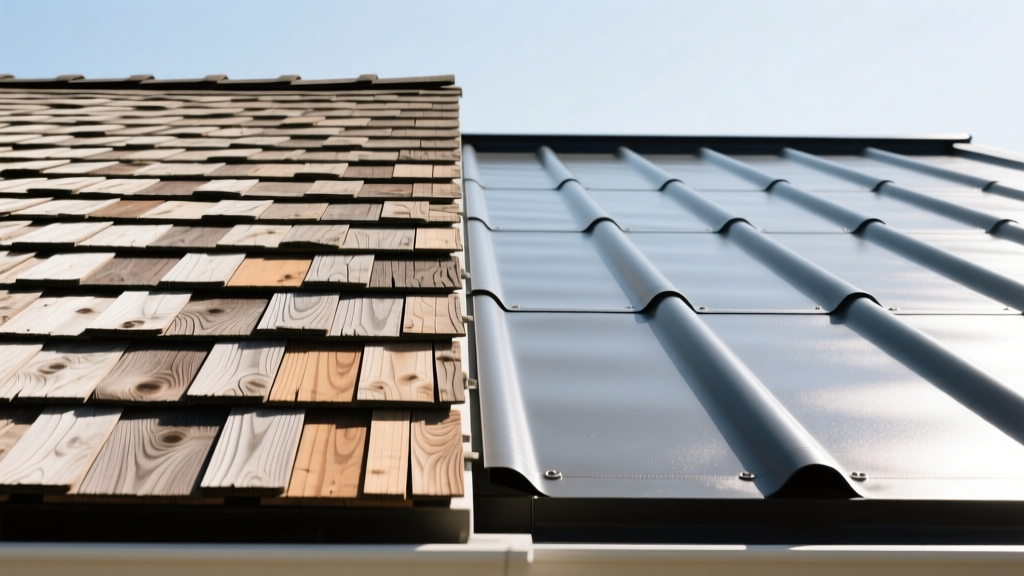
Residential Roofing: Lifespan vs. Upfront Cost Matrix
In the residential sector, the lifespan of a roof is heavily dictated by the substrate preparation, ventilation, and the specific chemical composition of the outer layer. The table below outlines the real-world performance metrics for the most common residential materials as of 2026.
| Material Type | Expected Field Lifespan | 2026 Installed Cost (per sq. ft.) | Primary Failure Mode | Impact Resistance (UL 2218) |
|---|---|---|---|---|
| 3-Tab Asphalt Shingles | 12–18 Years | $3.50 – $5.00 | Wind uplift, granule loss, thermal cracking | Class 1 or 2 |
| Architectural Asphalt (SBS Modified) | 25–35 Years | $5.50 – $8.50 | Algae degradation, sealant strip failure | Class 4 |
| Standing Seam Metal (24-gauge) | 50–70 Years | $14.00 – $22.00 | Fastener back-out, oil canning, coating fade | Class 4 |
| Synthetic Composite Slate | 40–60 Years | $12.00 – $18.00 | UV brittleness (lower-tier brands), color fade | Class 4 |
| Natural Slate (S1 Grade) | 75–100+ Years | $25.00 – $45.00 | Copper fastener corrosion, spalling (freeze-thaw) | Class 4 |
The Shift to SBS-Modified Asphalt and Synthetic Composites
Standard oxidized asphalt shingles are increasingly being replaced by SBS (Styrene-Butadiene-Styrene) modified shingles in hail-prone regions. SBS incorporates a rubberized polymer that allows the shingle to absorb and disperse kinetic energy from hail impacts rather than fracturing. Products like the GAF Timberline UHDZ utilize this technology to achieve a UL 2218 Class 4 impact rating, which requires the material to withstand two direct strikes from a 2-inch steel ball dropped from 20 feet without exhibiting cracking or splitting.
Similarly, synthetic composite slates (such as those manufactured by DaVinci Roofscapes or EcoStar) have captured significant market share from natural slate and concrete tile. While natural slate is virtually immortal, its weight requires expensive structural reinforcement, and lower-grade slate can suffer from spalling if its water absorption rate exceeds 0.25% (per ASTM C406). Synthetic alternatives weigh 30% less, require no structural retrofitting, and are engineered with UV stabilizers that prevent the polymer chains from breaking down under prolonged solar radiation.
Commercial Flat Roof Systems: Membrane Durability Breakdown
The commercial sector is dominated by low-slope and flat roof systems. The durability of these membranes hinges on two critical factors: seam integrity and plasticizer retention. The 2026 commercial market is heavily weighted toward thermoplastic polyolefin (TPO) and polyvinyl chloride (PVC), with ethylene propylene diene monomer (EPDM) retaining a niche in colder climates.
When specifying TPO, the difference between 45-mil, 60-mil, and 80-mil thicknesses is not linear. An 80-mil TPO membrane provides roughly 28% more puncture resistance than a 60-mil membrane, but it also offers superior resistance to wind scour and hail. In regions with high foot traffic for HVAC maintenance, specifying anything less than 60-mil TPO with a reinforced polyester scrim drastically increases the risk of premature membrane failure.
TPO vs. PVC: Heat-Welded Seam Longevity
Both TPO and PVC rely on thermally welded seams, which fuse the sheets into a single, monolithic surface. This is vastly superior to the adhesive or tape seams used in EPDM, which are the primary failure points for rubber roofs after 10 to 15 years of thermal cycling.
- PVC (Polyvinyl Chloride): PVC membranes, such as Sika Sarnafil, rely on liquid plasticizers to maintain flexibility. Over a 25-year lifespan, these plasticizers can slowly migrate out of the material, leading to embrittlement. However, modern PVC formulations include top-coat barriers that significantly retard this migration, pushing reliable lifespans to 30+ years. PVC is also highly resistant to chemicals, making it the mandatory choice for roofs exposed to grease exhaust (e.g., restaurants) or industrial fallout.
- TPO (Thermoplastic Polyolefin): TPO does not use liquid plasticizers; its flexibility is inherent to the polymer blend. This makes TPO immune to the plasticizer migration issue, but early generations of TPO (pre-2015) suffered from premature cracking under high UV and thermal loads. The 2026 TPO formulations feature advanced UV stabilizer packages and reinforced scrims that reliably deliver 25 to 30 years of service. TPO is generally 15% to 20% less expensive than PVC, making it the default for standard commercial warehouses and retail spaces.
Environmental Stressors and Degradation Mechanisms
Material lifespan is not a static number; it is a variable dependent on local environmental stressors. Understanding these mechanisms allows for better material specification.
Thermal Shock and Metal Fatigue
In high-altitude or desert environments, temperature swings of 50°F or more between day and night cause severe thermal expansion and contraction. On standing seam metal roofs, this continuous movement can cause fastener back-out and clip fatigue. To mitigate this, structural standing seam systems must utilize concealed, sliding clips that allow the metal panels to 'float' and expand independently of the roof deck. Fixed-fastener systems (like corrugated exposed-fastener panels) will typically experience fastener hole elongation and subsequent leaking within 15 to 20 years in high-thermal-shock zones.
Algae and Moisture Retention in Humid Climates
In the Southeastern United States, asphalt shingles are highly susceptible to Gloeocapsa magma (blue-green algae), which feeds on the limestone filler in the shingle matrix. While algae primarily causes cosmetic streaking, the moisture retained by heavy biological growth accelerates granule loss and UV degradation. Specifying shingles with copper-infused granules (which provide a minimum 10-year algae resistance warranty) or installing zinc or copper ridge strips is non-negotiable for maximizing lifespan in these humidity zones.
Strategic Maintenance to Maximize ROI
Even the most durable materials will fail prematurely without targeted maintenance. The following protocols are essential for protecting capital investments in roofing.
- Biannual Infrared Moisture Surveys (Commercial): Water ingress in flat roofs often travels laterally beneath the membrane before dripping through the deck. Annual or biannual infrared thermography can identify trapped moisture in the polyisocyanurate insulation before it compromises the deck or causes the membrane to blister and split.
- Sealant and Penetration Audits: 90% of residential and commercial leaks occur at penetrations (pipes, vents, HVAC curbs). Inspect and replace neoprene pipe boots every 7 to 10 years, as the rubber degrades and cracks long before the surrounding shingles or membrane fail.
- Vegetation and Debris Management: On commercial roofs, ensure drains and scuppers are cleared quarterly. Ponding water on TPO or EPDM roofs for more than 48 hours accelerates biological growth and, in the case of EPDM, can lead to water reversion where the rubber begins to break down chemically.
According to the Insurance Institute for Business & Home Safety (IBHS), buildings that adhere to the FORTIFIED Roof standard—which mandates sealed roof decks, enhanced edge metal, and impact-resistant coverings—experience up to 70% fewer claims related to wind and hail damage compared to standard code-built structures.
Frequently Asked Questions
How does the Cool Roof Rating Council (CRRC) rating affect membrane lifespan?
Highly reflective roofs (rated by the Cool Roof Rating Council) reduce the surface temperature of the membrane by up to 50°F compared to dark roofs. This drastically slows the thermal oxidation process in asphalt and reduces the thermal cycling stress on single-ply seams, effectively extending the functional lifespan of the roof by 15% to 20% in hot climates.
Is it worth upgrading from 60-mil to 80-mil TPO for a standard warehouse?
If the warehouse experiences heavy foot traffic from HVAC servicing, or if it is located in a region with frequent, large-diameter hail, the 80-mil upgrade is justified. The marginal increase in material cost (typically $0.50 to $0.80 per square foot) is offset by the avoidance of a single puncture repair and the extended time before the membrane requires a recoating or replacement.
Can modern synthetic underlayments replace traditional felt paper?
Yes, and they should. Synthetic underlayments (like GAF FeltBuster or Owens Corning ProArmor) offer superior tear strength, do not absorb moisture and wrinkle, and can be left exposed to UV radiation for up to 6 months during construction delays without degrading, unlike 15-lb or 30-lb asphalt felt which becomes brittle and cracks when exposed.
Written by
James ThorntonJames Thornton is a construction industry veteran with 25 years of hands-on experience in wood framing, lumber grading, and residential building codes. He started as a framing carpenter in rural Oregon, earned his ICC Residential Building Inspector certification, and eventually became a senior plan reviewer for the City of Portland Bureau of Development Services. James holds a B.S. in Wood Science & Technology from Oregon State University and is a certified lumber grader through the West Coast Lumber Inspection Bureau (WCLIB). He has inspected over 3,000 residential construction sites and authored the city's internal guide on advanced framing techniques (2x6 at 24" O.C.). James lives in Bend, OR, where he builds custom timber-frame cabins and competes in lumberjack sports.
More from James Thornton
View all
Insulation
Best Home Insulation Materials: Complete 2026 Guide
Compare top home insulation materials for 2026. Find R-values, installed costs per square foot, and best uses for fiberglass, spray foam, and mineral wool.
Aug 4, 2026

Sustainable Building
Certify Your Green Building Material for LEED and WELL
Step-by-step guide to certifying a green building material for LEED v5 and WELL v2. Master EPDs, HPDs, and VOC limits for 2026 project specifications.
Aug 4, 2026

Stone & Masonry
Veneer Stacked Stone Panels: Interior Design & Style Showcase
Discover how veneer stacked stone panels transform interiors. Explore modern design profiles, material pairings, and technical installation specs.
Aug 4, 2026