Roof Melt Tablets: How Ice Melting Chemicals Impact Roof Lifespan
Analyze how roof melt tablets and ice chemicals degrade asphalt shingles, metal, and flat membranes. Learn the true lifespan impact and safer alternatives.
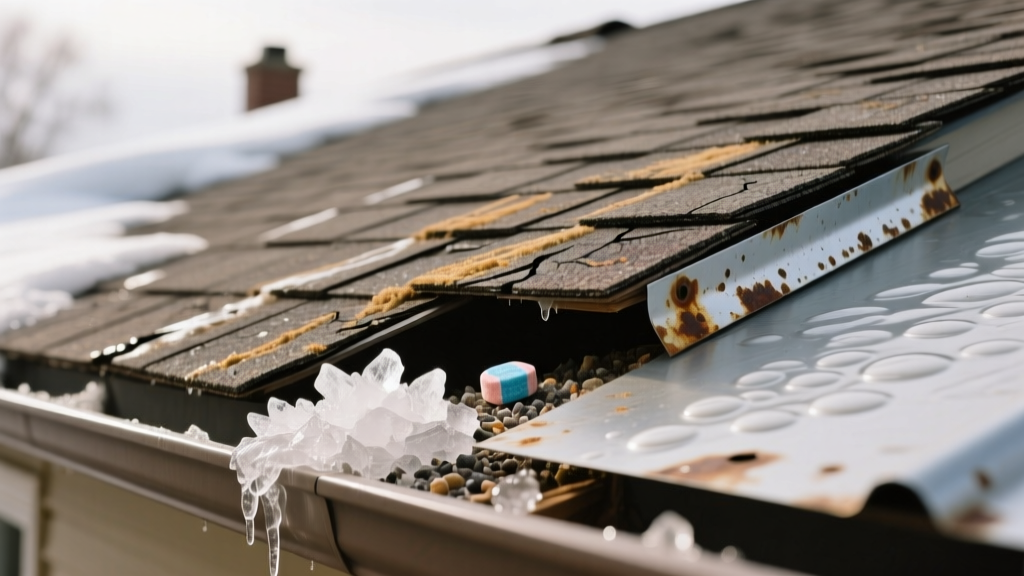
The Thermodynamics and Chemistry of Roof Melt Damage
When ice dams threaten to force meltwater under roofing materials, facility managers and homeowners frequently deploy roof melt tablets—compressed pucks of calcium chloride, magnesium chloride, or sodium chloride. While effective at boring channels through ice, these chemical melters initiate severe degradation pathways that drastically reduce the functional lifespan of the underlying roof system.
The primary mechanism of damage is thermodynamic shock. Calcium chloride (CaCl2) undergoes a highly exothermic dissolution process when it contacts moisture. A single roof melt tablet can generate localized temperatures exceeding 170°F (76°C) as it dissolves. When this intense heat is applied to an asphalt shingle or synthetic membrane that is currently at an ambient temperature of 10°F (-12°C), the resulting thermal shock causes micro-cracking in the substrate and immediate softening of the asphaltic binder.
Beyond thermal shock, chloride ions are highly corrosive and hygroscopic. They attract and retain moisture long after the visible ice has melted, creating a persistent zone of osmotic pressure. On flat roofs, this leads to osmotic blistering; on pitched roofs, it accelerates the chemical breakdown of protective coatings and granule adhesion.
Lifespan Degradation Matrix by Roofing Material
The impact of roof melt chemicals is not uniform across all roofing systems. The table below outlines the projected lifespan reduction based on routine, multi-year use of chloride-based ice melters.
| Roofing Material | Expected Baseline Lifespan | Lifespan with Routine Roof Melt Use | Primary Chemical Failure Mode |
|---|---|---|---|
| Architectural Asphalt Shingles | 25 - 30 Years | 12 - 18 Years | Granule detachment, fiberglass mat exposure |
| Standing Seam Metal (Steel) | 40 - 50 Years | 20 - 25 Years | Galvanic corrosion, fastener neoprene failure |
| EPDM Rubber (Flat) | 25 - 30 Years | 15 - 20 Years | Osmotic blistering, plasticizer extraction |
| TPO / PVC (Flat) | 20 - 30 Years | 15 - 22 Years | Seam welding degradation, UV acceleration |
Asphalt Shingles: Granule Loss and Emulsion Breakdown
Asphalt shingles rely on ceramic-coated granules to protect the underlying asphalt emulsion from UV radiation. The exothermic heat from roof melt tablets softens the asphalt binder, causing the granules to dislodge and wash away in the subsequent meltwater runoff. Once the fiberglass mat is exposed, UV degradation accelerates exponentially. Furthermore, the hygroscopic nature of residual salts keeps the shingle damp, promoting algae growth and organic decay on the underside of the roof deck.
Metal Roofing: Galvanic Corrosion and Fastener Failure
While standing seam metal panels are often coated with Kynar or SMP finishes that resist chemical corrosion, the fasteners and panel laps are highly vulnerable. Sodium chloride and calcium chloride act as electrolytes, triggering galvanic corrosion where dissimilar metals meet (such as steel screws piercing aluminum panels). More critically, the chemical runoff degrades the neoprene or EPDM washers on exposed fastener screws. Once these washers dry-rot or dissolve, the roof loses its watertight seal, leading to concealed leaks years before the metal panels themselves fail.
Single-Ply Membranes: Plasticizer Extraction and Blistering
On commercial flat roofs, ponding water mixed with roof melt residue creates a highly concentrated saline solution. In EPDM membranes, this draws out the chemical plasticizers that keep the rubber flexible, leading to premature brittleness and cracking at the seams. In TPO systems, the chemical residue left behind after the water evaporates forms a crystalline layer that alters the albedo (reflectivity) of the roof, forcing the HVAC system to work harder and accelerating UV degradation of the polymer.
The Hidden Casualties: Gutters, Fascia, and Landscaping
The durability impact of roof melt extends beyond the roof plane. The concentrated brine generated by these tablets flows directly into the drainage system.
- Aluminum Gutters: Chloride salts cause rapid pitting and oxidation in aluminum gutters, leading to pinhole leaks and structural sagging within 3 to 5 winters.
- Wood Fascia and Soffits: The hygroscopic runoff keeps wood components perpetually damp, creating ideal conditions for wood-decay fungi and carpenter ant infestations.
- Landscaping and Hardscapes: Concentrated calcium chloride runoff alters soil pH, causes root burn in foundation plantings, and accelerates the spalling and freeze-thaw deterioration of concrete walkways below the drip edge.
Decision Framework: Mitigation vs. Chemical Reliance
Roof melt chemicals should never be used as a routine maintenance tool. They are strictly an emergency intervention. Use the following framework to determine when chemical intervention is justified versus when physical or thermal alternatives are required.
Emergency Protocol: When to Use Roof Melt
Condition: Active interior leaking caused by an ice dam, with temperatures below freezing and no immediate thaw in the forecast.
Action: Deploy calcium chloride pucks vertically across the dam (not horizontally) to cut drainage channels. Use the absolute minimum quantity required to restore water flow to the gutter.
Post-Event: Flush the affected roof area, gutters, and landscaping with fresh water as soon as ambient temperatures rise above 40°F to dilute and remove residual salts.
Long-Term Solutions for Ice Dam Prevention
To preserve roof durability and eliminate the need for chemical melters, address the root causes of ice dams: heat loss and inadequate drainage.
- Self-Regulating Heat Cables: Install UL-listed, self-regulating heat cables (such as Raychem WinterGard) in gutters and along the eaves in a zigzag pattern. Unlike constant-wattage cables, self-regulating models adjust their heat output based on ambient temperature, preventing the thermal degradation of shingles while maintaining a clear drainage path.
- Attic Air Sealing and Insulation: According to the U.S. Department of Energy, the primary cause of ice dams is heat escaping from the conditioned living space into the attic. Sealing top-plate penetrations and upgrading to R-49 or higher insulation keeps the roof deck cold, preventing the initial snowmelt that refreezes at the eaves.
- Ventilation Upgrades: Ensure a balanced intake-to-exhaust ventilation ratio (minimum 1/150 net free ventilating area). Proper ridge and soffit venting equalizes the roof temperature, a critical factor highlighted in Penn State Extension building science guidelines for cold-climate roofing.
- Ice and Water Shield: For roofs in regions with persistent ice dam history, install a minimum 6-foot width of self-adhering polymer-modified bitumen underlayment (e.g., Grace Ice & Water Shield) at the eaves, valleys, and penetrations during the next roof replacement. This provides a secondary, watertight barrier even if ice dams form.
By shifting from reactive chemical applications to proactive thermal and structural management, property owners can preserve the full design lifespan of their roofing systems while effectively managing winter water intrusion risks.