Low Slope Roof Materials: Complete Selection Guide 2026
Compare top low slope roof materials including TPO, EPDM, PVC, and modified bitumen. Expert cost data, specs, and failure modes for 2026.

The 3:12 Threshold: Defining Low-Slope Dynamics
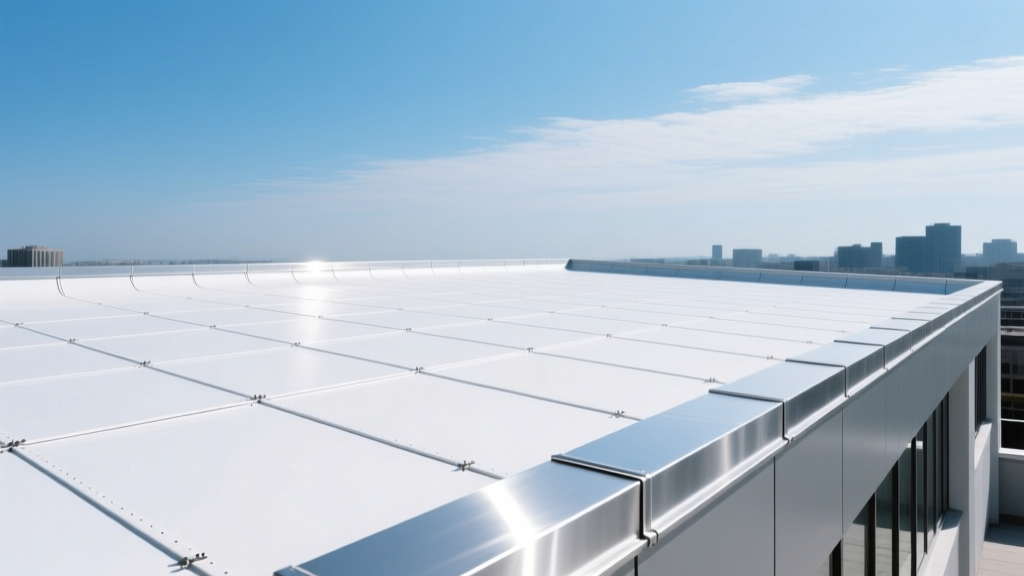
In commercial and modern residential architecture, a roof is classified as 'low slope' when its pitch is 3:12 or less (a 3-inch vertical drop for every 12 horizontal inches). At this gradient, water does not shed rapidly; it ponds, meanders, and tests the absolute limits of membrane integrity. Selecting the correct low slope roof materials is not merely about weatherproofing—it is an exercise in managing thermal shock, UV degradation, chemical exposure, and wind uplift.
Unlike steep-slope systems that rely on overlapping shingles to shed water via gravity, low-slope systems require continuous, watertight seals. A single compromised seam or fastener penetration will lead to catastrophic insulation saturation. This guide dissects the four dominant membrane systems in the 2026 market, providing exact specifications, installed cost baselines, and critical failure modes to inform your procurement strategy.
Quick Decision Framework
- High UV / Energy Efficiency Priority: White TPO or PVC (meets ENERGY STAR and LEED cool roof requirements).
- Restaurant / Chemical Exposure: PVC (specifically fleece-back for chemical and grease resistance).
- Extreme Cold / High Puncture Risk: EPDM (remains flexible at -40°F) with a heavy ballast or protected membrane assembly.
- Complex Penetrations / Historic Retrofits: Modified Bitumen (torch-applied SBS conforms tightly to irregular substrates).
Material Breakdown: Performance, Pricing, and Use Cases
1. TPO (Thermoplastic Polyolefin)
TPO dominates the North American commercial market, accounting for over 50% of new low-slope installations. It is a single-ply, reflective membrane typically manufactured in 45, 60, and 80-mil thicknesses. The seams are thermally fused using hot-air welders at approximately 1,000°F, creating a bond that is physically stronger than the membrane itself.
Specification Insight: Do not default to 45-mil TPO. In 2026, 60-mil is the minimum standard for mechanically attached systems to resist wind-scour and hail. For high-velocity hurricane zones (HVHZ) or FM 1-90 wind uplift requirements, specify an 80-mil fully adhered system over a 1/2-inch high-density polyiso (HDPE) cover board. Leading manufacturers like GAF (EverGuard) and Carlisle (Sure-Weld) have reinforced their TPO scrim with thicker polyester wefts to prevent membrane splitting under structural deflection.
- Installed Cost (2026): $5.50 – $8.50 per sq. ft.
- Expected Lifespan: 20 – 30 years.
- Primary Vulnerability: Early-generation TPO suffered from premature cracking under extreme thermal cycling; modern formulations with UV stabilizers have largely resolved this, but material provenance matters. Stick to Tier-1 manufacturers.
2. EPDM (Ethylene Propylene Diene Monomer)
EPDM is a synthetic rubber membrane renowned for its extreme temperature tolerance and long-term track record. It is available in black (which absorbs heat, beneficial in northern climates to melt snow) and white. Unlike TPO, EPDM seams are joined using liquid adhesives or peel-and-stick butyl tapes, which historically represented the system's weakest link.
Specification Insight: The shift from liquid-applied primers to factory-applied seam tape (such as Carlisle's QuickPrime Plus) has drastically reduced installer error and seam failure rates. For ballasted systems, 45-mil EPDM is acceptable, but for fully adhered applications, 60-mil is mandatory to prevent stretching and 'fishmouth' wrinkles during installation. According to data from the Carlisle SynTec technical archives, fully adhered 60-mil EPDM systems routinely exceed 30 years of service life when protected from oil and grease runoff.
- Installed Cost (2026): $4.50 – $7.00 per sq. ft.
- Expected Lifespan: 25 – 35+ years.
- Primary Vulnerability: Highly susceptible to degradation from animal fats, vegetable oils, and petroleum-based solvents. Never install EPDM over a commercial kitchen exhaust without secondary grease containment.
3. PVC (Polyvinyl Chloride)
PVC is the premium single-ply option, characterized by its exceptional chemical resistance and inherent fire retardancy. The membrane includes plasticizers for flexibility and heat-weldable seams similar to TPO. PVC is the undisputed choice for facilities with airborne pollutants, such as restaurants, chemical plants, and manufacturing facilities.
Specification Insight: Specify a fleece-backed PVC (like Sika Sarnafil G 50/60 Fleece) for fully adhered applications. The fleece backing acts as a buffer, allowing the membrane to be adhered directly to existing substrates (like old asphalt or EPS insulation) without the solvents in the adhesive attacking the PVC. Furthermore, PVC retains its flexibility longer than TPO in freezing conditions, making heat-welding in winter months more reliable.
- Installed Cost (2026): $7.00 – $11.00 per sq. ft.
- Expected Lifespan: 25 – 30+ years.
- Primary Vulnerability: Plasticizer migration. If PVC comes into direct contact with EPS (expanded polystyrene) insulation or asphaltic products without a separation slip sheet, the plasticizers will leach out, causing the membrane to become brittle and shatter.
4. Modified Bitumen (SBS and APP)
Modified bitumen bridges the gap between traditional built-up roofing (BUR) and modern single-plies. It consists of asphalt reinforced with polyester or fiberglass mats, modified with either SBS (synthetic rubber) or APP (plastic). SBS is typically torch-applied or cold-adhered, while APP is exclusively torch-applied.
Specification Insight: SBS is vastly superior in climates with severe temperature fluctuations because the rubber polymer allows the asphalt to stretch and recover without cracking. Always specify a two-ply system: a smooth base sheet and a granulated cap sheet. The granules provide essential UV protection and fire resistance. As noted by the U.S. Department of Energy's Cool Roof guidelines, selecting highly reflective white granules on SBS membranes can significantly reduce cooling loads, though they require periodic cleaning to maintain solar reflectance.
- Installed Cost (2026): $6.00 – $9.50 per sq. ft.
- Expected Lifespan: 15 – 25 years.
- Primary Vulnerability: Torch application requires strict fire-watch protocols. Poorly trained crews can overheat the asphalt, causing blistering, or underheat it, leading to cold seams that unzip under wind load.
Comparative Matrix: 2026 Market Data
| Material | Standard Thickness | Installed Cost / Sq. Ft. | Wind Uplift Rating (Typical) | Ponding Water Tolerance | Best Application |
|---|---|---|---|---|---|
| TPO | 60-mil / 80-mil | $5.50 - $8.50 | FM 1-60 to 1-90 | Excellent | Big-box retail, warehouses, general commercial |
| EPDM | 60-mil | $4.50 - $7.00 | FM 1-60 (Adhered) | Good | Cold climates, ballasted plazas, simple geometries |
| PVC | 50-mil / 60-mil | $7.00 - $11.00 | FM 1-90+ | Excellent | Restaurants, chemical plants, high-fire-risk zones |
| Mod-Bit (SBS) | 2-Ply (Base + Cap) | $6.00 - $9.50 | FM 1-60 | Fair (Requires slope) | Complex roofs, heavy foot traffic, historic retrofits |
The Hidden Variable: Insulation and Vapor Control
Membrane selection is only half the equation. The most common cause of low slope roof failure is not membrane puncture, but subsurface condensation and insulation compression. Polyisocyanurate (polyiso) is the industry standard insulation, offering an aged R-value of roughly R-5.6 per inch. However, polyiso experiences 'thermal drift'—its R-value drops significantly in temperatures below 40°F.
For inverted roof membrane assemblies (IRMA) where the insulation sits on top of the membrane, you must use Extruded Polystyrene (XPS). XPS is closed-cell, highly resistant to water absorption, and maintains an R-5.0 per inch even when submerged. EPDM is the preferred membrane beneath XPS ballast due to its puncture resistance.
Common Failure Modes and Mitigation Strategies
Understanding how low slope roof materials fail allows you to write better specifications and enforce stricter quality control during installation.
Fastener Back-Out (Mechanically Attached TPO/PVC)
In mechanically attached systems, screws and plates secure the insulation and membrane to the steel or wood deck. Over time, thermal expansion and contraction of the metal deck can cause fasteners to back out, piercing the membrane from below. Mitigation: Specify induction-welded attachment systems (like the OMG RhinoBond) where the membrane is welded directly to the plate without penetrating the membrane surface, or use heavy-duty fasteners with wider threads designed for dynamic steel decks.
Membrane Shrinkage (EPDM)
Older or poorly formulated EPDM membranes can shrink over time, pulling away from flashings and parapet walls. Mitigation: Ensure the EPDM is fully adhered rather than mechanically attached, and specify reinforced EPDM (which includes an internal polyester scrim) for high-tension areas like corners and parapet returns.
Blistering (Modified Bitumen & Adhered Single-Ply)
Blisters form when moisture or air trapped between the membrane and substrate expands under solar heat. While small blisters in Mod-Bit are often cosmetic, they can rupture under foot traffic. Mitigation: Ensure the substrate is completely dry before application. For adhered single-plies, use a ribbed adhesive pattern that allows microscopic moisture to vent laterally to the roof edge, rather than trapping it.
Warranty Realities and Exclusions
Manufacturer warranties for low slope roof materials typically range from 15 to 30 years, but they are heavily caveated. A 'No Dollar Limit' (NDL) labor and material warranty requires the use of certified contractors, strict adherence to manufacturer details, and third-party inspections. Be aware that ponding water (water remaining 48 hours after precipitation) will immediately void the warranty on most EPDM and Modified Bitumen systems, whereas TPO and PVC manufacturers generally tolerate it. Furthermore, unauthorized penetrations by HVAC technicians or solar installers post-completion will void the warranty unless the original roofing contractor performs the flashing work. Always budget for a maintenance contract that includes bi-annual infrared moisture surveys to detect subsurface saturation before it compromises the structural deck.
For comprehensive technical standards on asphaltic low-slope systems, refer to the Asphalt Roofing Manufacturers Association (ARMA) design guides, which provide exhaustive details on slope requirements and drainage calculations for modified bitumen assemblies.
Written by
James ThorntonJames Thornton is a construction industry veteran with 25 years of hands-on experience in wood framing, lumber grading, and residential building codes. He started as a framing carpenter in rural Oregon, earned his ICC Residential Building Inspector certification, and eventually became a senior plan reviewer for the City of Portland Bureau of Development Services. James holds a B.S. in Wood Science & Technology from Oregon State University and is a certified lumber grader through the West Coast Lumber Inspection Bureau (WCLIB). He has inspected over 3,000 residential construction sites and authored the city's internal guide on advanced framing techniques (2x6 at 24" O.C.). James lives in Bend, OR, where he builds custom timber-frame cabins and competes in lumberjack sports.
More from James Thornton
View all
Insulation
Best Home Insulation Materials: Complete 2026 Guide
Compare top home insulation materials for 2026. Find R-values, installed costs per square foot, and best uses for fiberglass, spray foam, and mineral wool.
Aug 4, 2026

Sustainable Building
Certify Your Green Building Material for LEED and WELL
Step-by-step guide to certifying a green building material for LEED v5 and WELL v2. Master EPDs, HPDs, and VOC limits for 2026 project specifications.
Aug 4, 2026

Stone & Masonry
Veneer Stacked Stone Panels: Interior Design & Style Showcase
Discover how veneer stacked stone panels transform interiors. Explore modern design profiles, material pairings, and technical installation specs.
Aug 4, 2026