Shakespeare's Globe Thatched Roof Material: A Climate-Specific Guide
Discover how Shakespeare's Globe thatched roof material performs across climates. We analyze Norfolk water reed, fire safety, and exact installation specs.

The Legacy of Shakespeare's Globe Thatched Roof Material
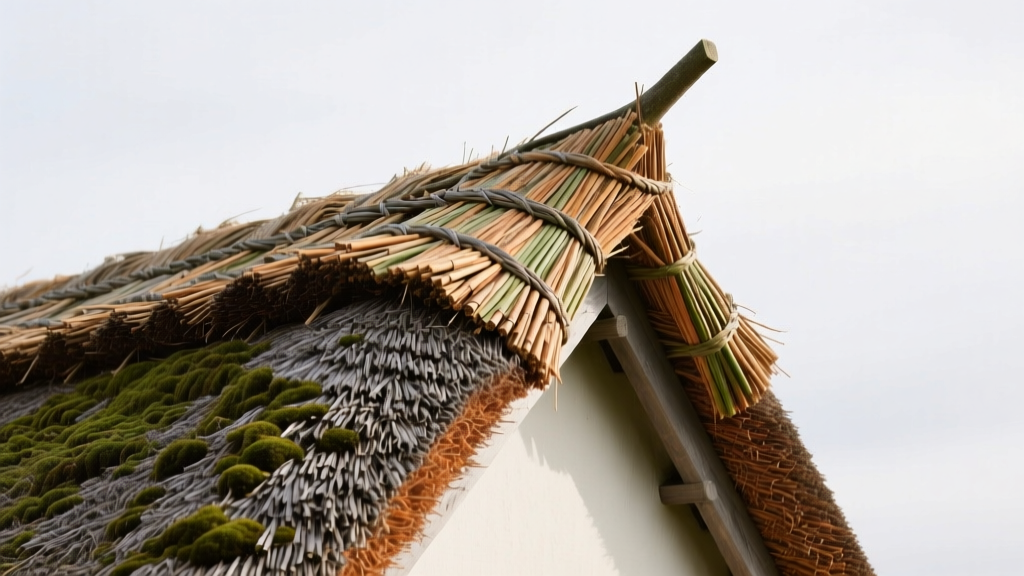
When the reconstruction of Shakespeare's Globe was completed in 1997, it marked a watershed moment in British architectural history. The building featured the first permitted thatched roof in London since the Great Fire of 1666. To achieve this, architects and master thatchers had to navigate stringent modern building codes while maintaining historical authenticity. The specific Shakespeare's Globe thatched roof material chosen for this monumental project was Norfolk water reed (Phragmites australis), selected for its superior durability, water-shedding capabilities, and structural rigidity compared to traditional wheat straw.
Understanding the performance of this specific material requires looking beyond its historical significance. Water reed is a highly specialized roofing material whose success is intrinsically tied to the climate it inhabits. This guide breaks down the technical specifications, climate-specific performance metrics, and modern fire-retardancy requirements for specifying water reed thatch in contemporary construction.
Material Profile: Norfolk Water Reed vs. Alternatives
Not all thatch is created equal. While long straw and combed wheat reed are still used in heritage restorations, water reed remains the premium standard for new-build thatch and major reconstructions like the Globe. The hollow, tubular structure of water reed creates a naturally insulating and highly water-resistant matrix when bundled and pitched correctly.
| Material Type | Botanical Name | Expected Lifespan | Water Resistance | Structural Rigidity |
|---|---|---|---|---|
| Norfolk Water Reed | Phragmites australis | 50 - 70+ years | Exceptional | High (Hollow, thick-walled stems) |
| Combed Wheat Reed | Triticum aestivum | 25 - 40 years | Moderate | Medium (Solid stems, prone to crushing) |
| Long Straw | Triticum aestivum | 15 - 25 years | Low | Low (Requires heavy roping/swaying) |
Climate-Specific Performance Analysis
The longevity of the Shakespeare's Globe thatched roof material is heavily dependent on its environmental conditions. Thatch does not fail from water penetrating through the bundles; it fails from surface moisture lingering too long, which promotes fungal decay and moss growth.
Temperate Maritime Climates (UK, Pacific Northwest)
Water reed thrives in temperate maritime zones characterized by regular rainfall interspersed with consistent wind. The wind is critical—it rapidly dries the surface layer of the thatch after rain events. In these climates, a properly pitched water reed roof will easily achieve a 60-year lifespan. The ambient humidity is generally low enough during winter months to prevent deep-seated fungal colonization.
High Humidity and Tropical Climates
Specifying water reed in tropical or high-humidity subtropical climates is strongly discouraged. Without the drying action of cold, dry winds, the surface of the thatch remains perpetually damp. This accelerates the breakdown of the lignin in the reed stems and invites aggressive fungal decay. In these environments, the lifespan of water reed can plummet to under 15 years, making modern synthetic thatch alternatives (like HDPE palm thatch) a more viable, albeit less authentic, choice.
Arid and Extreme Sunbelt Climates
While thatch is an excellent natural insulator (providing a U-value of approximately 0.18 W/m²K), extreme UV exposure in arid climates causes the exterior reeds to become brittle and fracture. The thermal expansion and contraction of the roof decking can also cause the thatch fixing wires to loosen over time. If specified in high-UV zones, the roof requires a much steeper pitch to minimize the surface area exposed to direct midday sun, and more frequent ridge replacements.
Structural and Pitch Requirements
The Shakespeare's Globe thatched roof material relies entirely on gravity and surface tension to shed water. Water must travel down the outside of the reed stems and drip off the eaves before it can penetrate more than an inch into the thatch layer. This physical mechanism dictates strict structural requirements.
- Minimum Pitch: 45 to 50 degrees. Anything less than 45 degrees allows water to penetrate deeply into the thatch layer, leading to rot at the base of the bundles.
- Thatch Thickness: 12 to 14 inches (300mm - 350mm) at the eaves, tapering to 8 to 10 inches at the ridge.
- Roof Decking: Historically, thatch was applied over open timber battens. Modern building codes, and the specific requirements for the Globe's reconstruction, mandate a solid timber deck (typically 19mm tongue-and-groove boarding) overlaid with a breathable roofing membrane.
- Fixings: Stainless steel sway hooks and 4mm galvanized or stainless steel tying wire. Copper wire is avoided as it can react with the natural tannins and agricultural chemicals in the reed.
Fire Retardancy and Modern Building Codes
The Great Fire of 1666 banned thatch in London for over three centuries. To install the Shakespeare's Globe thatched roof material in 1997, the project required special dispensation from the London Building Acts. This was achieved not by altering the reed itself, but by engineering a comprehensive fire-barrier system beneath it.
Modern thatch fire safety focuses on preventing internal ignition (from chimney sparks or electrical faults) and slowing external flame spread. According to guidance from the Society for the Protection of Ancient Buildings (SPAB), a multi-layered defense system is now standard for commercial and heritage thatch installations.
The Fire Barrier Matrix
- Intumescent Membrane: A specialized fireproof board (such as Thatchbatts or a proprietary rockwool barrier) is installed directly over the solid roof decking. This provides up to 90 minutes of fire integrity, preventing flames from breaching the interior of the building even if the thatch above is fully engulfed.
- Surface Retardants: Water-based intumescent sprays (e.g., Thatchfire) are applied to the surface of the thatch. These coatings swell when exposed to extreme heat, forming a carbonaceous char layer that starves the fire of oxygen. These must be reapplied every 5 to 7 years.
- Spark Arrestors: Mandatory installation of heavy-duty stainless steel spark arrestors on all chimney flues penetrating or adjacent to the thatch.
"The fire safety strategy for the Globe's roof was a pioneering integration of historical materials and modern passive fire protection, proving that thatch can meet stringent commercial safety standards when engineered correctly." — Shakespeare's Globe Architectural Archives
Maintenance and Lifecycle Cost Breakdown
Thatch is a premium, labor-intensive roofing system. The initial capital expenditure is significantly higher than slate or clay tile, but the lifecycle value—when factoring in thermal performance and longevity—can be highly competitive for heritage or bespoke architectural projects.
| Cost Category | Estimated Range (USD per sq. ft.) | Frequency / Notes |
|---|---|---|
| Initial Installation (Water Reed) | $45.00 - $75.00 | Includes solid decking, fire barrier, and master thatcher labor. |
| Ridge Replacement | $15.00 - $25.00 (linear ft) | Required every 15 - 20 years due to extreme weather exposure. |
| Fire Retardant Re-application | $2.50 - $4.00 | Required every 5 - 7 years to maintain insurance compliance. |
| Moss and Algae Treatment | $1.00 - $2.00 | Biannual application of zinc-based or proprietary biocides. |
| Complete Strip and Re-thatch | $40.00 - $65.00 | Required at the end of the 50-70 year lifecycle. |
Expert Verdict: When to Specify Water Reed Thatch
Specifying the Shakespeare's Globe thatched roof material for a modern project requires a commitment to precise detailing and ongoing maintenance. It is the optimal choice for projects in temperate, windy climates where architectural authenticity, superior natural insulation, and acoustic dampening are paramount. It is entirely unsuited for low-pitch designs, high-humidity tropical zones, or projects with constrained maintenance budgets. When paired with a solid deck, an intumescent fire barrier, and a minimum 50-degree pitch, Norfolk water reed remains one of the most resilient and aesthetically striking roofing materials in the architectural lexicon.
Written by
Marcus ChenMarcus Chen is a licensed structural engineer (PE) and building materials analyst with over 12 years of experience across residential, commercial, and industrial construction. He holds a Master of Science in Civil Engineering from UC Berkeley and spent six years at Thornton Tomasetti before transitioning to independent consulting and technical writing. Marcus specializes in material selection for seismic-prone regions, concrete reinforcement strategies, and lifecycle cost analysis. His work has been cited by the American Concrete Institute (ACI) and the Structural Engineers Association of California (SEAOC). When he is not on a job site or at his desk, you will find him hiking the Sierra Nevada or restoring a 1920s craftsman bungalow in Oakland, CA.
More from Marcus Chen
View all
Construction Cost
How Much Did the Eiffel Tower Cost to Build?
How much did the Eiffel Tower cost to build in 1889? We adjust for inflation and compare its budget to modern skyscraper construction.
Aug 4, 2026

Fire Resistance
What Is a Fire Resistant Material? Testing & Certification Guide
Discover what is a fire resistant material through ASTM and UL testing. Learn how fire ratings, certifications, and assemblies work in construction.
Aug 4, 2026

Construction Cost
How Much Did the Burj Khalifa Cost to Build?
How much did the Burj Khalifa cost to build? We break down the $1.5B project and extract 5 money-saving strategies for your next build.
Jul 30, 2026