Roof Moss Killer Playbook: Chemicals, Costs, and Application
Expert playbook for choosing and applying roof moss killer. Compare zinc, fatty acids, and bleach, with material-specific protocols and 2026 cost data.
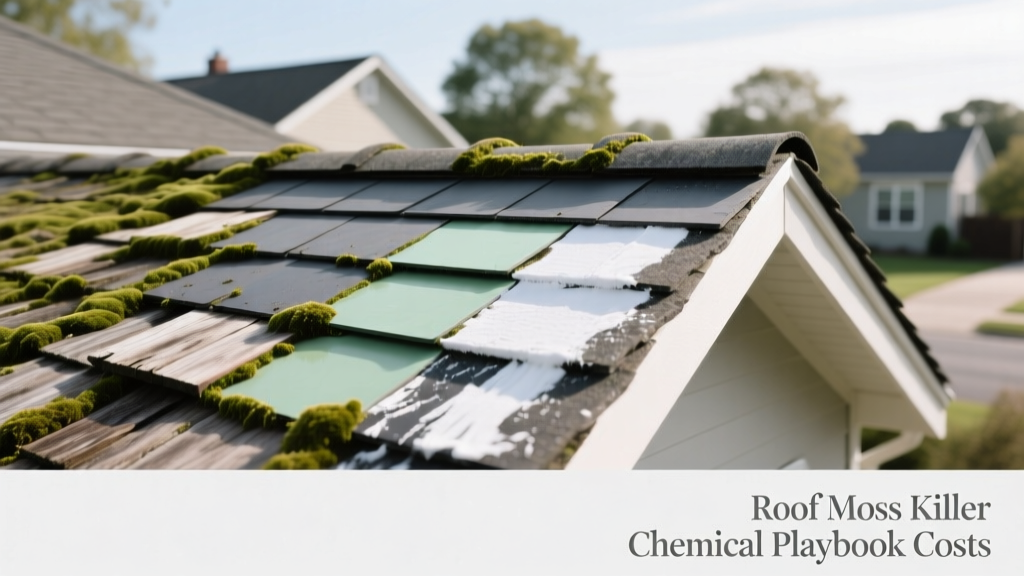
The Chemistry of Roof Moss Killers: Selecting the Right Active Ingredient
Moss thrives in shaded, moisture-retentive environments, anchoring its rhizoids into the microscopic pores of roofing materials. Left untreated, moss acts as a sponge, holding water against the roof deck, accelerating granule loss on asphalt, and causing frost heave in freezing climates. Selecting the correct roof moss killer requires understanding the chemical mechanism of action and its compatibility with your specific roofing material.
According to guidelines from the Asphalt Roofing Manufacturers Association (ARMA), harsh alkaline cleaners and high-pressure washing are strictly prohibited, as they degrade the asphalt binder and strip protective ceramic granules. Instead, professionals rely on three primary chemical categories:
1. Zinc Sulfate Monohydrate (Heavy Metal Salts)
Zinc-based treatments (e.g., Moss-B-Ware) are the industry standard for long-term residual control. Zinc ions disrupt the cellular enzymes of the moss, causing it to die and detach over 3 to 6 weeks. Because zinc is a heavy metal, it leaves a residual toxic layer that prevents regrowth for up to three years. However, zinc runoff is highly toxic to aquatic life, particularly salmonids, making it restricted in certain municipal watersheds.
2. Potassium Salts of Fatty Acids (Insecticidal/Moss Soaps)
Recognized by the EPA Safer Choice Program, fatty acid salts operate as contact desiccants. They dissolve the waxy cuticle of the moss cell walls, causing rapid dehydration within 24 to 48 hours. These biodegradable solutions are safe for landscaping and aquatic environments but offer zero residual protection, meaning moss can return within a single season if environmental conditions remain unchanged.
3. Benzalkonium Chloride and Sodium Hypochlorite (Biocides/Bleach)
While sodium hypochlorite (bleach) provides instant visual results by bleaching the moss white, it is highly corrosive to metal flashings, degrades wood fibers, and accelerates the aging of asphalt shingles. Benzalkonium chloride (quaternary ammonium) is a safer alternative often found in "no-scrub, no-rinse" formulations, offering moderate residual control without the corrosive drawbacks of bleach.
| Active Ingredient | Product Example | Kill Time | Residual Effect | Shingle Safety | Avg Cost (2026) |
|---|---|---|---|---|---|
| Zinc Sulfate | Moss-B-Ware | 3–6 Weeks | 1–3 Years | Excellent | $35 / 3 lb tub |
| Fatty Acid Salts | Safer Brand Moss Killer | 24–48 Hours | None | Excellent | $22 / 32 oz RTU |
| Benzalkonium Chloride | Wet & Forget | 1–3 Months | 6–12 Months | Good | $45 / 1 Gallon |
| Sodium Hypochlorite | Custom Soft-Wash Mix | Instant (Bleaching) | None | Poor (Degrades Binder) | $8 / Gallon (Mixed) |
The 4-Phase Application Playbook
Applying a roof moss killer is not a simple spray-and-forget operation. Proper protocol requires mechanical preparation, precise chemical application, and environmental safeguards.
Phase 1: Dry Mechanical Removal
Never apply chemicals to thick, established moss mats; the chemical will only kill the top layer, leaving the root structure intact. Use a push broom with stiff synthetic bristles to dry-brush the moss. Critical technique: Always sweep down the slope of the roof. Sweeping upward will lift the shingle tabs, breaking the factory-applied adhesive sealant and creating wind-uplift vulnerabilities.
Phase 2: Low-Pressure Chemical Application
Mix your chosen roof moss killer according to the manufacturer's dilution ratio. For zinc sulfate, the standard ratio is 3 pounds of powder per 100 gallons of water. Apply using a low-pressure pump sprayer or a garden hose attachment. The application pressure must not exceed 40 PSI to prevent forcing moisture under the shingle overlaps.
Never use a standard gas-powered pressure washer on asphalt or cedar roofs. These machines operate at 1,500 to 3,000 PSI. According to the National Roofing Contractors Association (NRCA), pressure washing instantly voids your manufacturer warranty by blasting away the ceramic granules that protect the asphalt from UV degradation.
Phase 3: Dwell Time and Rinsing Protocols
- Zinc Sulfate: Do not rinse. Apply when 48 hours of dry weather is forecast. The zinc must bond to the shingle surface and reactivate with subsequent rainfalls.
- Fatty Acid Soaps: Allow a 15-minute dwell time, then rinse thoroughly with a standard garden hose to prevent soap residue from leaving a sticky film that attracts dirt.
- Benzalkonium Chloride: Leave on the roof. It requires rain activation to spread across the surface and will continue working for months.
Phase 4: Gutter and Downspout Flushing
Dead moss will slough off over the next few rainstorms and migrate into the gutters. Schedule a gutter cleaning 30 days post-application to prevent downspout blockages and ice dam formation in the winter.
Material-Specific Protocols and Edge Cases
The efficacy and safety of a roof moss killer depend heavily on the underlying roofing material. What works for asphalt may destroy cedar or corrode metal.
Asphalt Shingles
Asphalt is highly sensitive to high-pH (alkaline) solutions. Avoid bleach-based soft washes, which strip the protective limestone filler from the shingle matrix. Stick to zinc sulfate or benzalkonium chloride. If granule loss is already visible in the gutters, switch to a fatty acid soap to avoid further chemical degradation of the exposed asphalt binder.
Cedar Shakes and Shingles
Wood is porous and relies on its natural lignin for structural integrity. Sodium hypochlorite destroys lignin, causing cedar shakes to become brittle and split. Furthermore, heavy metal salts like zinc can cause dark, unsightly staining on light-colored cedar. The optimal roof moss killer for cedar is potassium salts of fatty acids, followed by an application of a penetrating wood preservative (like Amteco TWP) once the wood is fully dry.
Metal Roofing (Galvalume and Standing Seam)
Metal roofs are susceptible to galvanic corrosion. Applying copper or zinc-based moss killers to a galvanized or Galvalume steel roof will trigger a bimetallic corrosion reaction, rapidly eating through the protective zinc-aluminum coating. For metal roofs, use an oxygen bleach solution (sodium percarbonate), which lifts organic matter without triggering galvanic reactions or harming the factory Kynar 500 paint finish.
Long-Term Prevention: Metal Ion Strip Installation
Chemical treatments are reactive. To transition from a maintenance cycle to a permanent prevention strategy, install metal ion strips. When rain washes over copper or zinc strips, it carries microscopic metal ions down the roof plane, creating an environment where moss spores cannot germinate.
Installation Specifications: Install a 3-inch to 4-inch wide zinc or copper strip exactly 10 inches below the ridge cap. Secure it with 1-inch roofing nails sealed with polyurethane caulk. A single strip placed near the ridge will protect approximately 15 to 20 vertical feet of roof plane below it. For roofs with slopes exceeding 20 feet, install a secondary strip midway down the slope.
Cost Breakdown: DIY vs. Professional Treatment (2026 Data)
Understanding the financial commitment helps homeowners decide between a weekend DIY project and hiring a licensed soft-wash contractor. Prices below reflect national averages for a standard 2,000-square-foot roof (20 squares).
| Treatment Method | Material/Chemical Cost | Labor Cost | Total Estimated Cost | Frequency Required |
|---|---|---|---|---|
| DIY Fatty Acid Soap | $120 – $160 | $0 | $120 – $160 | Annually |
| DIY Zinc Sulfate | $80 – $110 | $0 | $80 – $110 | Every 2–3 Years |
| Pro Soft-Wash (Biocide) | $50 – $80 | $350 – $500 | $400 – $580 | Every 1–2 Years |
| Pro Zinc Strip Install | $150 – $250 | $400 – $600 | $550 – $850 | Permanent (15+ Years) |
Environmental Compliance and Runoff Management
Before purchasing a zinc-heavy roof moss killer, check your local municipal watershed regulations. In regions with sensitive aquatic ecosystems, such as the Pacific Northwest, heavy metal runoff is strictly monitored. In these areas, biodegradable fatty acid soaps combined with physical trimming of overhanging tree branches (to increase UV exposure and reduce moisture retention) is the most compliant and ecologically responsible maintenance playbook.