Roof Shingles Colors: A Maintenance and Cleaning Playbook by Shade
Discover how roof shingles colors dictate your cleaning schedule. Learn specific maintenance playbooks for light, dark, and mid-tone asphalt shingles.
The Science of Shingle Pigmentation and Wear
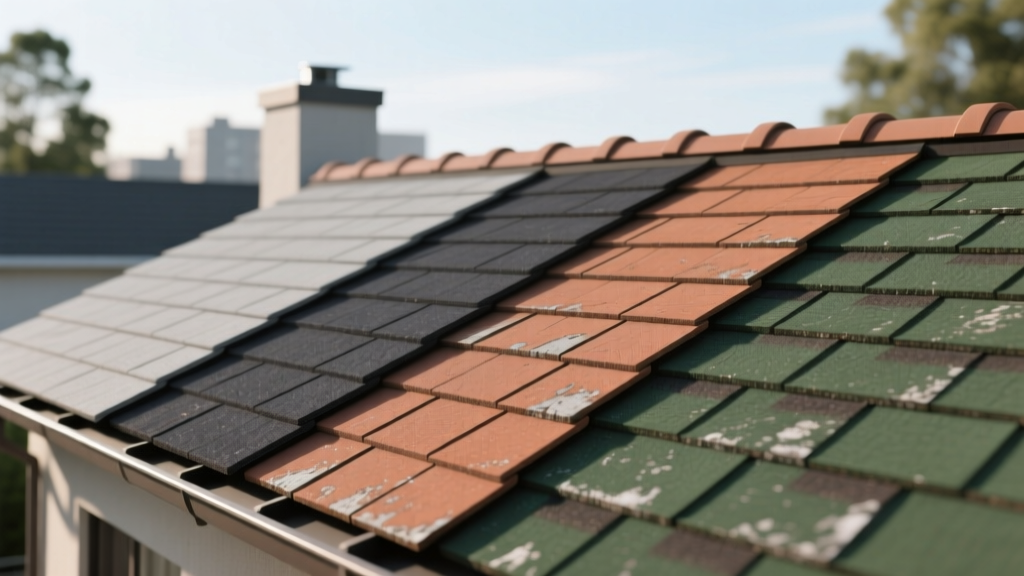
The color of your asphalt roofing is not merely an aesthetic choice; it fundamentally alters the thermal dynamics, biological vulnerability, and degradation rate of the roofing system. When developing a maintenance and cleaning playbook, contractors and homeowners must account for the albedo effect—the measure of how much solar radiation a surface reflects. Dark pigments absorb up to 90% of solar energy, pushing surface temperatures to 160°F on a 90°F day. Light pigments reflect significantly more radiation, keeping surface temperatures closer to 120°F. This 40-degree thermal delta dictates entirely different failure modes, inspection protocols, and chemical cleaning requirements.
Light-Colored Shingles: White, Light Gray, and Pale Tan
Light-colored roof shingles colors, such as Arctic White, Desert Tan, and Shasta White, offer superior energy efficiency by reflecting solar heat. However, their primary maintenance vulnerability is high-contrast biological staining. Because light pigments provide a stark visual background, the presence of Gloeocapsa magma—a cyanobacteria that feeds on the limestone filler in asphalt shingles—becomes immediately visible as dark, unsightly streaks.
The Soft-Wash Cleaning Protocol for Light Shingles
Pressure washing is strictly prohibited by the Asphalt Roofing Manufacturers Association (ARMA), as it strips the protective granules. For light-colored shingles, a low-pressure soft-wash system is mandatory.
- Chemical Mixture: Combine a 12.5% concentration sodium hypochlorite (liquid chlorine) with water at a 1:1 ratio. Add a non-ionic surfactant (such as a dedicated roof-washing soap) at 2 ounces per gallon to increase dwell time and prevent rapid evaporation.
- Application: Use a 12-volt diaphragm pump delivering 4 to 5 gallons per minute (GPM) through a downstream injector. The goal is to drench the shingles without the solution bouncing off.
- Dwell Time: Allow the solution to dwell for 15 to 20 minutes. The black streaks should turn white or light gray as the bacteria is eradicated.
- Rinsing: Lightly rinse with a garden hose. Do not use a high-pressure nozzle.
Dark-Colored Shingles: Charcoal, Black, and Deep Brown
Dark roof shingles colors, including Onyx Black, Charcoal, and Estate Gray, are favored for their ability to hide minor dirt accumulation and blend seamlessly with natural surroundings. However, their maintenance playbook shifts away from cosmetic stain removal and toward structural integrity and hidden moisture management.
Inspection Playbook for Thermal and Moisture Damage
Because dark shingles absorb intense heat, the asphalt binder softens more frequently, making the shingles pliable and vulnerable to physical damage. Furthermore, dark colors mask the early visual indicators of moss and moisture retention.
- Granule Loss Audits: Inspect downspouts and gutter runs bi-annually. Dark shingles shed dark granules, which look like coarse black sand. Accumulation exceeding 1/4 inch in the gutters indicates advanced binder failure.
- Thermal Blistering Checks: During spring inspections, look for small, raised bumps or ruptured blisters on the shingle surface. These occur when trapped moisture in the asphalt vaporizes under high heat, expanding and breaking the surface mat.
- Hidden Moss Eradication: Moss thrives in shaded, damp areas and blends perfectly with dark charcoal and brown shingles. Use a zinc sulfate monohydrate powder application (applying 3 pounds per 600 square feet) in early autumn to desiccate moss without the harsh runoff associated with liquid chlorine.
Mid-Tone and Variegated Shingles: Weathered Wood and Driftwood
Variegated roof shingles colors feature multiple pigment blends designed to mimic the dimensional look of natural wood shakes. The primary maintenance challenge for these shades is uneven UV fading and color-matching during spot repairs. The varying pigment granules degrade at different rates under ultraviolet exposure, leading to a patchy appearance over a 15-year lifespan.
Pro Tip for Spot Repairs: When replacing damaged shingles on a variegated 'Weathered Wood' roof, never use brand-new shingles from a fresh bundle. The color contrast will be jarring. Instead, harvest replacement shingles from hidden areas of the same roof, such as the rear dormers or under the ridge cap, ensuring the UV-faded patina matches the surrounding field.
Color-Specific Maintenance Matrix
| Shingle Color Category | Primary Degradation Threat | Recommended Cleaning Agent | Inspection Frequency |
|---|---|---|---|
| Light (White, Pale Gray) | Gloeocapsa magma (Algae streaks) | Sodium Hypochlorite (Soft Wash) | Annually (Spring) |
| Dark (Black, Charcoal) | Thermal blistering & hidden moss | Zinc Sulfate Powder / Oxygen Bleach | Bi-annually (Spring/Fall) |
| Mid-Tone (Variegated) | Uneven UV fading & wind uplift | Sodium Percarbonate (Oxygen Bleach) | Annually (Fall) |
Step-by-Step: The Universal Soft-Wash and Landscape Protection Protocol
Regardless of the roof shingles colors you are maintaining, chemical runoff is a critical liability. Sodium hypochlorite will rapidly defoliate shrubs, burn grass, and alter soil pH. According to guidelines published by GAF's professional roofing resources, protecting the property perimeter is just as important as the roof application itself.
Phase 1: Perimeter Preparation
- Pre-Wetting: Saturate all landscaping, shrubs, and grass within 20 feet of the roof drip line with plain water. A saturated plant absorbs less chemical runoff than a dry plant.
- Bagging: Cover delicate ornamental plants and foundation shrubs with 3-mil plastic sheeting, securing the bottom with painter's tape to prevent chemical pooling.
- Gutter Diversion: Attach flexible downspout extenders to route chemical-heavy runoff away from flower beds and into municipal storm drains or safe drainage swales.
Phase 2: Application and Neutralization
Apply your chosen cleaning solution from the ridge down to the eaves. Once the dwell time is complete and the biological growth is neutralized, it is time to neutralize the chemical residue on the ground.
- Plant Flush: Remove plastic coverings and immediately flush all landscaping with a high-volume garden hose for a minimum of 5 minutes per zone.
- Soil Neutralizer: If sodium hypochlorite was used, apply a liquid soil neutralizer containing sodium thiosulfate to the affected soil areas. This chemical instantly dechlorinates the soil, preventing root burn and long-term pH imbalances.
Frequently Asked Questions
Do light-colored shingles require more frequent cleaning than dark ones?
Yes, from a purely cosmetic standpoint. Light roof shingles colors show algae, dirt, and pollen accumulation much faster than dark shades. While a dark charcoal roof might hide moderate Gloeocapsa magma growth for three to four years, a white or light gray roof will show visible streaking within 12 to 18 months in humid climates, necessitating more frequent soft-washing to maintain curb appeal.
Can I use oxygen bleach on dark shingles without causing fading?
Sodium percarbonate (oxygen bleach) is highly recommended for dark and mid-tone shingles. Unlike chlorine bleach, oxygen bleach does not strip the ceramic pigments from the granules or degrade the asphalt binder. It is a safer, albeit slightly slower-acting, alternative that is endorsed by the U.S. Department of Energy for maintaining the reflective properties of cool-roof coatings and light-colored assemblies without damaging the substrate.
How do I prevent algae from returning to my light-colored roof?
Cleaning only removes existing bacteria. To prevent recurrence, install 99.9% pure copper or zinc alloy strips (minimum 2.5 inches wide) just below the ridge cap. As rain washes over the metal, it carries trace metallic ions down the roof slope, creating an invisible, toxic barrier for algae. For existing roofs where ridge replacement isn't feasible, apply a liquid zinc-sulfate preventative treatment every 24 months.