Roof Snow Removal: Load Specs & Material Safety Limits
Master roof snow removal with exact load specifications, material friction ratings, and tool specs to prevent structural collapse and surface damage.
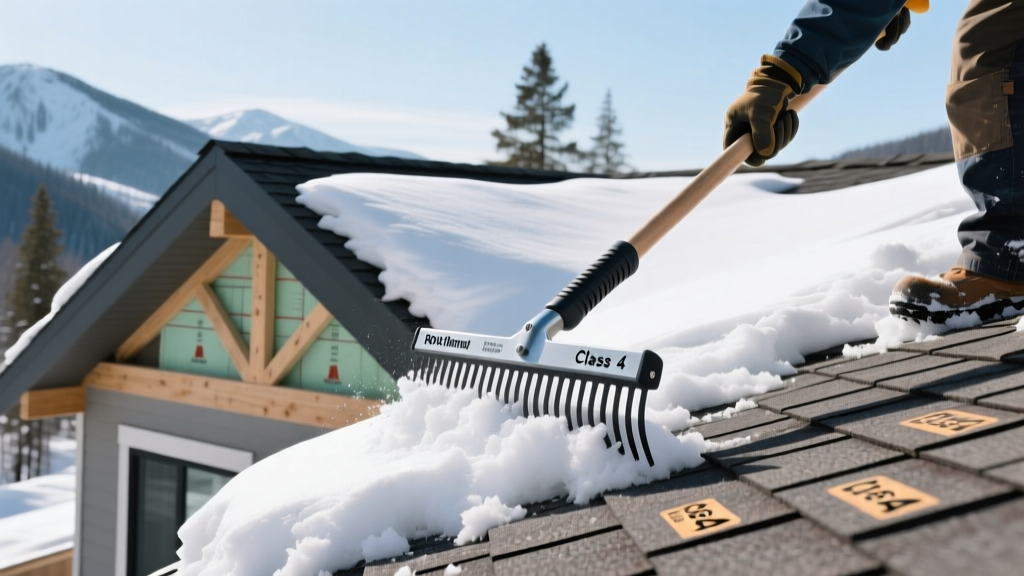
Structural Load Thresholds & Weight Metrics
Roof snow removal is not merely a maintenance task; it is a critical structural intervention. The decision to clear a roof must be driven by precise load calculations rather than visual estimates of snow depth. According to the National Weather Service, snow weight varies drastically based on moisture content and compaction, directly impacting the pounds per square foot (psf) exerted on roof decking and trusses.
Most residential structures in northern climates are engineered to handle 30 to 50 psf of ground snow load, which translates to roughly 20 to 35 psf of flat-roof snow load depending on the thermal factor and exposure category outlined in ASCE 7 standards. When accumulated snow approaches 70% of the design load, manual intervention is required.
| Snow Type | Density (pcf) | Weight per 12" Depth (psf) | Visual Indicators |
|---|---|---|---|
| Fresh, Dry Snow | 5 - 7 lbs | 5 - 7 psf | Powdery, easily blown by wind |
| Settled Snow (1 week+) | 15 - 20 lbs | 15 - 20 psf | Compacted, holds shovel shape |
| Wet, Packed Snow | 30 - 40 lbs | 30 - 40 psf | Heavy, slushy, dark gray base |
| Solid Ice | 57 lbs | 57 psf | Translucent, fused to membrane |
Ice dams at the eaves do not just cause interior water intrusion; they act as a structural retaining wall. A 2-foot high ice dam at the eave can trap thousands of pounds of wet snow upslope, creating localized point loads that exceed truss shear capacities. The Insurance Institute for Business & Home Safety (IBHS) recommends addressing eave ice buildup before attempting to clear the upper roof plane.
Material-Specific Friction & Shedding Profiles
The necessity and methodology of roof snow removal depend heavily on the roofing material's coefficient of friction (COF). Materials with a low COF shed snow naturally but pose severe avalanche hazards to pedestrians and lower roof tiers. High COF materials retain snow, increasing the risk of structural overload and ice damming.
| Roofing Material | Relative COF | Shedding Behavior | Removal Tool Requirement |
|---|---|---|---|
| Standing Seam Metal | Very Low | Sudden avalanche above 2:12 pitch | Snow guards required; rake only eaves |
| Asphalt Shingles (Arch.) | High | Retains snow; prone to ice dams | Polycarbonate rake with soft bumper |
| Slate / Concrete Tile | Medium-High | Retains snow; high dead load already | Non-abrasive rake; no impact tools |
| EPDM / TPO (Flat) | Medium | Ponding risk; relies on drains | Plastic shovels; no metal edges |
Tool Specifications: Engineering the Roof Rake
Using improper tools is the leading cause of self-inflicted roof damage during winter maintenance. Standard hardware store shovels with steel blades will strip mineral granules from asphalt shingles, gouge metal panels, and puncture single-ply membranes. Professional roof snow removal requires purpose-built roof rakes engineered with specific material tolerances.
Blade and Bumper Material Science
- Polycarbonate Blades: For asphalt shingles and wood shakes, polycarbonate is mandatory. It offers high impact resistance at sub-zero temperatures (withstanding -40°F without shattering) and will not scrape away the protective ceramic granules.
- Anodized Aluminum Blades: Acceptable only for standing seam metal roofs, provided the blade is perfectly parallel to the panel ribs. Aluminum is lightweight, reducing user fatigue during overhead extension.
- Polyurethane Bumpers: The most critical component of a roof rake is the bumper. Look for a bumper with a Shore A hardness of 80A to 90A. This specific durometer is soft enough to prevent gouging but rigid enough to push heavy, wet snow. The bumper physically limits the blade depth, enforcing the mandatory "2-inch clearance rule" to protect the roof surface.
Pole Deflection and Ergonomics
When extending a roof rake to 20 feet or more, pole deflection (bending under load) becomes a major mechanical issue. Wet snow can weigh up to 20 lbs per cubic foot; pushing a 2-foot wide blade of wet snow creates immense torque.
- Aluminum Poles: Lightweight but prone to permanent bending (plastic deformation) when pushing heavy, wet snow at lengths exceeding 16 feet.
- Fiberglass Poles: Heavier, but possess a significantly higher modulus of elasticity. Fiberglass poles will flex under heavy loads and return to their original shape without permanent deformation, making them the professional standard for deep snow removal.
Never attempt to scrape a roof down to the bare shingle or metal surface. Always leave a minimum 2-inch layer of snow on the roof. This residual layer acts as a sacrificial slip plane, allowing the rake to glide over the snow rather than catching on shingle edges, metal seams, or membrane laps.
Chemical De-Icers: Eutectic Temperatures & Material Degradation
Chemical snow melters are frequently used to clear gutters, valleys, and eaves. However, applying the wrong chemical compound can accelerate the corrosion of metal roofs, degrade single-ply membranes, and void manufacturer warranties. Selection must be based on the chemical's eutectic temperature (the lowest temperature at which it can melt ice) and its compatibility with the specific roofing substrate.
| Chemical Compound | Eutectic Temp | Asphalt Shingles | Metal Roofing | EPDM/TPO |
|---|---|---|---|---|
| Calcium Chloride | -25°F (-32°C) | Safe (may cause staining) | Corrosive to uncoated steel | Safe (rinse required) |
| Magnesium Chloride | -15°F (-26°C) | Safe | Generally Safe | Safe |
| Sodium Chloride (Rock Salt) | 15°F (-9°C) | Damaging (granule loss) | Highly Corrosive | Damaging (dries out rubber) |
| Calcium Magnesium Acetate (CMA) | 20°F (-6°C) | Safe | Safe (Non-corrosive) | Safe |
For standing seam metal roofs and stone-coated steel, Calcium Magnesium Acetate (CMA) or Magnesium Chloride are the only acceptable chemical interventions. Sodium chloride (rock salt) initiates galvanic corrosion on metal panels and fasteners, while its high alkalinity can break down the plasticizers in EPDM rubber membranes over time.
Low-Slope and Flat Roof Membrane Protocols
Flat roofs (defined as having a pitch less than 2:12) present unique snow removal challenges. Unlike pitched roofs, flat roofs do not shed snow, meaning they must bear the full dead load of the entire winter's accumulation. Furthermore, the waterproofing membranes (EPDM, TPO, PVC, or Modified Bitumen) are highly susceptible to puncture.
Flat Roof Removal Specifications
- Tool Restriction: Metal shovels, ice choppers, and pickaxes are strictly prohibited on flat roofs. Use only heavy-duty, flat-bottomed plastic push shovels with rounded corners.
- Drainage Priority: Before clearing the main roof field, clear a 3-foot radius around all roof drains, scuppers, and gutters. If the drainage pathways are blocked by ice, clearing the rest of the roof will only result in melted snow ponding and refreezing.
- Snow Melt Mats: For commercial flat roofs prone to ice damming at parapet walls, install UL-listed, self-regulating heat tracing cables or snow melt mats specifically rated for single-ply membranes. These systems draw 5 to 10 watts per linear foot and prevent ice blockages without risking membrane melt-through.
Frequently Asked Technical Questions
At what exact depth should I initiate roof snow removal?
Depth is an unreliable metric; weight is the controlling factor. However, as a general field rule, initiate removal when dry snow exceeds 30 inches in depth, or when wet, heavy snow exceeds 12 inches. If your roof is older or was built prior to modern ASCE 7 load codes, reduce these thresholds by 30%.
Can I use a snowblower on a flat commercial roof?
Snowblowers can be used on large, flat commercial roofs (like TPO or EPDM) provided they are equipped with non-marking rubber tracks or skid shoes raised at least 1 inch above the membrane surface. The auger must be set high enough to leave a 2-inch snow base to prevent the scraper bar from tearing the membrane seams.
Does removing snow from the lower roof cause upper roof avalanches?
Yes. Clearing the lower tier of a multi-level roof removes the structural support for the snowpack on the upper tier. This can trigger a sudden, massive slide from the upper roof, which can crush the lower roof structure or injure workers. Always clear the upper roof first, or install engineered snow retention systems (snow guards) on the upper tier before clearing the lower tier.