Comprehensive Roofing Materials List: Repair & Maintenance Guide
Master roof upkeep with our detailed roofing materials list. Discover specific repair products, failure modes, and maintenance intervals for every system.

Why Material-Specific Maintenance Extends Roof Lifespan
Maintaining a roof requires understanding the specific chemical and physical properties of the installed system. Using a solvent-based asphalt cement on an EPDM membrane will dissolve the rubber, and walking on clay tiles without specialized foam pads causes micro-fractures that lead to catastrophic winter leaks. This comprehensive roofing materials list breaks down the exact failure modes, compatible repair products, and maintenance intervals for the four most common residential and commercial roofing systems, providing actionable frameworks for facility managers and homeowners.
The Core Roofing Materials List: Failure Modes & Fixes
Asphalt Composition Shingles (3-Tab and Architectural)
Asphalt shingles account for nearly 75% of the North American residential market. While architectural shingles (like GAF Timberline HDZ or Owens Corning Duration) offer superior wind resistance up to 130 mph compared to 60 mph for 3-tab variants, both share identical chemical vulnerabilities.
- Thermal Cracking and Blistering: Caused by trapped moisture in the fiberglass mat expanding under UV heat. Do not pop blisters. Instead, monitor them until the granule cap wears away, exposing the asphalt.
- Nail Pops: Driven by attic humidity cycling causing wood decking to expand and contract, pushing roofing nails upward. The Fix: Lift the overlapping shingle tab, pull the popped nail, drive a new ring-shank roofing nail 1 inch away, and seal the old hole with a dab of Henry 208R Rubberized Wet Patch. Embed matching granules from the gutters into the wet cement to camouflage the repair.
- Algae Streaking: Gloeocapsa magma bacteria feed on limestone filler in the asphalt. Avoid pressure washing, which strips protective granules. Apply a 50/50 mix of sodium hypochlorite (pool shock) and water, letting it dwell for 20 minutes before a low-pressure rinse.
Standing Seam and Corrugated Metal Roofing
Metal roofs (typically 24-gauge or 26-gauge Galvalume steel) are prized for 50-year lifespans, but their fasteners and flashings rarely last that long without intervention.
- Fastener Back-Out and Washer Degradation: On exposed-fastener corrugated panels, the neoprene washers dry-rot and crack after 12-15 years of UV exposure. The Fix: Do not simply caulk over them. Remove the failed screw and replace it with an oversized #12 or #14 metal roofing screw featuring a fresh EPDM washer. If the hole is stripped, inject Geocel 2300 Pro Flex sealant before driving the new screw.
- Galvanic Corrosion: Occurs when dissimilar metals touch in the presence of an electrolyte (rain). Using copper valley flashing against bare steel panels will cause the steel to rust through in under 5 years. Always use a peel-and-stick ice and water shield barrier between dissimilar metals, or specify aluminum/zinc-coated flashings.
- Oil Canning: Aesthetic rippling caused by thermal expansion. While not a leak risk, it can be mitigated during installation by using striated panels or adding stiffening ribs.
EPDM and TPO Flat Roof Membranes
Low-slope commercial and modern residential roofs rely on single-ply membranes. According to the National Roofing Contractors Association (NRCA), improper seam splicing is the leading cause of premature failure in these systems.
- EPDM (Ethylene Propylene Diene Monomer): Black EPDM absorbs heat and shrinks over time, pulling away from parapet walls and pipe penetrations. The Fix: For emergency seam repairs, clean the area with EPDM primer and apply a 4-inch wide strip of EternaBond RoofSeal tape, ensuring a 2-inch overlap past the compromise. Press firmly with a silicone seam roller to activate the micro-sealant.
- TPO (Thermoplastic Polyolefin): White TPO reflects UV rays but suffers from heat-welded seam failures if installed in high humidity or cold weather. The Fix: TPO cannot be glued with standard contact adhesives. Failed seams must be cleaned with TPO splice wash and re-welded using a hot-air welder at 800°F to 1000°F, or patched using Carlisle SynTec TPO splice tape.
Clay and Concrete Tile Systems
Tile roofs are essentially cosmetic weather shields; the true waterproofing layer is the 90lb asphalt felt or synthetic underlayment beneath them. According to the Department of Energy (DOE), clay tiles also offer exceptional thermal mass for cooling loads.
- Concrete Spalling: Concrete tiles are porous. In freeze-thaw climates, absorbed water freezes and expands, causing the face of the tile to delaminate. Seal concrete tiles with a silane-siloxane penetrating sealer every 10 years to prevent water ingress.
- Cracked Pans and Shims: Foot traffic on clay tiles easily cracks the bottom pan. The Fix: Never use roofing tar to glue broken clay. Lift the surrounding tiles, remove the broken piece, and set the replacement tile using a polyurethane adhesive like SikaTile Roof Fix, which remains flexible under thermal movement.
Maintenance Interval Matrix by Material
Routine inspections prevent minor wear from escalating into structural decking rot. Use this matrix to schedule proactive maintenance.
| Roofing Material | Inspection Frequency | Primary Vulnerability | Average Repair Cost (2026) |
|---|---|---|---|
| Asphalt Shingles | Bi-Annual (Spring/Fall) | Flashing sealant failure, nail pops | $250 - $450 per visit |
| Standing Seam Metal | Every 3 Years | Sealant degradation at penetrations | $400 - $600 per visit |
| Exposed Fastener Metal | Every 5 Years | Neoprene washer dry-rot | $800 - $1,200 (screw replacement) |
| EPDM / TPO Membrane | Annual (Post-Winter) | Seam separation, ponding water | $500 - $900 per seam repair |
| Clay / Concrete Tile | Every 5 Years | Underlayment degradation, broken pans | $1,200 - $2,500 (lift & relay) |
⚠️ Critical Warning: Incompatible Repair Products
Never use solvent-based asphalt cements (like standard Henry Wet Patch or Black Jack) on EPDM, TPO, or PVC membranes. The petroleum distillates will chemically break down the synthetic rubber, turning a minor pinhole leak into a massive, irreparable membrane failure within weeks. Always use manufacturer-approved, water-based or silicone-compatible sealants for single-ply systems.
Sourcing and Matching Discontinued Materials
When repairing localized storm damage on an older roof, matching discontinued shingle profiles or colors is a common hurdle. The Asphalt Roofing Manufacturers Association (ARMA) notes that UV fading makes exact color matching impossible on roofs older than five years.
The Blending Framework:
- Harvest from Secondary Structures: Remove intact shingles from low-visibility areas like shed roofs, garage eaves, or the back side of dormers to patch the primary front-facing roof planes.
- The Pitch Transition Trick: If a matching color cannot be sourced, use a contrasting color intentionally at a natural architectural break, such as a lower porch roof or a distinct gable end, making it look like a deliberate design choice rather than a patch job.
- Custom Granule Sourcing: For high-end architectural restorations, specialty roofing suppliers sell bulk ceramic-coated granules. You can broadcast these over wet asphalt cement to mimic the exact color blend of vintage CertainTeed or Atlas shingles.
When to Transition from Repair to Full Replacement
Knowing when to stop patching and schedule a full tear-off saves money in the long run. Apply this decision matrix during your next inspection:
- The 25% Rule: If more than 25% of the roof surface requires localized patching or if multiple active leaks are traced to widespread underlayment failure, spot repairs are no longer cost-effective.
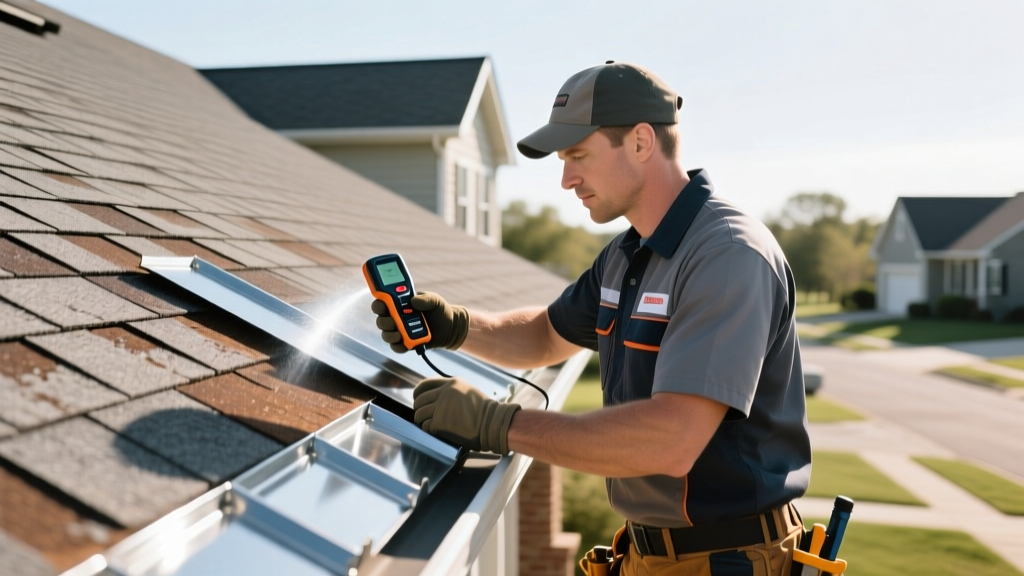
- Decking Deflection: If a moisture meter reads above 19% moisture content in the OSB or plywood decking across multiple truss bays, the structural integrity is compromised. A new roof system cannot be installed over rotted substrate.
- Membrane Shrinkage (Flat Roofs): If an EPDM membrane has shrunk more than 2 inches from the parapet coping or edge metal, the internal tension will cause new seams to tear immediately. Full replacement is the only viable option.
💡 Pro Tip: Documenting for Insurance Claims
When repairing wind or hail damage, always photograph the chalk line markings on the underside of asphalt shingles and the manufacturing date codes on metal panels before disposal. Insurance adjusters require these specific data points to prove the materials were installed to code and to accurately calculate depreciation for Actual Cash Value (ACV) payouts.
Written by
Priya KapoorPriya Kapoor is a real estate market analyst and construction economics researcher with expertise in housing affordability, development feasibility, and infrastructure investment. She holds a Master of Regional Planning from Cornell University and previously worked as a senior analyst at CBRE's Investment Properties group, where she modeled returns for $4B in mixed-use development pipelines. Priya now runs an independent research practice advising developers, municipalities, and REITs on construction cost forecasting and market timing. She publishes the quarterly "BuildMat Market Pulse" report tracking material price indices across 12 commodity categories. Based in Austin, TX, Priya serves on the board of Habitat for Humanity Austin and is a marathon runner.
More from Priya Kapoor
View all
Construction Cost
Cost to Build a 1600 Sq Ft Home in 2026: Full Breakdown
Accurate 2026 cost to build a 1600 sq ft home—material, labor, and regional pricing breakdowns included. Plan your budget with real-time estimates.
Aug 11, 2026

Wood & Lumber
Name the Types of Wood for Pressure Treatment and Preservation
Learn how to name the types of wood best suited for pressure treatment. Compare species treatability, chemical retention levels, and 2026 preservation costs.
Aug 4, 2026

Stone & Masonry
Stone Veneer Suppliers Lindenhurst: 2026 Cost Analysis
Analyze 2026 stone veneer costs in Lindenhurst, NY. Compare local supplier pricing, delivery fees, and Suffolk County installation labor rates.
Aug 4, 2026