2026 Barnstable Roof Materials Cost Breakdown Guide
Detailed 2026 cost breakdown for roof materials in Barnstable, MA. Compare cedar, metal, and asphalt pricing, plus Cape Cod historic district rules.

The Barnstable Premium: Why Local Roofing Costs Diverge
Calculating the true cost of roof materials in Barnstable requires more than multiplying national averages by your roof's square footage. Barnstable and its seven villages (including Osterville, Cotuit, and Centerville) sit in a unique microclimate characterized by aggressive salt spray, 110+ mph nor'easter wind loads, and stringent local historic preservation codes. In 2026, homeowners replacing a roof here face a 'Cape Cod Premium' that adds 18% to 32% to baseline material and labor costs compared to inland Massachusetts.
This premium is driven by three factors: mandatory marine-grade fasteners to prevent salt corrosion, enhanced wind-mitigation framing required by local building inspectors, and the logistical costs of transporting heavy debris to off-Cape landfills. Below is a comprehensive, localized cost breakdown to help you budget accurately for your project.
2026 Roof Materials Barnstable Cost Matrix
The following matrix breaks down the installed cost per square foot for the most common roofing systems used in Barnstable County. Costs include materials, local labor, tear-off, and standard disposal.
| Material System | Installed Cost (Per Sq. Ft.) | HDC Approval | Max Wind Rating | Lifespan (Coastal) |
|---|---|---|---|---|
| Architectural Asphalt (GAF Timberline HDZ) | $7.50 - $10.50 | Restricted | 130 mph | 15 - 20 Years |
| Western Red Cedar Shakes (Maibec) | $18.00 - $26.00 | Highly Preferred | 110 mph | 20 - 25 Years |
| Standing Seam Metal (Petersen PAC-CLAD) | $21.00 - $29.00 | Conditional | 140+ mph | 40 - 50 Years |
| Synthetic Slate (DaVinci Roofscapes) | $24.00 - $32.00 | Approved | 110 mph | 50+ Years |
While architectural asphalt is the cheapest option, many Historic District Commissions (HDCs) in Barnstable villages will deny permits for asphalt on homes built before 1920 or those visible from historic scenic routes. Always verify your property's HDC status before signing an asphalt contract.
Labor, Tear-Off, and Disposal Breakdown
Labor rates in Barnstable County average 25% higher than the national median. In 2026, expect to pay between $4.50 and $7.50 per square foot for labor alone. This premium compensates for the high cost of local contractor insurance, specialized wind-mitigation training, and the extended time required for coastal compliance inspections.
Debris Removal and Landfill Fees
Tearing off an existing roof generates roughly 3 to 4 tons of debris per 1,000 square feet. Because Barnstable lacks large-scale commercial roofing landfills, contractors must transport debris to facilities in Bourne or off-Cape. Expect line-item disposal fees ranging from $850 to $1,400 per project, heavily dependent on whether you are tearing off a single layer of asphalt or multiple layers of heavy cedar and slate.
Navigating the Historic District Commission (HDC)
If your home is located in the Barnstable Village, Centerville, or Cotuit historic districts, the HDC dictates your material choices. The Cape Cod Commission Resource Library outlines regional preservation goals that heavily favor natural or historically accurate materials.
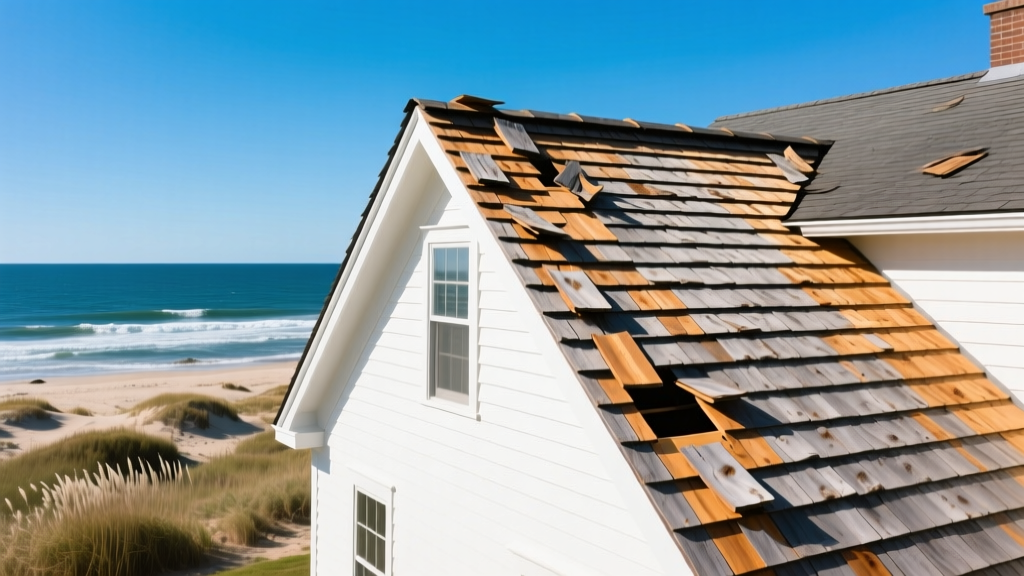
- Cedar Shakes: The gold standard for Cape Cod historic homes. You must specify 'Certigrade' or 'Number 1 Blue Label' cedar. Pressure-treated cedar is often required to resist local mold and moisture, adding $2.00 per sq. ft. to material costs.
- Synthetic Slate/Shake: Brands like DaVinci or Inspire are increasingly accepted by local HDCs because they mimic the shadow lines of natural materials while offering superior wind resistance.
- Metal Roofing: Generally restricted on historic facades but may be approved for rear additions or non-visible slopes if painted in a matte, historically appropriate color (e.g., charcoal or weathered copper).
Mandatory Coastal Upgrades (The Hidden Line Items)
A standard roofing quote will often omit the upgrades required to make a roof survive a Barnstable nor'easter. Ensure your contractor includes the following specific line items:
1. Marine-Grade Fasteners
Standard electro-galvanized roofing nails will corrode and fail within 3 to 5 years in Barnstable's salt-spray zone. You must specify hot-dipped galvanized nails meeting ASTM A153 standards, or Type 304/316 stainless steel fasteners. This upgrade adds approximately $0.40 to $0.65 per square foot but prevents catastrophic shingle blow-offs.
2. Enhanced Ice & Water Shield
While Massachusetts building code requires ice and water shield in the valleys and along the eaves, Barnstable's freeze-thaw cycles and driving winter rains warrant a full-deck application. Upgrading to a high-temperature membrane like Grace Ice & Water Shield HT across the entire roof deck adds $1.75 to $2.25 per square foot, effectively turning your roof into a secondary waterproofing barrier if wind strips the outer material.
3. Wind Mitigation and FORTIFIED Standards
To secure favorable rates from coastal property insurers, many Barnstable homeowners build to the IBHS FORTIFIED Roof standard. This requires a 6-nail pattern per shingle (instead of the standard 4), sealed roof decking, and specialized metal hurricane clips for truss-to-wall connections. Budget an additional $1,200 to $2,500 for FORTIFIED compliance labor and hardware.
The upfront cost of FORTIFIED wind mitigation and full-deck ice shield is frequently recouped within 3 to 4 years through reduced windstorm deductibles and premium discounts from Massachusetts coastal insurers.
Material Degradation in Salt-Spray Zones
When evaluating long-term ROI, consider how Barnstable's environment attacks specific materials. According to data referenced in NRCA Technical Resources regarding coastal applications, salt aerosol accelerates the degradation of unprotected metals and organic materials.
- Unpainted Galvalume Metal: Will develop surface pitting and red rust within 8-10 years within 1,500 feet of the coastline. Always specify a Kynar 500 (PVDF) painted finish for standing seam metal in Barnstable.
- Asphalt Shingles: The ceramic granules protect the asphalt from UV, but high coastal winds cause 'granule scour,' stripping the protective layer prematurely. Impact-resistant (Class 4) shingles hold granules better under abrasive wind conditions.
- Cedar: Without proper airflow and a cedar-specific fungicide treatment, the shaded north-facing slopes of Barnstable homes will develop moss and wood rot, compromising the structural integrity of the shakes.
Actionable Bidding Strategy for Barnstable Homeowners
When soliciting quotes from local contractors, do not accept a generic estimate. Require that your contract explicitly states the following parameters to protect your investment:
- Fastener Specification: Must explicitly state 'Hot-Dipped Galvanized (ASTM A153)' or 'Stainless Steel'.
- Nail Pattern: Must specify a 6-nail minimum pattern for all field shingles, with 8 nails on all perimeter and ridge shingles.
- Underlayment Brand: Specify a synthetic underlayment (e.g., Owens Corning Titanium UDL30) rather than traditional felt paper, which degrades rapidly in Cape Cod's high-humidity attic environments.
- Permitting Responsibility: The contractor must pull the local building permit and, if applicable, the HDC Certificate of Appropriateness. Avoid contractors who suggest bypassing the HDC, as this can result in municipal fines and forced tear-offs.
By understanding the specific environmental and regulatory demands of Barnstable, you can accurately forecast your roofing budget and select a material system that will withstand the Cape's demanding coastal climate for decades.
Written by
Marcus ChenMarcus Chen is a licensed structural engineer (PE) and building materials analyst with over 12 years of experience across residential, commercial, and industrial construction. He holds a Master of Science in Civil Engineering from UC Berkeley and spent six years at Thornton Tomasetti before transitioning to independent consulting and technical writing. Marcus specializes in material selection for seismic-prone regions, concrete reinforcement strategies, and lifecycle cost analysis. His work has been cited by the American Concrete Institute (ACI) and the Structural Engineers Association of California (SEAOC). When he is not on a job site or at his desk, you will find him hiking the Sierra Nevada or restoring a 1920s craftsman bungalow in Oakland, CA.
More from Marcus Chen
View all
Construction Cost
How Much Did the Eiffel Tower Cost to Build?
How much did the Eiffel Tower cost to build in 1889? We adjust for inflation and compare its budget to modern skyscraper construction.
Aug 4, 2026

Fire Resistance
What Is a Fire Resistant Material? Testing & Certification Guide
Discover what is a fire resistant material through ASTM and UL testing. Learn how fire ratings, certifications, and assemblies work in construction.
Aug 4, 2026

Construction Cost
How Much Did the Burj Khalifa Cost to Build?
How much did the Burj Khalifa cost to build? We break down the $1.5B project and extract 5 money-saving strategies for your next build.
Jul 30, 2026