Cost Breakdown: Commercial Roofing Materials in 2026
Analyze 2026 commercial roofing materials costs, from TPO and PVC membranes to standing seam metal, including installation and insulation variables.
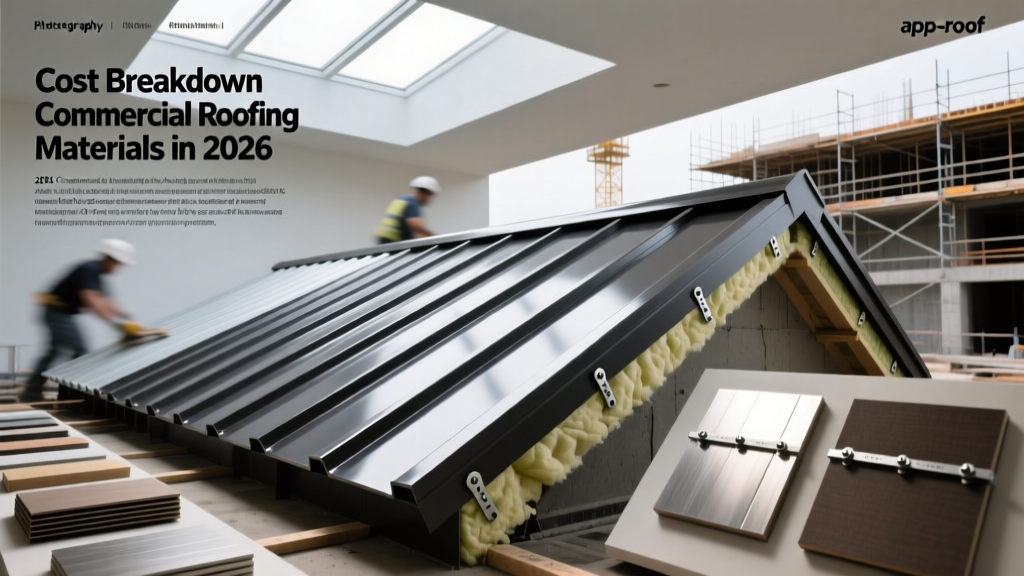
The Financial Architecture of Commercial Roofing
Procuring a commercial roof is an exercise in lifecycle asset management, not just waterproofing. In 2026, the pricing landscape for commercial roofing materials has stabilized from the extreme supply chain volatility of the early 2020s, but specialized labor shortages and stringent energy code mandates have shifted the cost burden. Facility managers and general contractors must now account for continuous insulation requirements, advanced wind uplift engineering, and cool-roof compliance when calculating true installed costs.
Unlike residential asphalt shingles priced by the "square" (100 sq. ft.), commercial low-slope and steep-slope systems are evaluated by the square foot, factoring in membrane thickness, attachment methodology, and substrate preparation. Below is a comprehensive cost breakdown of the primary commercial roofing systems deployed in North America today.
Core Cost Matrix: Material vs. Installed Pricing
The following matrix outlines the baseline costs for major commercial systems. Installed costs assume a standard new construction or full tear-off scenario on a flat or low-slope (under 3:12 pitch) commercial deck, excluding structural decking repairs.
| Material System | Specification / Thickness | Material Cost (per sq. ft.) | Installed Cost (per sq. ft.) | Expected Lifecycle |
|---|---|---|---|---|
| TPO (Fully Adhered) | 60-mil, ASTM D6878 | $1.80 - $2.40 | $5.50 - $7.50 | 20-25 Years |
| PVC (Mechanically Attached) | 50-mil, ASTM D4434 | $2.50 - $3.20 | $7.00 - $9.50 | 25-30 Years |
| EPDM (Ballasted) | 60-mil, ASTM D4637 | $1.50 - $2.00 | $5.00 - $6.50 | 25-30 Years |
| Modified Bitumen (SBS) | 2-Ply Torch-Applied | $2.20 - $2.80 | $6.50 - $8.50 | 20-25 Years |
| Standing Seam Metal | 24-Gauge Galvalume, PVDF | $4.50 - $6.00 | $12.00 - $16.00 | 40-50 Years |
Single-Ply Membranes: TPO, PVC, and EPDM
Single-ply membranes dominate the low-slope commercial market due to their installation speed and reflective properties. According to the Whole Building Design Guide (WBDG), the selection between these polymers hinges on chemical exposure, seam integrity requirements, and budget.
Thermoplastic Polyolefin (TPO)
TPO is the market leader for general commercial applications (warehouses, big-box retail). A 60-mil membrane is the industry minimum for securing a 20-year No Dollar Limit (NDL) manufacturer warranty.
- Top Tier Brands: Carlisle Sure-Weld, GAF EverGuard, Firestone UltraPly.
- Attachment Cost Variance: Mechanically attached TPO is the cheapest ($5.00/sq. ft.) but vulnerable to wind billowing. Fully adhered systems (using water-based or low-VOC polyurethane adhesives) add $1.00–$1.50/sq. ft. in labor and glue but provide superior wind uplift ratings (FM 1-135 or higher).
- Gotcha: TPO seams are hot-air welded at 1,000°F+. In 2026, automated robotic welders are standard for field seams, but manual welding at penetrations requires highly skilled labor, which commands a 15% premium in tight labor markets.
Polyvinyl Chloride (PVC)
PVC is the mandatory choice for facilities exhausting grease, oils, or hydrocarbons (e.g., commercial kitchens, manufacturing plants), as TPO degrades when exposed to animal fats and petroleum distillates.
- Top Tier Brands: Sarnafil (Sika), FiberTite (Seaman Corp), Johns Manville PVC.
- Cost Premium: PVC resin is inherently more expensive, and formulations include plasticizers and UV stabilizers. Expect to pay a 20-30% premium over TPO.
- Lifespan Factor: High-quality PVC systems (like Sarnafil G 410) routinely exceed 30 years in the field, justifying the upfront capital expenditure for long-term hold investors.
Ethylene Propylene Diene Monomer (EPDM)
Often referred to as "rubber roofing," EPDM is a thermoset membrane. While black EPDM is still used, white EPDM is increasingly specified to meet the Department of Energy's Cool Roof standards, which mandate high solar reflectance to reduce urban heat islands and HVAC cooling loads.
- Ballasted Systems: The most cost-effective installation method. The membrane is laid loose and held down by river-washed stone or pavers. This requires the structural deck to support an additional 10-15 lbs per square foot of dead load.
- Seam Vulnerability: Unlike TPO/PVC which are heat-welded into a monolithic surface, EPDM seams are joined with liquid adhesives and primer tape. Over 20 years, UV degradation at the seams is the primary failure mode, requiring periodic maintenance.
When budgeting for commercial roofing materials, the membrane is only half the equation. Under widely adopted IECC 2024 and 2026 energy codes, commercial roofs in Climate Zones 4 through 8 require minimum R-30 to R-38 continuous insulation above the deck. Polyisocyanurate (Polyiso) yields roughly R-5.6 per inch. Achieving R-38 requires nearly 6.8 inches of Polyiso, often installed in staggered, multi-layer lifts (e.g., 2" + 2" + 2.8"). Budget Impact: Expect to add $4.50 to $7.00 per square foot to your total project cost strictly for code-compliant insulation and fasteners.
Modified Bitumen: The Heavy-Duty Alternative
For roofs with heavy foot traffic (plazas, terraces, or密集 HVAC maintenance zones), asphalt-based Modified Bitumen (Mod-Bit) remains a staple. It combines the redundancy of a built-up roof (BUR) with the elasticity of polymer modifiers.
SBS vs. APP Modifiers
- SBS (Styrene-Butadiene-Styrene): Adds rubber-like elasticity, allowing the membrane to stretch and recover during extreme thermal cycling. Typically torch-applied or installed with cold-process adhesives.
- APP (Atactic Polypropylene): Adds plastic-like rigidity and high-temperature resistance. Exclusively torch-applied.
2026 Labor Shift: Due to stringent urban air quality regulations and fire risks, open-flame torching is heavily restricted or banned in many major municipalities. Consequently, cold-applied SBS systems (using low-VOC asphaltic adhesives) have become the standard. While the material cost for cold-process adhesives is higher, it eliminates the need for fire watches and hot-work permits, balancing the overall labor cost to approximately $7.50/sq. ft.
Commercial Metal Roofing: Standing Seam Systems
For steep-slope commercial applications (pitch > 3:12) or architectural facades, standing seam metal is the premier choice. It is critical to distinguish between commercial structural standing seam and residential exposed-fastener panels.
"A commercial standing seam roof must utilize a concealed, sliding clip system that allows the metal panels to expand and contract independently of the structural deck. Pinning the panel with an exposed fastener guarantees oil-canning and eventual tear-out at the fastener holes." — Industry Standard Detail for Thermal Movement
- Material Specs: 24-gauge Galvalume steel (minimum) with a 70% PVDF (Kynar 500/Hylar 5000) fluoropolymer paint system to prevent chalking and UV fading.
- Panel Profiles: A 2-inch or 3-inch tall mechanical-lock seam is required for low-slope applications (down to 1/4:12 pitch) to prevent capillary water draw.
- Cost Drivers: The high installed cost ($12.00 - $16.00/sq. ft.) is driven by the fabrication of custom flashings, the precision required to roll-form seams on-site, and the installation of specialized snow guards or solar attachment clamps that do not penetrate the membrane.
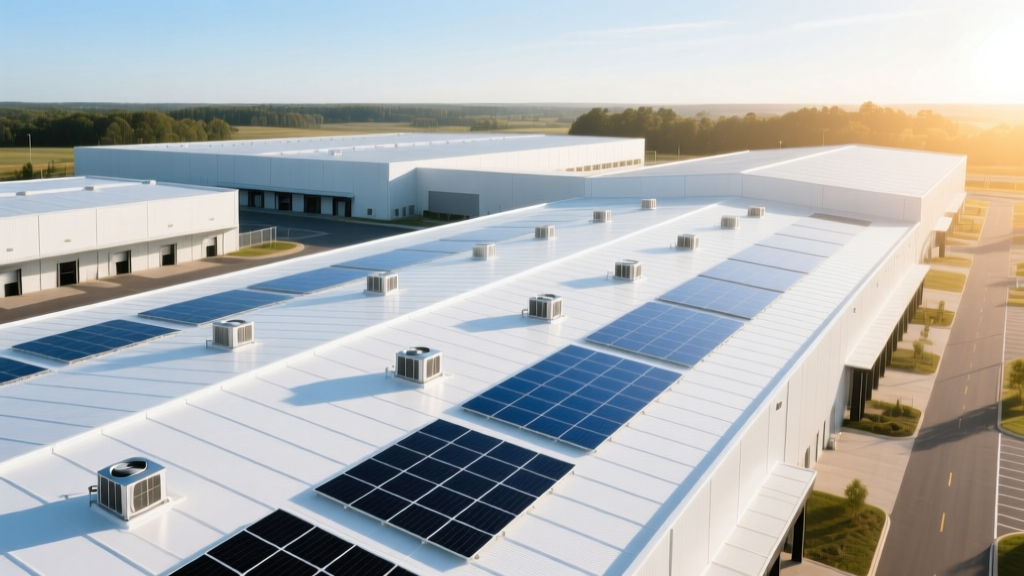
Lifecycle Cost Analysis (LCCA): The 30-Year Reality
Facility managers evaluating commercial roofing materials must look beyond Day 1 capital expenditure. A proper LCCA factors in tear-off disposal, energy savings, and maintenance.
30-Year Lifecycle Cost Comparison (per 10,000 sq. ft. roof)
60-mil TPO (Fully Adhered):
Initial Install: $65,000 | Year 15 Overlay/Replacement: $75,000 | Maintenance: $15,000
30-Year Total: ~$155,000
24-Gauge Standing Seam Metal:
Initial Install: $140,000 | Year 15 Fastener/Clip Check: $5,000 | Maintenance: $5,000
30-Year Total: ~$150,000
Takeaway: While metal costs 100% more upfront, its 40+ year lifespan and lack of required mid-cycle replacement often make it cheaper over a 30-year hold period, especially when factoring in the avoided landfill tipping fees for tearing off single-ply membranes.
Tear-Off vs. Overlay: The Substrate Decision
The single largest variable in a commercial roofing budget is the existing substrate. If the current roof is a single layer of single-ply or mod-bit with dry, structurally sound insulation, an overlay (recover) can save $1.50 to $2.50 per square foot in tear-off and disposal costs.
However, an overlay is only viable if:
- The structural deck can support the additional dead load of a new insulation layer and membrane.
- There is only one existing roof system (building codes generally prohibit a third layer).
- Moisture scans (infrared or nuclear) confirm the existing insulation is completely dry. Trapping moisture beneath a new TPO membrane will lead to blistering, adhesive failure, and voided manufacturer warranties.
Summary: Procuring the Right System
Selecting the optimal commercial roofing material requires aligning the building's operational profile with the material's chemical and physical properties. TPO remains the budget-conscious standard for general warehousing; PVC is non-negotiable for restaurants and chemical facilities; EPDM serves well in ballasted, high-wind applications; and standing seam metal is the ultimate long-term asset for steep-slope commercial architecture. Always demand an FM Global or UL wind-uplift rating specific to your building's geographic zone and ensure your insulation strategy meets the latest continuous R-value codes.
Written by
James ThorntonJames Thornton is a construction industry veteran with 25 years of hands-on experience in wood framing, lumber grading, and residential building codes. He started as a framing carpenter in rural Oregon, earned his ICC Residential Building Inspector certification, and eventually became a senior plan reviewer for the City of Portland Bureau of Development Services. James holds a B.S. in Wood Science & Technology from Oregon State University and is a certified lumber grader through the West Coast Lumber Inspection Bureau (WCLIB). He has inspected over 3,000 residential construction sites and authored the city's internal guide on advanced framing techniques (2x6 at 24" O.C.). James lives in Bend, OR, where he builds custom timber-frame cabins and competes in lumberjack sports.
More from James Thornton
View all
Insulation
Best Home Insulation Materials: Complete 2026 Guide
Compare top home insulation materials for 2026. Find R-values, installed costs per square foot, and best uses for fiberglass, spray foam, and mineral wool.
Aug 4, 2026

Sustainable Building
Certify Your Green Building Material for LEED and WELL
Step-by-step guide to certifying a green building material for LEED v5 and WELL v2. Master EPDs, HPDs, and VOC limits for 2026 project specifications.
Aug 4, 2026

Stone & Masonry
Veneer Stacked Stone Panels: Interior Design & Style Showcase
Discover how veneer stacked stone panels transform interiors. Explore modern design profiles, material pairings, and technical installation specs.
Aug 4, 2026