Top Synthetic Roof Underlayment Brands: 2026 Deep Dive
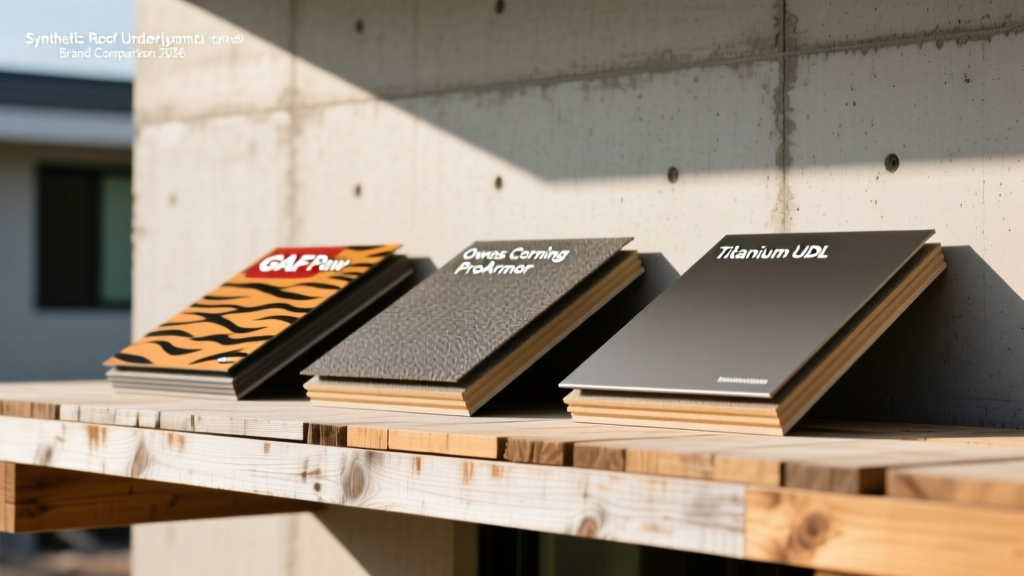
Compare top synthetic roof underlayment brands like GAF TigerPaw, Owens Corning ProArmor, and Titanium UDL with 2026 pricing and specs.
The Shift to Synthetic: Why Felt is Fading
Asphalt-saturated felt (#15 and #30) has been largely relegated to budget flips and historical restorations. In 2026, synthetic roof underlayment dominates new construction and premium re-roofs due to its hydrophobic nature, superior tear strength, and extended UV exposure limits. Unlike organic felt, which absorbs ambient moisture and wrinkles (creating telegraphing bumps under architectural shingles), woven polypropylene synthetics remain dimensionally stable. This deep-dive analyzes the three dominant synthetic product lines, comparing their technical specifications, real-world failure modes, and fastening requirements for high-wind zones.
Brand Deep-Dive: The Big Three Synthetics
GAF TigerPaw™ Premium
GAF TigerPaw is a 10-mil polypropylene underlayment designed to integrate seamlessly with the GAF Lifetime Roofing System. Its primary advantage is the proprietary GridLine™ surface, which provides 1-inch by 1-inch cutting guides, drastically reducing installation time and material waste during complex hip and ridge cuts. According to GAF's official technical specifications, TigerPaw offers a slip-resistant top coating that maintains traction even when wet, a critical OSHA compliance factor for steep-slope roofs (8/12 pitch or greater). However, at 10 mils, it is slightly thinner than premium competitors, making it more susceptible to puncture from heavy foot traffic or dropped tools during metal roofing installations.
Owens Corning ProArmor™ Synthetic Underlayment
Owens Corning ProArmor steps up to a 15-mil thickness, utilizing a fused multilayer woven structure. The increased mass provides a stiffer, heavier lay-flat characteristic that resists wind-whipping before shingles are applied. Owens Corning markets ProArmor with a wrinkle-free guarantee, addressing the primary aesthetic complaint contractors have with thinner synthetics. The material features a high-grip bottom coating that locks onto OSB and plywood decking, preventing lateral shifting during high-wind events prior to shingle nailing. The trade-off is weight: a 10-square roll of ProArmor weighs approximately 31 lbs, which can cause fatigue for crews carrying bundles up multi-story ladders.
InterWrap Titanium UDL® 50
Titanium UDL 50 is the benchmark for extreme climate performance. Engineered with a 14-mil woven polyethylene fabric coated in UV-stabilized polyolefin, it boasts an unprecedented 50-year limited warranty. Its standout feature is cold-weather flexibility; while standard synthetics become brittle and prone to cracking at 20°F, UDL 50 remains pliable down to -40°F. This makes it the undisputed choice for high-altitude and northern-tier installations where winter re-roofs are common. The surface features an aggressive, sand-like slip-resistant coating that outperforms both TigerPaw and ProArmor in independent traction tests.
Technical Specification Matrix
| Metric | GAF TigerPaw | OC ProArmor | Titanium UDL 50 |
|---|---|---|---|
| Thickness | 10 mil | 15 mil | 14 mil |
| Weight per 10-Sq Roll | 23 lbs | 31 lbs | 28 lbs |
| UV Exposure Limit | 6 Months | 6 Months | 6 Months |
| Tear Strength (ASTM D1922) | 35 lbs (MD/XD) | 45 lbs (MD/XD) | 50 lbs (MD/XD) |
| Cold Pliability Limit | 20°F | 15°F | -40°F |
| Approx. 2026 Roll Price | $185 | $165 | $215 |
High-Wind Fastening & IBHS FORTIFIED Compliance
The most common point of failure in synthetic underlayment systems is not the material itself, but the fastener selection. Standard 1-inch crown staples are entirely insufficient for modern wind-uplift requirements. In High-Velocity Hurricane Zones (HVHZ) and for roofs seeking IBHS FORTIFIED Home certification, plastic cap nails are mandatory.
- Fastener Type: 1-inch diameter plastic cap nails with a minimum 2-inch shank (e.g., Stinger Cap Nails or Simpson Strong-Tie CN100).
- Field Spacing: 4 inches on center (o.c.) in both directions.
- Perimeter Spacing: 2 inches o.c. within 3 feet of all eaves, rakes, and ridges.
- Deck Penetration: Must penetrate a minimum of 3/4-inch into structural wood decking (OSB or plywood).
Using staples creates a micro-tear in the woven polypropylene. Under sustained cyclic wind loads, the underlayment can tear through the staple crown, leading to catastrophic deck exposure if the primary roof covering is compromised. Cap nails distribute the uplift load across a 1-square-inch surface area, effectively locking the synthetic to the deck.
Thermal Fishmouths & Installation Edge Cases
Synthetic underlayments are highly sensitive to thermal expansion and contraction. A frequent real-world failure mode is the "fishmouth"—a crescent-shaped wrinkle that occurs when the underlayment is installed during peak afternoon heat. The material expands, gets nailed taut, and then contracts as the temperature drops at night, causing the material to buckle between fasteners. These buckles can telegraph through thin metal roofing panels or cause asphalt shingles to seal improperly.
Contractor Best Practice: Always install synthetic underlayment in the early morning when the decking is cool. Use a push-broom to sweep the material flat immediately ahead of the nail gun to ensure zero tension is trapped in the weave. Never pull the roll tight; allow a 1/8-inch slack per 10-foot span to accommodate thermal movement.
Ice and Water Shield Integration
Synthetic underlayment is not a substitute for self-adhered ice and water shield (e.g., Grace Ice & Water Shield® or GAF WeatherWatch®). Building codes universally require self-adhered membranes at the eaves (extending 24 inches past the interior warm wall line), in all valleys, and around penetrations. The transition between the sticky ice and water shield and the synthetic underlayment requires a strict 4-inch overlap, with the synthetic laid over the ice and water shield to create a shingle-style water-shedding lap.
2026 Economics & Roll Yield Realities
While synthetic underlayment carries a higher upfront material cost than #15 felt, the total installed cost often favors synthetics due to roll yield and labor savings. A standard roll of #15 felt covers 4 squares (400 sq ft) and requires heavy overlapping (19 inches for double coverage on low slopes). Synthetic rolls universally cover 10 squares (1,000 sq ft) with minimal 2-inch horizontal and 4-inch vertical overlaps.
Cost Breakdown per Square (100 sq ft):
- #15 Felt: ~$5.50 material + $6.00 labor (heavy rolls, frequent ladder trips, tearing issues) = $11.50/sq
- GAF TigerPaw: ~$18.50 material + $2.50 labor (lightweight, grid lines, fast unrolling) = $21.00/sq
- Hidden Cost Factor: Cap nails add approximately $1.20 per square compared to staples. However, the reduction in crew fatigue and ladder trips saves an estimated 45 minutes of labor per 30-square roof, offsetting the fastener premium entirely.
For contractors bidding premium architectural shingle or standing seam metal jobs in 2026, specifying Titanium UDL 50 or ProArmor provides a verifiable upgrade that justifies a higher margin, while protecting the decking from rain exposure during multi-day tear-offs.