Westlake Royal Roof Tiles: Best Roof Tiles for Your Roof
Deep dive into Westlake Royal concrete and clay roof tiles. Compare Saxony 900, Stonewall II, and Mission S lines, structural weights, and 2026 costs.
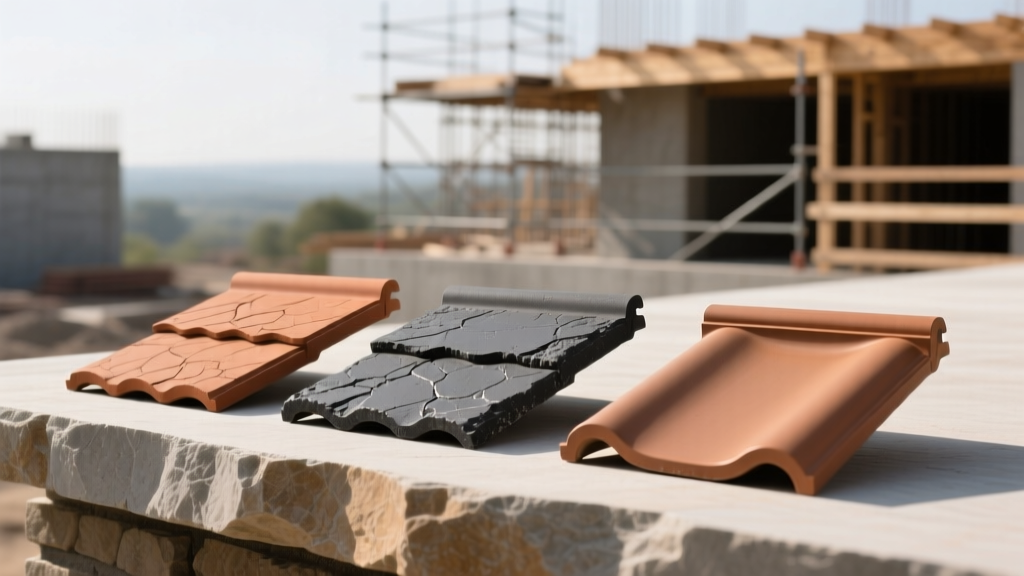
The Westlake Royal Ecosystem: Concrete vs. Clay
When evaluating premium roofing systems for high-end residential or commercial builds, Westlake Royal Roofing (the parent company that absorbed Boral Roofing and Eagle Roofing) remains the dominant force in the North American market. Selecting the right roof tiles for your roof requires moving beyond basic color swatches and understanding the structural, thermal, and installation realities of their specific product lines. This deep-dive analyzes their three flagship profiles—Saxony 900, Stonewall II, and Mission S—providing exact engineering data and 2026 pricing benchmarks to inform your specification.
Saxony 900 (Concrete S-Profile)
The Saxony 900 is Westlake Royal’s workhorse concrete S-tile, designed to mimic the classic Mediterranean barrel look but with a modern interlocking mechanism. Manufactured to ASTM C1492 standards, the Saxony 900 features a patented weathering channel that prevents capillary water action during wind-driven rain events. Key Specification: The interlocking side-lap reduces the required headlap to 2 inches on roofs with a 4:12 pitch or greater, saving roughly 8% in material overlap compared to non-interlocking legacy S-tiles.
Stonewall II (Concrete Flat/Slate)
For architectural styles demanding a slate or wood-shake aesthetic without the associated fire risks or structural fragility, the Stonewall II flat tile is the default specification. It utilizes a straight-edge design with a double-course application method. Key Specification: Stonewall II requires a minimum 3-inch headlap and relies heavily on the underlayment for secondary water shedding. It is heavily favored in Wildland-Urban Interface (WUI) zones due to its Class A fire rating and lack of lateral water channels.
Mission S (Clay Barrel)
Unlike their concrete counterparts, the Mission S line is extruded clay, fired at temperatures exceeding 2,000°F. This vitrification process makes the tile virtually impervious to water absorption (typically less than 2%, compared to concrete’s 5-8%). Mission S is a two-piece system (pan and cover) and is significantly more labor-intensive to install, but offers a lifespan that routinely exceeds 100 years.
Structural Engineering: Dead Loads and Framing Requirements
The most common failure point in tile roof specification is underestimating the dead load. Roof tiles add massive weight to the truss system. Before specifying any Westlake Royal product, your structural engineer must verify the truss spacing and load-bearing walls. Below is the exact weight data per roofing square (100 square feet) for 2026 production runs.
| Product Line | Material Type | Weight per Square (lbs) | Max Truss Spacing | Required Decking |
|---|---|---|---|---|
| Saxony 900 | Concrete | 920 - 960 lbs | 24" o.c. | 15/32" CDX Plywood |
| Stonewall II | Concrete | 800 - 840 lbs | 24" o.c. | 15/32" CDX Plywood |
| Mission S | Clay (Two-Piece) | 880 - 950 lbs | 16" o.c. (Recommended) | Solid Sheathing or Spaced |
2026 Cost Matrix: Material vs. Turnkey Installation
Pricing for clay and concrete systems has stabilized following the supply chain disruptions of the early 2020s, but labor rates for specialized tile setters continue to climb. The following table reflects Q1 2026 national averages for both material-only and fully installed turnkey costs.
| Product Line | Material Cost (per sq. ft.) | Installed Cost (per sq. ft.) | Estimated Install Time (per square) |
|---|---|---|---|
| Saxony 900 | $3.80 - $4.50 | $13.50 - $16.00 | 1.5 - 2.0 Hours |
| Stonewall II | $4.20 - $5.10 | $15.00 - $18.50 | 2.5 - 3.0 Hours |
| Mission S (Clay) | $7.50 - $9.80 | $22.00 - $28.00 | 4.0 - 5.5 Hours |
Note: Installed costs include synthetic underlayment, standard flashing, and basic ridge tile installation. Complex roof geometries (multiple valleys, dormers, turrets) will increase labor costs by 20-35%.
Critical Installation Edge Cases (The "Gotchas")
Even the best roof tiles will fail if the secondary water barrier and ventilation details are ignored. According to the Tile Roofing Institute (TRI), the majority of tile roof leaks are not due to broken tiles, but rather improper flashing and underlayment degradation.
1. The Eave Closure and Bird Stop Dilemma
Concrete S-tiles and barrel tiles create hollow voids at the eave edge. If these are left open, birds, rodents, and wind-blown embers will enter the roof cavity. The Fix: You must specify a closure system. Westlake Royal offers proprietary metal bird stops, but many contractors cheap out by using foam closures. Foam degrades under UV exposure and high attic heat within 5 to 7 years. Always mandate galvanized steel or aluminum eave closures in your contract.
2. Underlayment Selection is Non-Negotiable
Because tile roofs are "water-shedding" rather than "water-tight" systems, the underlayment is your actual waterproofing layer. The Fix: Do not accept standard 30lb asphalt felt. In 2026, the standard should be a high-temp, peel-and-stick modified bitumen membrane (like Polyglass Tu-Ply or Westlake Royal’s own TileLine underlayment) for the first three courses at the eaves, in all valleys, and around all penetrations. The field of the roof can use a high-quality synthetic underlayment rated for 180°F+ to prevent melting under the thermal mass of the tiles.
Decision Framework: Which Line Fits Your Build?
Use this matrix to finalize your specification based on your project’s specific constraints:
- Choose Saxony 900 if: You want the classic Mediterranean/Spanish aesthetic on a budget, and your structural framing can support a 950 lb/sq dead load. It offers the best balance of curb appeal and cost-efficiency.
- Choose Stonewall II if: You are building in a strict WUI (Wildland-Urban Interface) fire zone, or your architectural style is Modern, Tudor, or Colonial. The flat profile hides the underlayment lines better than S-tiles on steep pitches.
- Choose Mission S if: You are executing a high-end luxury custom build, a historical restoration, or a coastal property where salt-spray resistance is paramount. Clay does not suffer from the efflorescence (white mineral staining) that concrete tiles sometimes experience in humid, coastal environments.
Warranty Specifics and Transferability
Westlake Royal provides a Limited Lifetime Warranty on their concrete and clay tiles, covering manufacturing defects and freeze-thaw spalling. However, contractors and buyers often misunderstand the transferability clause. The warranty is fully transferable to a second owner only once, and it must be officially registered within 60 days of the property’s sale. If you are building a spec home or planning to sell within a decade, ensure the title company includes the warranty transfer documentation in the closing packet, or the new buyer will inherit a non-transferable, prorated warranty.
Furthermore, the warranty explicitly excludes color fading. While the acrylic coatings on concrete tiles (especially the Saxony line) are highly UV resistant, all concrete pigments will experience some degree of UV degradation over 30 years. If color permanence is your absolute highest priority, extruded clay (Mission S) with through-body color is the only mathematically sound choice.