Best White Roof Material for Hot Climates: SRI & Cost Guide
Compare the best white roof materials for hot climates. Analyze TPO, PVC, and cool shingles by SRI ratings, installed costs, and regional durability.

The Physics of Solar Reflectance in Extreme Heat
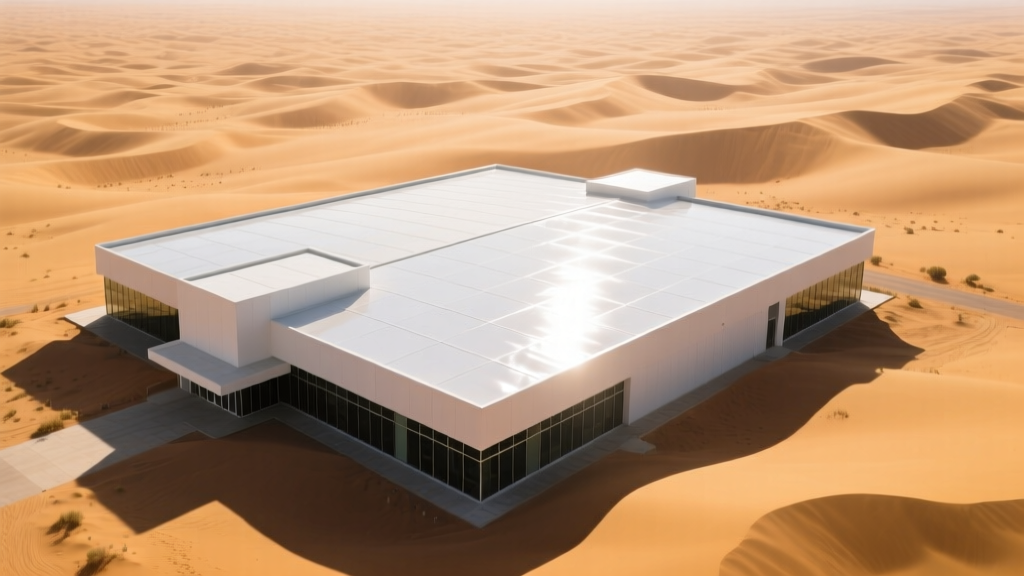
Selecting a white roof material in high-heat climate zones (IECC Climate Zones 1 through 3) is not merely an aesthetic choice; it is a critical thermodynamic intervention. The performance of these materials is measured by the Solar Reflectance Index (SRI), a metric developed by the Lawrence Berkeley National Laboratory (LBNL) that combines both solar reflectance and thermal emittance into a single value. While a standard black EPDM roof yields an SRI of roughly 5, high-performance white roof materials can achieve initial SRI values exceeding 110. According to the LBNL Heat Island Group, deploying high-SRI membranes can reduce peak cooling demand by 10% to 15%, directly alleviating strain on commercial HVAC systems during extreme summer load events.
However, the initial SRI is only half the equation. Environmental soiling, biological growth, and UV degradation cause the 'aged SRI' to drop over the first three years. The Cool Roof Rating Council (CRRC) mandates third-party testing to verify these aged values, which are the true indicators of long-term energy savings in sun-baked environments like the US Southwest and Gulf Coast.
Material Showdown: SRI, Costs, and Climate Matching
The table below outlines the primary white roof materials utilized in 2026, contrasting their thermodynamic properties with current market installation costs.
| Material Type | Initial SRI | 3-Year Aged SRI | 2026 Installed Cost (per sq. ft.) | Optimal Climate Match |
|---|---|---|---|---|
| White TPO (60-80 mil) | 105 - 112 | 85 - 95 | $4.50 - $7.50 | Temperate to Hot-Dry |
| White PVC (50-60 mil) | 105 - 115 | 95 - 105 | $6.50 - $9.50 | Humid, Coastal, Chemical |
| White Coated Metal (Kynar 500) | 100 - 115 | 90 - 100 | $9.00 - $14.50 | High-Wind, Wildfire Zones |
| Cool Asphalt Shingles | 25 - 32 | 20 - 28 | $5.50 - $8.50 | Steep-Slope Residential |
Commercial Low-Slope: Navigating TPO vs. PVC
For flat and low-slope commercial structures, the debate almost always narrows down to Thermoplastic Polyolefin (TPO) and Polyvinyl Chloride (PVC). Both are single-ply, heat-weldable white membranes, but their chemical compositions dictate vastly different failure modes in extreme climates.
TPO: The Desert Workhorse (With Caveats)
TPO, such as GAF EverGuard Extreme or Johns Manville EverGuard, dominates the market due to its lower material cost and excellent initial reflectivity. The membrane is inherently resistant to UV radiation without requiring additional plasticizers. However, in desert environments characterized by severe thermal shock—where roof surface temperatures can drop 60°F in a matter of hours after sunset—TPO is prone to thermal contraction. This repetitive expansion and contraction can cause 'membrane tenting' at fastener points and stress the hot-air welded seams. For high-desert applications, specifying an 80-mil thickness (rather than the code-minimum 45-mil or 60-mil) and utilizing a fully adhered installation method rather than mechanically fastened is critical to prevent seam tearing.
PVC: The Coastal and Chemical Champion
PVC membranes, like Carlisle Sure-Weld or FiberTite (which utilizes a Kee polymer formulation), contain plasticizers that keep the material highly flexible over decades. This flexibility makes PVC vastly superior in environments with high thermal cycling, as it absorbs structural movement without stressing the welds. Furthermore, PVC is highly resistant to chemical exposure, animal fats, and biological growth. If your facility is near the Gulf Coast (high humidity and algae risk) or houses a restaurant with grease exhaust vents, PVC is the mandatory choice. The primary drawback is cost; PVC resins are more expensive, and the membrane requires a separation layer (like fiberglass or fleece) when installed directly over EPS or XPS rigid insulation to prevent the plasticizers from leaching into the foam.
Steep-Slope Residential: The Cool Shingle Reality
Homeowners often request 'white roofs' for steep-slope applications, assuming they can achieve the same SRI as a commercial flat roof. This is a thermodynamic impossibility with asphalt. Standard white asphalt shingles utilize specialized infrared-reflective granules (such as 3M Cool Roofing Granules) to bounce UV light, but the asphalt substrate still absorbs significant heat. Products like Malarkey Vista Arctic or Owens Corning Duration Premium COOL achieve an SRI of roughly 25 to 30. While this seems low compared to TPO, it is vastly superior to standard black shingles (SRI ~5) and meets the strict Title 24 cool roof requirements in California, as well as ENERGY STAR criteria for steep-slope products.
Climate-Specific Decision Framework
Use the following diagnostic framework to specify the exact white roof material based on your specific regional microclimate:
- Hot-Dry / Desert Southwest (Phoenix, Las Vegas, Inland SoCal): Prioritize UV stability and thermal shock resistance. Specify 80-mil fully adhered TPO or a white Kynar-coated standing seam metal roof. Avoid mechanically fastened TPO, as the extreme temperature swings will cause fastener back-out and seam fatigue over 10-15 years.
- Hot-Humid / Gulf Coast (Miami, Houston, New Orleans): Prioritize biological resistance, ponding water tolerance, and wind uplift. Specify 60-mil PVC with a fleece backing, fully adhered using low-VOC solvent-based adhesives. Ensure the system is rated for FM 1-135 wind uplift to survive hurricane-force gusts. PVC's resistance to algae and ponding water makes it outlast TPO in these wet environments.
- Wildfire-Prone Zones (Northern California, Colorado Foothills): Prioritize Class A fire resistance and ember ignition resistance. White coated metal roofing is the only viable high-SRI option here. Single-ply membranes can melt or ignite from wind-blown embers, whereas steel or aluminum panels with a white PVDF coating will not combust.
Installation Edge Cases That Destroy Reflectivity
Even the highest-rated CRRC white membrane will fail to deliver energy savings if installed incorrectly. The US Department of Energy notes that poor installation is the leading cause of premature cool roof degradation. Watch for these specific field errors:
- Improper Weld Temperatures on TPO: TPO requires precise hot-air welding temperatures (typically between 900°F and 1100°F at the nozzle). In extreme desert heat, ambient temperatures can push the membrane surface temperature over 140°F before welding even begins. If the welder does not adjust the machine's speed and temperature downward, the membrane will scorch, creating brittle, yellowed seams that will crack within two years.
- Skipping the Substrate Cleaning Phase: When applying white silicone or acrylic reflective coatings over an existing roof, contractors often fail to power-wash the substrate. Dust, chalk, and oxidized asphalt prevent chemical adhesion. The coating will peel in sheets after the first heavy monsoon rain.
- Ignoring the 'Dirt Dam' Effect: White roofs lose SRI primarily through soiling. On low-slope roofs, poor drainage causes water to pond and evaporate, leaving behind concentrated rings of dirt and biological spores. Specifying tapered polyiso insulation to ensure a minimum 1/4-inch per foot slope to drains is non-negotiable for maintaining aged SRI values.
Code Compliance and Financial Payback
As of the 2024 and 2026 adoptions of the International Energy Conservation Code (IECC), low-slope roofs in Climate Zones 1, 2, and 3 must meet a minimum aged SRI of 78. Selecting a premium PVC or heavy-duty TPO ensures compliance without requiring secondary coatings. Financially, the premium paid for a high-SRI white roof (typically $1.50 to $3.00 more per square foot than a black EPDM system) is frequently offset by utility rebates from providers like PG&E, FPL, and SRP, alongside a documented 10-15% reduction in peak cooling costs. When factoring in the extended lifespan of the roof membrane—since white roofs operate at surface temperatures 40°F to 50°F cooler than black roofs, drastically slowing the degradation of the underlying polyiso insulation—the lifecycle ROI of a properly specified white roof material is overwhelmingly positive.
Written by
James ThorntonJames Thornton is a construction industry veteran with 25 years of hands-on experience in wood framing, lumber grading, and residential building codes. He started as a framing carpenter in rural Oregon, earned his ICC Residential Building Inspector certification, and eventually became a senior plan reviewer for the City of Portland Bureau of Development Services. James holds a B.S. in Wood Science & Technology from Oregon State University and is a certified lumber grader through the West Coast Lumber Inspection Bureau (WCLIB). He has inspected over 3,000 residential construction sites and authored the city's internal guide on advanced framing techniques (2x6 at 24" O.C.). James lives in Bend, OR, where he builds custom timber-frame cabins and competes in lumberjack sports.
More from James Thornton
View all
Insulation
Best Home Insulation Materials: Complete 2026 Guide
Compare top home insulation materials for 2026. Find R-values, installed costs per square foot, and best uses for fiberglass, spray foam, and mineral wool.
Aug 4, 2026

Sustainable Building
Certify Your Green Building Material for LEED and WELL
Step-by-step guide to certifying a green building material for LEED v5 and WELL v2. Master EPDs, HPDs, and VOC limits for 2026 project specifications.
Aug 4, 2026

Stone & Masonry
Veneer Stacked Stone Panels: Interior Design & Style Showcase
Discover how veneer stacked stone panels transform interiors. Explore modern design profiles, material pairings, and technical installation specs.
Aug 4, 2026