Selecting Fireproof Construction Materials by Building Scenario
Match fireproof construction materials to specific building scenarios. Compare gypsum, concrete, and intumescent coatings for optimal fire safety compliance.
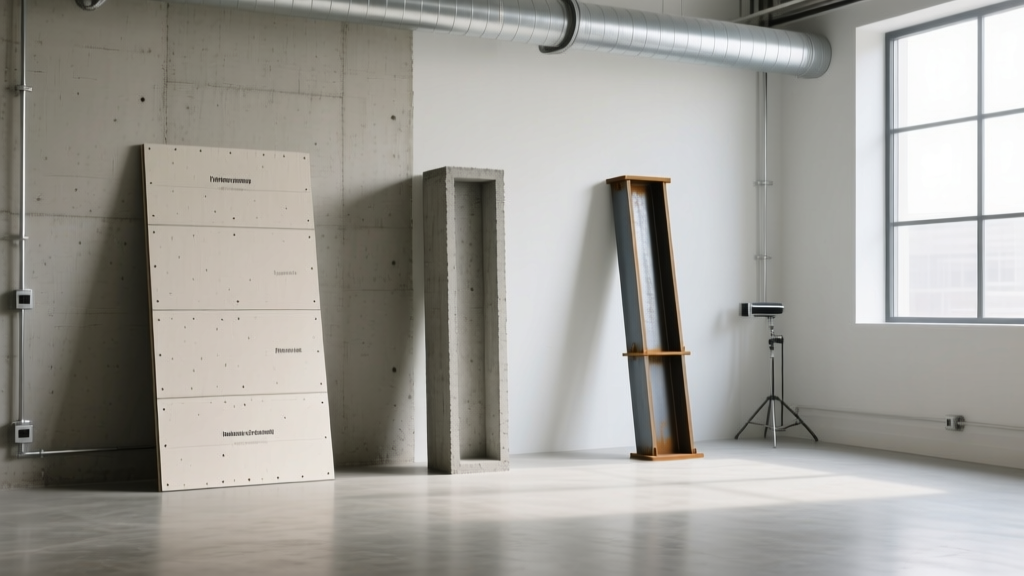
The Scenario-Matching Framework for Fire Resistance
In commercial and high-density residential construction, the term 'fireproof' is a functional misnomer; all building materials eventually degrade under sustained thermal exposure. The engineering objective is selecting fireproof construction materials that provide a specific duration of structural integrity and compartmentalization—measured in hourly ratings—tailored to the exact fire load and vulnerability of a given zone. A blanket approach to fire resistance leads to massive budget overruns in low-risk zones and catastrophic code violations in high-risk areas.
Matching materials to scenarios requires evaluating three core variables: the structural role of the assembly (load-bearing vs. non-load-bearing), the environmental stressors (moisture, impact, vibration), and the aesthetic requirements. For instance, specifying standard spray-applied fire resistive materials (SFRM) in a high-impact elevator shaft will result in premature delamination, while using impact-resistant calcium silicate boards in a concealed ceiling plenum wastes capital.
Material Matrix: Matching Products to Structural Zones
The following matrix breaks down the optimal fireproof construction materials for specific building scenarios, including current 2026 market pricing for installed systems. Costs reflect commercial-scale application rates.
| Application Scenario | Primary Material Class | Specific Product / Type | Target Rating | Est. Installed Cost (2026) |
|---|---|---|---|---|
| High-Rise Steel Columns (Concealed) | Spray-Applied (SFRM) | Isolatek Cafco 300 | 2 to 3 Hour | $2.50 - $4.00 / sq ft |
| Elevator Shafts & Stairwells | Calcium Silicate Board | Promat PROMATECT-H | 2 to 4 Hour | $8.00 - $12.00 / sq ft |
| Commercial Tenant Demising Walls | Fire-Rated Gypsum | USG Sheetrock Firecode Core (Type X) | 1 to 2 Hour | $1.20 - $1.80 / sq ft |
| Exposed Architectural Steel | Intumescent Coating | Nullifire SC902 (Epoxy-based) | 1 to 2 Hour | $6.00 - $9.50 / sq ft |
| Grease Duct Enclosures | Specialized Fire Wrap | 3M Fire Barrier Duct Wrap 1.5 | 1 to 2 Hour | $14.00 - $18.00 / linear ft |
Deep Dive: High-Risk Scenario Applications
Scenario A: Elevator Shafts and High-Impact Stairwells
Elevator shafts present a unique challenge: they require strict fire compartmentalization to prevent the stack effect from pulling smoke through the building, but the walls are subject to severe vibration from elevator cars and high impact from maintenance equipment. Standard 5/8-inch Type X gypsum board is insufficient here; it will crack under vibration and puncture under impact, compromising the fire barrier.
The Solution: Specify high-density calcium silicate boards or specialized impact-resistant shaftliner panels. Promat PROMATECT-H, a 20mm thick calcium silicate board, provides a 2-hour rating while withstanding severe mechanical abuse. When designing these shafts, ensure that the framing system uses heavy-gauge steel studs (minimum 16-gauge) spaced no more than 16 inches on center, and secure the boards with specialized self-drilling screws featuring oversized bugle heads to prevent pull-through during seismic events or high-wind sway.
Scenario B: Exposed Architectural Steel in Atriums
Modern commercial architecture frequently features exposed structural steel in atriums and lobbies. Encasing these beams in concrete or boxing them in drywall destroys the aesthetic intent. Here, the correct fireproof construction material is an intumescent coating.
Intumescent epoxies, such as Nullifire SC902, remain inert under normal conditions but swell up to 50 times their original thickness when exposed to temperatures exceeding 400°F (204°C), forming a protective carbonaceous char that insulates the steel. Critical Specification Detail: The required dry film thickness (DFT) is dictated by the steel's section factor (Hp/A ratio). For a standard W12x26 beam requiring a 60-minute rating, you typically need 25 to 35 dry mils of epoxy. Application requires strict climate control; ambient temperatures must remain above 50°F during curing, and a compatible primer (e.g., zinc-rich epoxy) and topcoat (polyurethane for UV resistance) must be used to prevent osmotic blistering.
Common Failure Modes in Material Selection
Even when the correct fireproof construction materials are specified on paper, field execution often introduces fatal vulnerabilities. Avoid these three common failure modes:
- SFRM Delamination from Primer Incompatibility: Spray-applied fireproofing relies on mechanical adhesion to the steel substrate. If the steel fabricator applies an incompatible shop primer (particularly certain fast-dry alkyds or silicon-based release agents), the SFRM will delaminate within months. Always require a primer compatibility test per AWCI Technical Manual 12-B before spraying.
- Pipe Penetration Thermal Expansion: When PVC or CPVC plumbing pipes penetrate a fire-rated drywall assembly, they melt early in a fire, leaving a massive hole. Using standard acrylic caulk to seal the gap is a fatal error. You must specify an intumescent firestop sealant, like Hilti CP 606, which expands aggressively to crush the melting pipe and seal the void, maintaining the wall's ASTM E814 rating.
- Thermal Bridging in Fire-Rated Glazing: Specifying a 90-minute fire-rated ceramic glass window but installing it in a standard hollow-metal frame creates a thermal bridge. The frame will fail long before the glass. The entire assembly—glass, frame, and anchoring hardware—must be tested and listed together under a single UL design number.
Code Compliance and Testing Standards
Material selection must be anchored in recognized testing standards. The foundational test for structural assemblies is ASTM E119 / UL 263, which subjects a load-bearing assembly to a standard time-temperature curve, followed by a high-pressure hose stream test to evaluate structural integrity post-fire. For building life safety and egress, compliance with NFPA 101: Life Safety Code dictates the required ratings for exit enclosures and corridor walls based on occupancy type.
Expert Insight: Never mix and match components from different UL designs. A 2-hour wall assembly tested with specific brand 'A' gypsum board and brand 'B' steel studs cannot legally be substituted with brand 'C' board, even if the individual materials claim identical standalone ratings. The assembly is only as strong as its tested configuration.
Decision Flowchart: Selecting Your Assembly
Use this step-by-step framework to narrow down your material selection for any given project zone:
- Identify the Structural Role: Is the element load-bearing (column, beam) or non-load-bearing (partition, shaft wall)? Load-bearing elements require materials that insulate against heat transfer to prevent steel yielding or concrete spalling (SFRM, concrete, intumescents).
- Determine the Required Hourly Rating: Consult IBC Table 601 or the project's fire protection engineering report. (e.g., Exit stairwells in a high-rise typically require a 2-hour rating).
- Assess Environmental & Mechanical Stressors: Will the material be exposed to moisture (parking garages), impact (corridors), or vibration (mechanical rooms)? If yes, eliminate standard gypsum and SFRM; default to calcium silicate, masonry, or specialized cementitious boards.
- Evaluate Aesthetic Constraints: If the structural element must remain visually exposed, intumescent coatings or specialized fire-rated glazing are your only viable options.
- Verify the UL Design Number: Once the material class is chosen, locate the exact UL or ULC design number that matches your framing type, material thickness, and required rating, and print it directly onto the construction documents.
By rigorously matching fireproof construction materials to the specific mechanical, environmental, and structural demands of each building zone, project teams can optimize both life safety and construction budgets while ensuring flawless code compliance.