Fireproof File Cabinet Lifespan: Durability & Failure Analysis
Discover the true lifespan of a fireproof file cabinet. We analyze durability, insulation degradation, UL rating longevity, and when to replace yours.
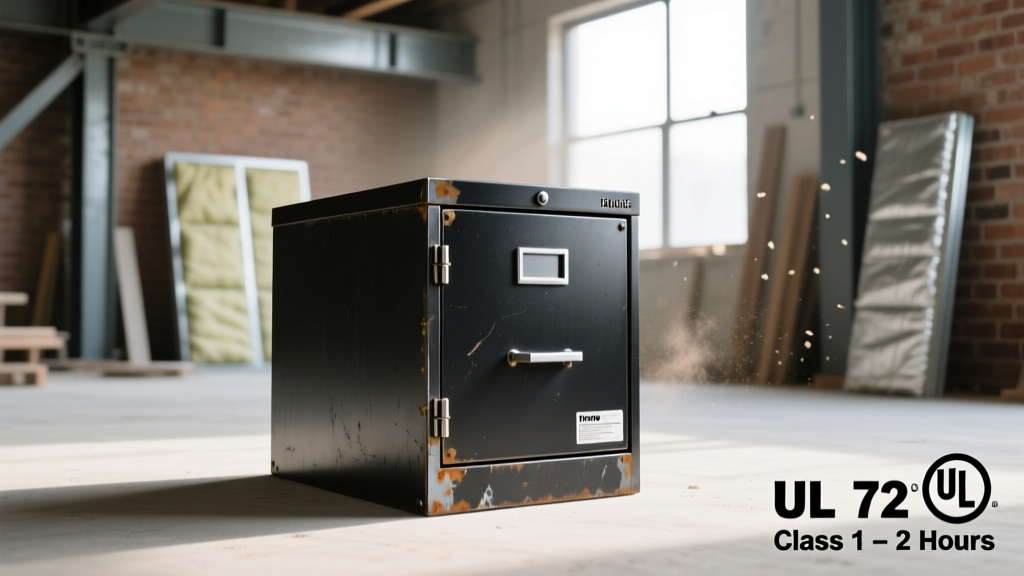
The Anatomy of a Fireproof File Cabinet's Durability
When facility managers and archivists invest in a fireproof file cabinet, there is a pervasive misconception that the asset is invincible. The term 'fireproof' is actually a commercial misnomer; these units are technically 'fire-resistive.' Their primary function is to delay heat transfer long enough to protect the contents during a structural fire. However, the physical durability and functional lifespan of the cabinet are dictated not by its fire rating, but by the mechanical integrity of its steel shell, drawer suspensions, and most importantly, its internal composite insulation.
A standard commercial 4-drawer vertical fireproof file cabinet weighs between 400 and 600 pounds. This immense weight is due to the multi-layered construction: an outer 14-to-16-gauge cold-rolled steel shell, an inner 18-to-20-gauge steel liner, and a 1.5-inch to 2-inch cavity packed with specialized fire-retardant insulation. Understanding how these materials age over a 15-to-30-year lifecycle is critical for maintaining genuine fire safety compliance in your facility.
Insulation Degradation: The Hidden Lifespan Killer
The thermal protection of a fireproof file cabinet relies entirely on the insulation core. Historically, manufacturers used asbestos, but modern units rely on three primary materials. The lifespan of the cabinet is directly tied to how well these materials resist ambient moisture, physical vibration, and structural settling over decades.
Composite vs. Traditional Insulation Matrix
| Insulation Material | Composition & Mechanism | Moisture Vulnerability | Expected Functional Lifespan |
|---|---|---|---|
| Gypsum Composite | Calcium sulfate dihydrate; releases chemically bound water vapor when heated to 212°F (100°C) to cool the interior. | High. Ambient humidity can cause the gypsum to prematurely hydrate or crumble if the steel shell is punctured. | 15 - 25 Years |
| Perlite / Vermiculite | Expanded volcanic minerals; traps air in microscopic pockets to slow thermal conductivity. | Moderate. Prone to settling and compaction over time if the cabinet is moved or subjected to heavy floor vibrations. | 20 - 30 Years |
| Proprietary Silica/Alumina | High-density ceramic fibers and silica aerogels used in premium UL Class 125 media cabinets. | Low. Highly hydrophobic and structurally rigid; resists settling and moisture absorption. | 30 - 50+ Years |
As noted by the UL 72 Standard for Tests for Fire Resistance of Records Protection Equipment, the fire rating is certified based on the cabinet's condition at the time of manufacture. If a gypsum-insulated cabinet is stored in a damp basement for 20 years, the gypsum may absorb ambient moisture. In a fire event, instead of slowly releasing steam to cool the interior, the compromised insulation can spall, crack, or fail to maintain the critical internal temperature thresholds.
Fire Ratings vs. Physical Lifespan
It is vital to distinguish between the fire rating (UL Class 350 vs. UL Class 125) and the physical lifespan of the hardware. Paper combusts at approximately 450°F, making UL Class 350 (which guarantees the interior will not exceed 350°F for 1 hour at 1700°F external heat) sufficient for standard documents. However, digital media, hard drives, and SSDs begin to melt and suffer data corruption at 125°F to 150°F.
Facilities often make the critical error of using 30-year-old Class 350 paper cabinets to store modern server backups or external hard drives. Even if the cabinet's physical lifespan has not expired, its functional relevance has. According to guidelines from FEMA's Ready.gov on protecting vital documents, organizations must align their physical storage medium with the thermal tolerance of the specific data being preserved. A perfectly intact 1995 paper cabinet offers virtually zero protection for modern digital media in a fire event.
Never drop or severely jolt a fireproof file cabinet during relocation. The internal insulation (especially gypsum and perlite) is brittle. A hard drop on a concrete loading dock can cause the insulation core to fracture or separate from the inner steel liner. This creates a 'thermal bridge'—a direct path for heat to bypass the insulation during a fire, rendering the UL rating completely void, even if the exterior looks pristine.
Real-World Failure Modes and Edge Cases
Beyond the insulation core, the mechanical components of a fireproof file cabinet dictate its day-to-day durability. Facility maintenance teams should monitor the following specific failure modes:
- Intumescent Seal Degradation: The door jambs are lined with intumescent seals designed to expand up to 10 times their volume when exposed to heat (typically around 300°F), sealing the gap against smoke and superheated gases. Over 15 to 20 years, these rubberized seals dry out, crack, and lose their chemical expansion properties. If the seal crumbles when pinched, the cabinet will fail to protect against smoke damage, which ruins documents even if the fire doesn't reach them.
- Drawer Suspension Warping: A fully loaded 4-drawer cabinet can hold over 150 pounds of paper per drawer. Over a decade, the continuous static load can warp the steel drawer tracks, causing them to bind. Forcing a bound drawer open can misalign the door latch, preventing the door from sealing flush against the intumescent gasket.
- Lock Mechanism Seizure: Internal humidity fluctuations can cause the steel linkages inside the locking mechanism to oxidize. A seized lock during an emergency evacuation or a rapid post-fire recovery effort can delay access to critical legal or financial documents by hours.
The 15-Year Inspection and Maintenance Protocol
To maximize the lifespan and ensure the fire-resistive integrity of your cabinets, implement this specific inspection protocol at the 10-year and 15-year marks of the asset's life:
- Gasket Integrity Test: Run a fingernail along the door jamb intumescent seal. It should feel slightly pliable. If it flakes, cracks, or feels like hard plastic, schedule a gasket replacement via the original manufacturer.
- The 'Dollar Bill' Seal Check: Close the door on a dollar bill. Pull the bill; there should be significant resistance. Repeat this on all four sides of the door. Lack of tension indicates the door hinges have sagged, compromising the fire seal.
- Insulation Rattle Test: Open the drawers and gently push against the inner back wall and side walls. Listen for shifting, crunching, or rattling sounds. This indicates the internal insulation has settled or fractured, requiring the unit to be decommissioned for fire-safety purposes.
- Track Lubrication: Apply a dry PTFE (Teflon) lubricant to the drawer suspension tracks. Avoid wet oils or WD-40, which attract dust and create an abrasive paste that accelerates track wear.
Replacement Economics: Repair vs. Replace
When a fireproof file cabinet suffers insulation failure, structural warping, or severe rust, it cannot be repaired. The insulation is poured or packed as a proprietary slurry during manufacturing; there is no aftermarket service to 're-insulate' an existing shell.
From a capital expenditure perspective, commercial-grade 4-drawer vertical cabinets from industry leaders like FireKing or SentrySafe typically range from $1,200 to $2,500 per unit. While this represents a significant upfront cost, the NFPA 75 Standard for the Fire Protection of Information Technology Equipment emphasizes that the cost of replacing physical storage hardware is negligible compared to the financial and legal liabilities of losing irreplaceable corporate records, deeds, or compliance documentation.
If your facility's fireproof file cabinets were manufactured before 2005, or if they have been subjected to uncontrolled climate environments (warehouses, unconditioned basements), their functional lifespan has likely expired. Transitioning to modern, silica-insulated Class 125 cabinets not only restores your fire safety baseline but also future-proofs your storage for the digital media that modern businesses rely upon.