Best Fireproof Home Safes for Document & Media Protection in 2026
Compare top fireproof home safes from SentrySafe, Honeywell, and Steelwater. Learn UL 72 ratings, media vs. paper limits, and 2026 pricing.
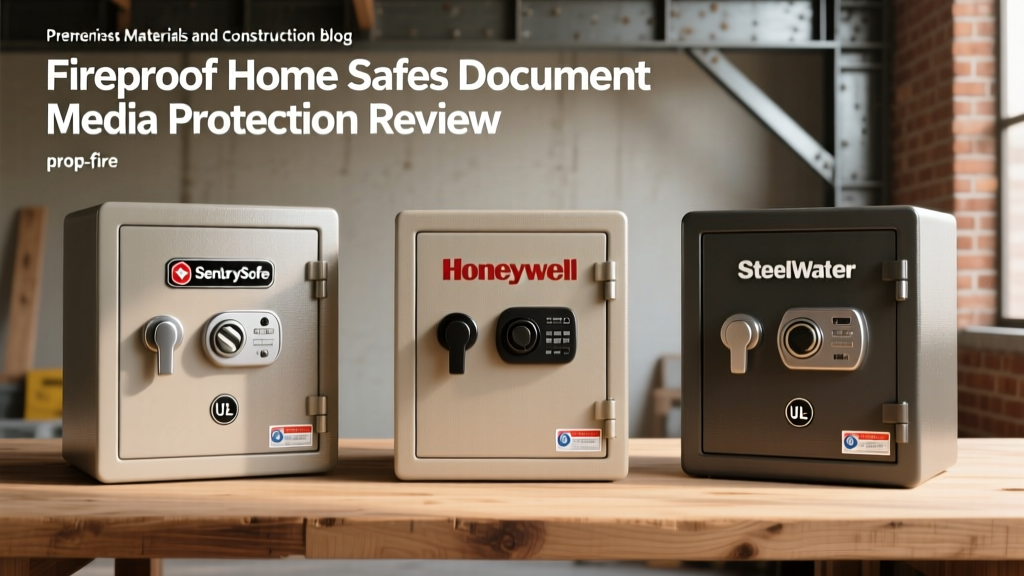
The 'Fireproof' Myth: Understanding UL 72 Ratings
The term 'fireproof' is a marketing misnomer. No residential safe is entirely impervious to fire; rather, they are 'fire-resistant' and engineered to delay internal temperature rise. When evaluating fireproof home safes, the only metric that matters is independent certification, specifically the UL 72 Standard for Fire Tests of Record Protection Equipment by UL Solutions.
Under UL 72, safes are subjected to exterior furnace temperatures of 1,550°F (843°C) for one hour, or 1,700°F (927°C) for two hours. The rating depends entirely on what the safe is designed to protect:
Critical Failure Points: Paper vs. Digital Media
- Paper Documents (UL Class 350): Paper begins to char and become unreadable at 400°F (204°C). A Class 350 safe guarantees the interior will not exceed 350°F during the test duration.
- Digital Media (UL Class 125): Hard drives, USBs, and SSDs suffer irreversible data loss and physical melting at just 125°F (52°C). A Class 125 safe guarantees the interior stays below this critical threshold, requiring vastly superior insulation.
Buying a standard Class 350 paper safe to store external hard drives is a critical error that will result in total data loss during a structural fire. According to the National Fire Protection Association (NFPA), residential fires generate temperatures exceeding 1,100°F within minutes, making precise UL rating selection non-negotiable.
Brand Deep-Dive: Top 4 Manufacturers in 2026
We analyzed the current market leaders based on thermal insulation composition, lock mechanisms, water resistance (a vital secondary feature, as fire hoses often destroy what flames do not), and long-term durability.
1. SentrySafe: The Mass-Market Standard
SentrySafe dominates the big-box retail space. Their flagship SFW-123GDC is a 1.23-cubic-foot chest utilizing a proprietary gypsum-and-perlite composite insulation.
- Rating: UL 1-Hour Class 350.
- Water Resistance: ETL verified for 8 inches of water for 24 hours.
- Price: ~$380.
- Pros: Excellent document protection; dual locking mechanism (key + digital); widely available replacement parts.
- Cons: Heavy composite lining makes the unit bulky for its interior volume; strictly for paper (will destroy digital media).
2. Honeywell: Budget & Waterproof Focus
Honeywell’s Model 1114 targets budget-conscious buyers who need basic document security and high water resistance. It uses a thinner composite wall but compensates with a tight silicone gasket seal.
- Rating: UL 1-Hour Class 350.
- Water Resistance: ETL verified 100% waterproof when fully submerged.
- Price: ~$140.
- Pros: Highly affordable; excellent flood protection; lightweight enough to relocate easily.
- Cons: Flimsy interior shelving; digital keypad feels cheap; minimal pry-resistance against physical theft.
3. First Alert: Specialized Media Protection
First Alert’s 2092F Media Chest is one of the few accessible consumer safes engineered specifically for digital storage. It utilizes advanced phase-change materials (PCMs) in the walls to absorb heat and maintain a sub-125°F interior.
- Rating: UL 1-Hour Class 125.
- Water Resistance: ETL verified waterproof.
- Price: ~$260.
- Pros: True digital media protection; spring-loaded hinges; compact footprint.
- Cons: Very small interior capacity (0.94 cu. ft.); not suitable for large legal-size binders.
4. Steelwater: Premium Heavy-Duty Construction
For high-net-worth individuals or those storing irreplaceable physical assets, Steelwater’s AMSWFB-450 bridges the gap between residential and commercial vaults. It features a 4.5-inch thick steel-reinforced composite body.
- Rating: UL 2-Hour Class 350.
- Water Resistance: Water-resistant seals (not fully submersible).
- Price: ~$890.
- Pros: 2-hour fire endurance; 10-gauge solid steel body; active relocker system prevents drilling attacks.
- Cons: Weighs 370 lbs (requires professional installation); premium price point.
2026 Model Comparison Matrix
| Brand & Model | UL Fire Rating | Interior Temp Limit | Water Protection | Est. Price (2026) |
|---|---|---|---|---|
| SentrySafe SFW-123GDC | 1-Hour Class 350 | 350°F (Paper) | 8-inch submersion | $380 |
| Honeywell 1114 | 1-Hour Class 350 | 350°F (Paper) | Fully submersible | $140 |
| First Alert 2092F | 1-Hour Class 125 | 125°F (Media) | Fully submersible | $260 |
| Steelwater AMSWFB-450 | 2-Hour Class 350 | 350°F (Paper) | Seal protected | $890 |
Critical Installation & Placement Mistakes
Purchasing the correct safe is only half the battle. The U.S. Fire Administration notes that fire dynamics within a home dictate structural survival. Avoid these common deployment errors:
- The Master Bedroom Closet Trap: Many homeowners place safes in the master closet. Statistically, bedrooms are a leading origin point for residential fires (due to space heaters, overloaded outlets, and smoking). Furthermore, master closets are highly combustible environments filled with synthetic fabrics. Place the safe in a basement, garage, or interior hallway away from primary fuel loads.
- Drywall Anchoring: Never bolt a fire safe to wooden wall studs or drywall. In a fire, structural lumber loses integrity rapidly, and the safe will pull away from the wall, breaking its thermal seal. Always use wedge anchors to bolt the safe directly into a poured concrete slab.
- Ignoring the 'Thermal Gap': Fire safes rely on a precise gap between the door and the frame, filled with intumescent seals that expand when heated. If a safe is dropped and the door frame warps by even a few millimeters, the seal will fail, allowing superheated gases to enter the interior. Inspect the door alignment annually.
Expert Insight: If you must store both paper deeds and digital backup drives, do not put the drives inside a Class 350 paper safe. Purchase a dedicated UL Class 125 media pouch or a secondary small media chest (like the First Alert 2092F) and place it inside the larger paper safe for layered thermal protection.
Frequently Asked Questions
Do fireproof home safes expire?
The steel body does not expire, but the insulation and seals do. The gypsum/perlite composite can settle or absorb ambient moisture over a decade, reducing its thermal efficacy. Intumescent door seals become brittle after 10 to 15 years. Plan to replace or professionally refurbish your safe's seals every decade.
Can I store firearms in a fire-rated document safe?
Technically yes, but it is not recommended. Document safes use thin steel (often 14 to 18 gauge) designed to hold insulation, not to resist angle grinders or pry bars. If firearm security is a priority, you need a dedicated TL-15 or TL-30 rated gun safe, which prioritizes physical burglary resistance over extreme fire insulation.
Why do some safes use plastic interior components?
Manufacturers use high-impact ABS plastic for interior shelves and drawers to save weight and cost. While these plastics will melt at around 300°F, they will not ignite or compromise the fire rating of the safe. However, for high-heat scenarios, metal wire racks are a superior, albeit more expensive, alternative.