Fire Resistant Decking Material: 2026 Code Compliance Guide
Navigate 2026 WUI building codes with our compliance guide to fire resistant decking material, testing standards, and approved assembly frameworks.
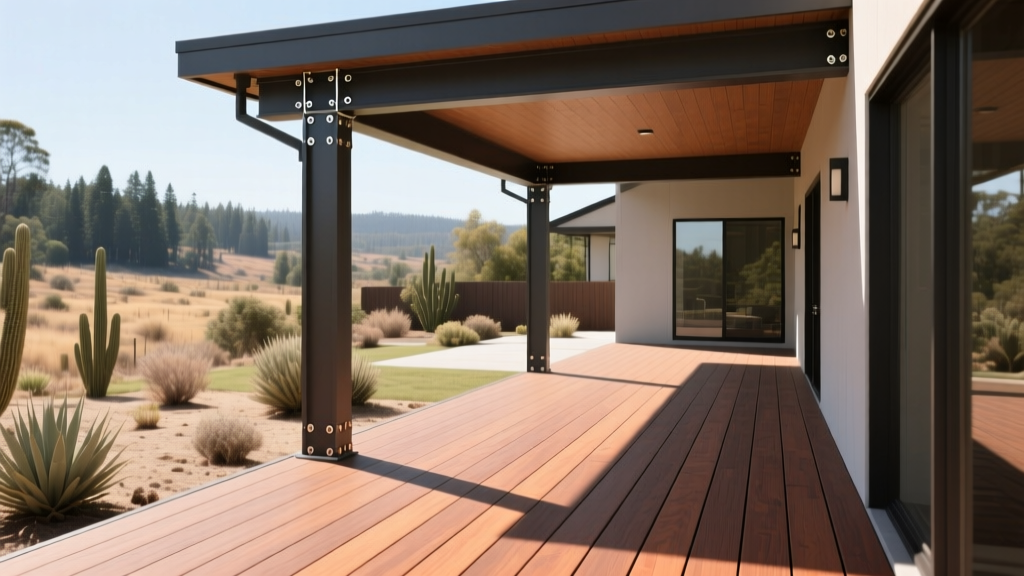
The WUI Mandate: Why Decking Codes Are Tightening
As of 2026, over 34 states have adopted some iteration of the International Wildland-Urban Interface Code (IWUIC) or state-specific equivalents like California Building Code (CBC) Chapter 7A. The expansion of the Wildland-Urban Interface (WUI) means that specifying a fire resistant decking material is no longer just a best practice for mountain cabins; it is a strict legal requirement for suburban developments in high-hazard fire zones. Decks are historically the most vulnerable component of a home's exterior during a wildfire. Embers can travel up to a mile ahead of a fire front, lodging in deck gaps, igniting substructures, and ultimately compromising the primary residence. Understanding the precise regulatory framework is the first step in passing local inspections and protecting the asset.
Decoding the Standards: ASTM E84 vs. SFM 12-7A-5
A common and costly mistake in material specification is conflating general fire ratings with WUI-specific decking approvals. Building departments evaluate fire resistant decking material through two distinct testing lenses:
- ASTM E84 (Surface Burning Characteristics): This test measures the Flame Spread Index (FSI) and Smoke Developed Index (SDI) of a material's surface. A Class A rating requires an FSI of 0-25. While many composites and PVCs achieve this, it only measures surface flame travel, not structural integrity under direct fire exposure.
- SFM 12-7A-5 (California State Fire Marshal Standard): This is the gold standard for WUI decking. It subjects the deck assembly to both an exterior fire exposure (simulating radiant heat and embers) and an interior fire exposure (simulating a fire originating under the deck). The material must not allow flame penetration through the decking boards and must maintain structural integrity without collapsing.
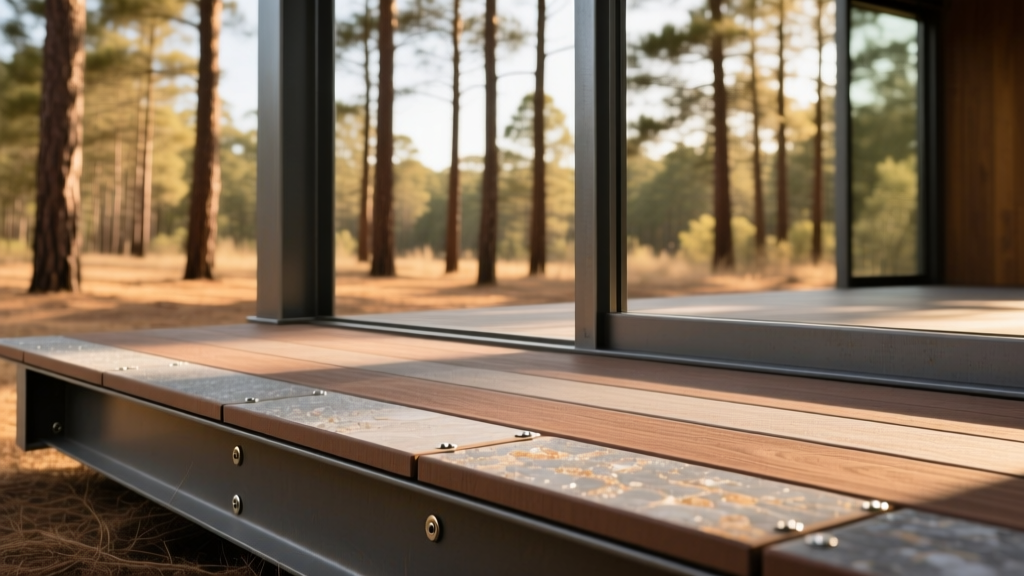
Material Matrix: Approved Fire Resistant Decking Material Options
Selecting the right board requires balancing fire performance, dimensional stability, and budget. Below is a comparative analysis of the top-performing fire resistant decking material categories available in the 2026 market.
| Material Class | 2026 Brand Examples | Flame Spread Index (FSI) | Avg. Material Cost (per sq. ft.) | WUI Code Status |
|---|---|---|---|---|
| Mineral-Based Composite (MBC) | Deckorators Voyage, Vault | < 25 (Class A) | $11.50 - $14.00 | Highly Approved (SFM 12-7A-5) |
| Advanced PVC | AZEK Vintage, TimberTech | < 25 (Class A) | $13.00 - $16.50 | Approved (Check specific profile) |
| Capped Wood-Plastic (WPC) | Trex Transcend Lineage | 25 - 75 (Class B/C) | $9.00 - $12.00 | Restricted (Fails some ember tests) |
| Fire-Retardant Treated Wood | Hoover Treated Wood (FRX) | < 25 (Class A) | $7.50 - $10.00 | Approved (Requires maintenance) |
| Heavy Timber / Hardwood | Ipe, Cumaru (Heavy mass) | Variable (Class A/B) | $15.00 - $22.00 | Conditionally Approved (Mass req.) |
Substructure and Framing: The Hidden Compliance Trap
Specifying a compliant fire resistant decking material is only half the battle. According to the National Fire Protection Association (NFPA), a significant percentage of deck failures during wildfires occur not on the surface boards, but in the substructure. Embers accumulate in the joist bays, igniting combustible framing or dry debris trapped beneath the deck.
In strict WUI zones, code mandates that the entire deck assembly—not just the walking surface—must resist ignition. This requires specific substructure strategies:
- Light-Gauge Steel Framing: Products like Fortress Evolution or Trex Elevations provide a non-combustible substructure that automatically satisfies WUI joist requirements. Expect a 20-30% premium over pressure-treated lumber framing.
- Fire-Retardant Treated Wood (FRTW) Joists: If using wood framing, standard pressure-treated (PT) lumber is insufficient. You must specify FRTW that carries an interior/ exterior fire-retardant rating, such as Hoover FRX, which does not leach chemicals when exposed to weather.
- Enclosed Under-Deck Assemblies: If combustible framing is grandfathered in or permitted via an alternative compliance path, the AHJ will require the under-deck area to be enclosed with non-combustible mesh (maximum 1/8-inch aperture) or fire-rated skirting to prevent ember intrusion and debris accumulation.
Step-by-Step: Designing a Code-Compliant Deck Assembly
- Verify the WUI Designation: Check your local GIS mapping or consult the building department to confirm if the lot falls within a High or Very High Fire Hazard Severity Zone (FHSZ).
- Select the Decking Board: Choose a product explicitly listed on the California OSFM WUI Products Listing or possessing an ICC-ES ESR report for WUI decks.
- Specify the Substructure: Pair the decking with light-gauge steel joists or FRTW lumber. Document the framing material on your permit plans.
- Detail the Gap Spacing: Maintain a strict 1/8-inch to 3/16-inch gap between deck boards. Wider gaps (1/4-inch or more) allow embers to penetrate the substructure; tighter gaps trap moisture and violate drainage codes.
- Submit the Compliance Package: Include the manufacturer's WUI listing number, installation instructions, and framing details in your permit application to prevent plan-check delays.
Common Inspection Failures and How to Avoid Them
Even with approved materials, field installation errors can result in failed inspections. Avoid these frequent code violations:
- Improper Flashing at the Ledger Board: The connection point between the deck and the primary structure is a critical vulnerability. Code requires non-combustible Z-flashing and a fire-rated sealant to prevent embers from entering the home's rim joist cavity.
- Under-Deck Storage: WUI codes strictly prohibit the storage of combustible materials (firewood, propane tanks, resin furniture) beneath elevated decks. Inspectors will flag this as a violation even if the materials themselves are compliant.
- Unprotected Post Bases: Wood posts resting directly on concrete or soil are susceptible to smoldering ignition from ground-level brush fires. Use elevated, non-combustible post bases (e.g., Simpson Strong-Tie ZMAX) that keep the wood framing at least 6 inches above grade.
Navigating Local AHJ Approvals
Building departments rely heavily on third-party verification databases. Before purchasing any fire resistant decking material, verify its status on the California OSFM WUI Products Listing. This database is updated monthly and serves as the primary reference for inspectors across the western United States. If your chosen material is not listed there, you must request an ICC-ES Evaluation Report (ESR) from the manufacturer. The ESR will detail the exact assembly conditions—including specific joist spacing, fastener types, and gap tolerances—required to maintain the fire rating. Deviating from the ESR parameters in the field voids the compliance certification and gives the inspector grounds for a stop-work order. Plan your material procurement around verified, documented assemblies to ensure a seamless inspection process in 2026.
Written by
James ThorntonJames Thornton is a construction industry veteran with 25 years of hands-on experience in wood framing, lumber grading, and residential building codes. He started as a framing carpenter in rural Oregon, earned his ICC Residential Building Inspector certification, and eventually became a senior plan reviewer for the City of Portland Bureau of Development Services. James holds a B.S. in Wood Science & Technology from Oregon State University and is a certified lumber grader through the West Coast Lumber Inspection Bureau (WCLIB). He has inspected over 3,000 residential construction sites and authored the city's internal guide on advanced framing techniques (2x6 at 24" O.C.). James lives in Bend, OR, where he builds custom timber-frame cabins and competes in lumberjack sports.
More from James Thornton
View all
Insulation
Best Home Insulation Materials: Complete 2026 Guide
Compare top home insulation materials for 2026. Find R-values, installed costs per square foot, and best uses for fiberglass, spray foam, and mineral wool.
Aug 4, 2026

Sustainable Building
Certify Your Green Building Material for LEED and WELL
Step-by-step guide to certifying a green building material for LEED v5 and WELL v2. Master EPDs, HPDs, and VOC limits for 2026 project specifications.
Aug 4, 2026

Stone & Masonry
Veneer Stacked Stone Panels: Interior Design & Style Showcase
Discover how veneer stacked stone panels transform interiors. Explore modern design profiles, material pairings, and technical installation specs.
Aug 4, 2026