Basement Crawl Space Waterproofing: Material Lifespan & Durability
Compare the lifespan and durability of top basement crawl space waterproofing materials, from polyethylene vapor barriers to epoxy sealants and sump pumps.
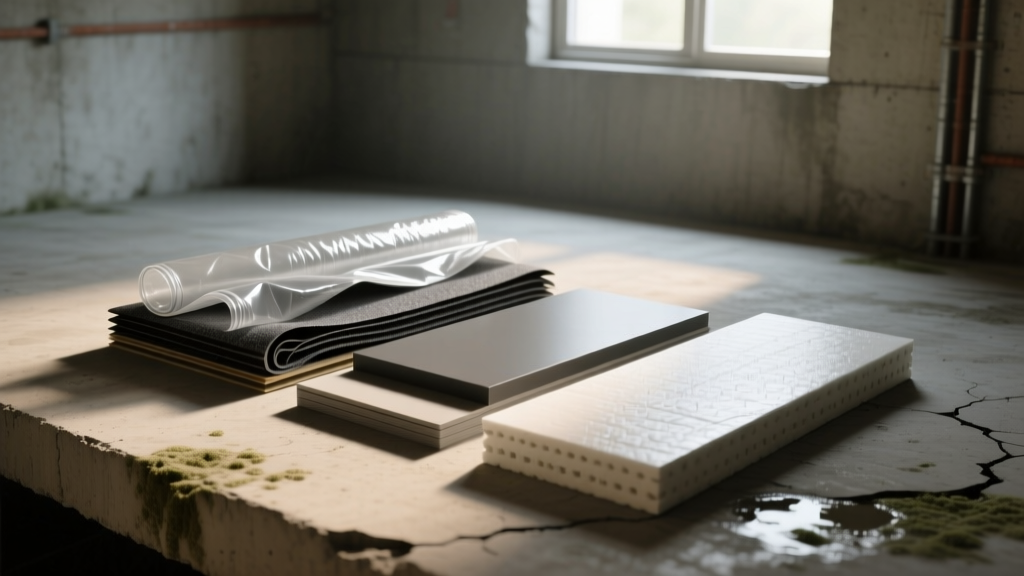
When evaluating basement crawl space waterproofing, most contractors focus on immediate moisture elimination. However, the true measure of a system's value is its durability under continuous hydrostatic pressure, biological stress, and mechanical wear. A system that fails in three years costs significantly more over a decade than a premium installation rated for 25 years. This analysis breaks down the actual lifespan of modern crawl space waterproofing materials, identifying specific failure modes and providing a framework for long-term specification.
The Lifespan Matrix: Crawl Space Waterproofing Materials
Not all waterproofing components degrade at the same rate. The table below categorizes standard materials by their expected service life, primary degradation vectors, and current 2026 material costs.
| Material / Component | Grade / Specification | Expected Lifespan | Primary Failure Mode | Material Cost (per sq ft / unit) |
|---|---|---|---|---|
| Polyethylene Vapor Barrier | 6-Mil Unreinforced | 1 - 3 Years | Puncture and tearing from foot traffic | $0.15 - $0.25 |
| Encapsulation Liner | 12-Mil String-Reinforced | 7 - 12 Years | Plasticizer migration causing brittleness | $0.60 - $0.85 |
| Encapsulation Liner | 20-Mil Cross-Laminated | 25+ Years | Seam tape degradation (liner outlasts tape) | $1.20 - $1.60 |
| Perimeter French Drain | Corrugated Slotted Pipe | 15 - 20 Years | Silt infiltration and root intrusion | $1.50 - $2.50 (linear ft) |
| Sump Pump | Thermoplastic Housing | 5 - 8 Years | Impeller wear and switch failure | $120 - $180 |
| Sump Pump | Cast Iron / Stainless | 12 - 18 Years | Galvanic corrosion and capacitor burnout | $220 - $350 |
Polyethylene Liners: Mil Thickness vs. Real-World Durability
The polyethylene liner is the foundational element of any encapsulation strategy. According to ASTM E1745 standards for vapor retarders, thickness (measured in mils) directly correlates to puncture resistance, but the manufacturing method dictates long-term tensile strength.
The Puncture Threshold Reality
A standard 6-mil liner, often sold as 'contractor grade,' has a puncture threshold of roughly 1.5 pounds of force. In a crawl space where HVAC technicians, plumbers, or homeowners occasionally enter for maintenance, a 6-mil liner will develop micro-tears within the first 12 months. These tears compromise the vapor seal, allowing soil gases and moisture to bypass the barrier.
For a multi-decade lifespan, 20-mil cross-laminated liners are the industry benchmark. These liners integrate a woven polyester scrim between two layers of virgin polyethylene. This construction prevents tear propagation; if the outer layer is pierced, the internal scrim distributes the stress, preventing the hole from expanding. When installed correctly, a 20-mil liner will easily outlast a 25-year mortgage cycle.
Mechanical Systems: Sump Pumps and Dehumidifier Degradation
While passive barriers like polyethylene can last decades, active mechanical systems dictate the functional lifespan of the overall waterproofing strategy. Water infiltration requires active removal, and mechanical fatigue is the leading cause of catastrophic crawl space flooding.
Cast Iron vs. Thermoplastic Sump Pumps
Thermoplastic sump pumps are lightweight and inexpensive, but their housings are susceptible to UV degradation (if exposed to light from open vents) and thermal warping from the heat generated by the motor during extended run cycles. Cast iron housings, such as those found on the Zoeller M53 Mighty-Mate series, act as massive heat sinks. The cast iron dissipates motor heat efficiently, preventing the thermal degradation of internal seals and significantly extending the lifespan of the starting capacitor.
- Switch Mechanics: The most common point of failure in any sump pump is the float switch. Vertical magnetic switches outlast tethered switches by a factor of three because they are immune to debris entanglement in the sump pit.
- Check Valves: A silent check valve (using a spring-loaded internal gate rather than a swinging flapper) prevents water hammer, which can fracture PVC discharge pipes over a 10-year period.
Seam and Fastener Failure: The Hidden Weak Points
A 20-mil liner is virtually indestructible, but the seams where two sheets overlap are highly vulnerable. The lifespan of your encapsulation is ultimately dictated by the adhesive used to join the material.
Acrylic vs. Butyl Tape Adhesives
Standard acrylic HVAC tapes dry out and lose adhesion within 3 to 5 years in the high-humidity, temperature-fluctuating environment of a crawl space. Once the tape delaminates, the seams open, rendering the encapsulation useless. For permanent adhesion, double-sided butyl tape must be specified. Butyl rubber remains permanently pliable and does not cure or dry out, maintaining a watertight seal for 20+ years. The Centers for Disease Control and Prevention (CDC) emphasizes that controlling indoor humidity requires continuous, unbroken vapor barriers; seam failure directly undermines this goal.
Wall Fastening Mechanisms
Attaching the liner to the foundation walls using spray adhesive or standard construction adhesive is a temporary fix. Solvents in construction adhesives can chemically degrade the polyethylene over time. The most durable method involves mechanical fastening: using pressure-treated furring strips or specialized plastic termination bars anchored into the masonry with concrete tap screws, combined with a continuous bead of polyurethane sealant behind the liner.
Calculating the 25-Year Cost of Ownership
To understand the true value of premium basement crawl space waterproofing, we must analyze the cost per year of service. Below is a comparative analysis for a standard 1,500 sq. ft. crawl space.
Scenario A: Budget Encapsulation (6-Mil + Acrylic Tape + Thermoplastic Pump)
- Initial Material Cost: $650
- Required Replacements (over 25 years): 4 liner replacements, 4 pump replacements, annual seam repairs.
- 25-Year Total Cost: ~$4,800 (excluding labor)
- Cost Per Year of Service: $192/year
Scenario B: Premium Encapsulation (20-Mil + Butyl Tape + Cast Iron Pump)
- Initial Material Cost: $2,400
- Required Replacements (over 25 years): 1 pump replacement at year 15.
- 25-Year Total Cost: ~$2,750 (excluding labor)
- Cost Per Year of Service: $110/year
While the upfront material cost for the premium system is nearly four times higher, the 25-year lifecycle cost is almost half that of the budget system, entirely eliminating the risk of mid-cycle moisture damage to structural joists.
Expert Verdict: Specifying a Multi-Decade System
Building a crawl space waterproofing system that survives a quarter-century requires strict adherence to material specifications. When drafting your project scope or evaluating contractor bids, mandate the following parameters to ensure maximum durability:
- Liner Specification: Require a minimum 12-mil string-reinforced or 20-mil cross-laminated virgin polyethylene liner. Reject any bid specifying 'contractor grade' or unreinforced 6-mil material.
- Seam Protocol: Mandate the use of double-sided butyl tape for all overlapping seams, supplemented by single-sided butyl or specialized polyethylene tape on the exterior face.
- Wall Termination: Specify mechanical termination bars or pressure-treated furring strips anchored with masonry screws, sealed with high-grade polyurethane caulk. Prohibit the use of spray adhesives for wall attachments.
- Pump Selection: Install a cast-iron or stainless-steel submersible sump pump with a vertical magnetic float switch and a spring-loaded silent check valve.
- Drainage Protection: If a perimeter French drain is installed, ensure the corrugated pipe is wrapped in a non-woven geotextile filter fabric to prevent silt accumulation, which is the primary cause of drain field failure.
By shifting the focus from immediate water removal to long-term material degradation, homeowners and builders can implement basement crawl space waterproofing systems that provide reliable, maintenance-free protection for decades. For further guidelines on structural moisture management and inspection protocols, consult the standards published by InterNACHI and local building code authorities.