Best Brands for Waterproofing Basement Walls: 2026 Review
Compare Drylok, RadonSeal, and Sika for waterproofing basement walls. Get 2026 pricing, coverage rates, and expert application protocols.
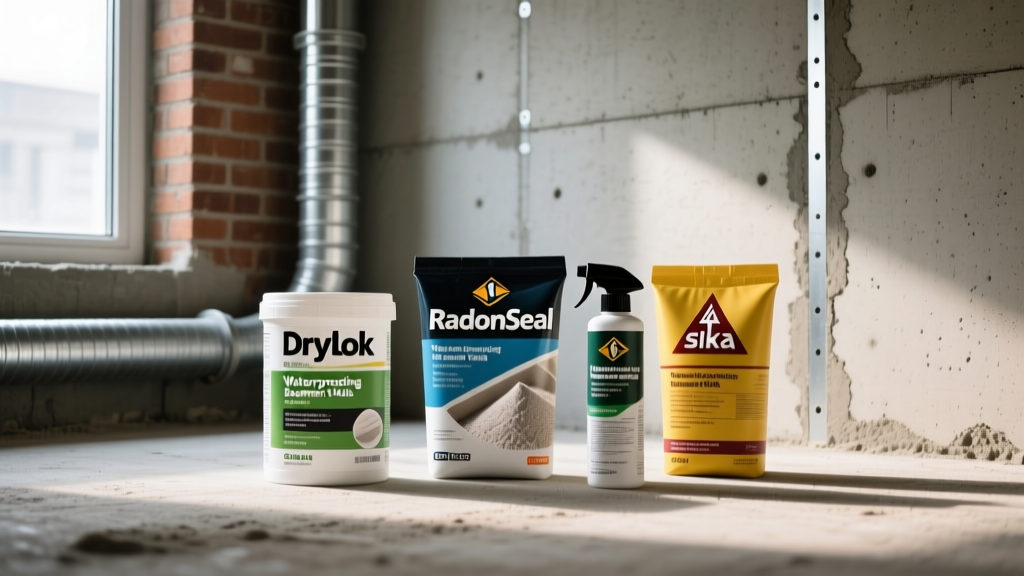
The Physics of Hydrostatic Pressure and Material Selection
When waterproofing basement walls from the interior (negative-side waterproofing), the primary adversary is hydrostatic pressure. Water weighs 62.4 pounds per cubic foot. In saturated clay soils, a mere four-foot head of water can exert upwards of 10 PSI against your foundation. According to the Building America Solution Center, interior sealers must either physically block this pressure through high-build cementitious mass or chemically alter the concrete matrix to eliminate the capillary pathways that allow moisture migration.
Choosing the wrong product for your specific wall composition—poured concrete versus CMU (concrete masonry units/cinder block)—is the leading cause of catastrophic coating failure. This 2026 deep-dive analyzes the three dominant product lines in the residential and light-commercial market: UGL Drylok, RadonSeal, and SikaTop, breaking down their chemical mechanisms, real-world costs, and exact application parameters.
Brand Deep-Dive: UGL Drylok Extreme Masonry Waterproofer
UGL Drylok Extreme (Model #28613) remains the most widely available consumer-grade hydraulic cement waterproofer. It is a Portland cement-based coating fortified with proprietary crystalline additives and acrylic polymers. When applied, it forms a rigid, high-build membrane that physically blocks water infiltration.
Technical Specifications & Pricing
- Hydrostatic Resistance: Withstands up to 15 PSI (equivalent to a 33-foot head of water).
- Coverage Rate: 75 to 100 square feet per gallon, depending on substrate porosity.
- 2026 Retail Cost: $48 to $55 per gallon.
- Dry Time: Touch dry in 3 hours; recoat in 4-6 hours; full cure in 24 hours.
Pros and Cons
Pros: Excellent bridging capabilities for minor surface pitting; highly forgiving on rough CMU blocks; readily available at big-box retailers; available in multiple tintable colors.
Cons: Rigid film will crack if the foundation experiences structural settling or thermal expansion; completely ineffective if applied over existing paint, efflorescence, or drywall dust.
Brand Deep-Dive: RadonSeal Deep-Penetrating Concrete Sealer
RadonSeal operates on an entirely different chemical principle. It is not a surface coating but a sodium silicate penetrating sealer. When sprayed onto bare concrete, it reacts with the calcium hydroxide (free lime) inherent in the cement matrix to form calcium silicate hydrate (C-S-H) gel. This gel permanently plugs the microscopic capillaries from the inside out, penetrating up to 4 inches into poured concrete.
Technical Specifications & Pricing
- Hydrostatic Resistance: Eliminates capillary action; relies on the structural integrity of the concrete itself rather than a surface film.
- Coverage Rate: 200 square feet per gallon (applied as two coats of 100 sq ft each).
- 2026 Retail Cost: $95 to $110 per gallon (Standard for CMU; Plus formula for poured concrete).
- Dry Time: Dries in 2-4 hours; chemical reaction continues for up to 90 days.
Pros and Cons
Pros: Will never peel, blister, or flake because it becomes part of the concrete; allows the wall to remain vapor-permeable (breathable); dual-purpose as a radon gas barrier.
Cons: Cannot bridge physical cracks or voids; requires completely bare, unpainted concrete; highly sensitive to application temperature (must be above 50°F); will fail if applied to concrete less than 28 days old.
Brand Deep-Dive: SikaTop Seal 107
SikaTop Seal 107 is a professional-grade, two-component polymer-modified cementitious coating. It consists of Part A (a liquid acrylic polymer emulsion) and Part B (a specially graded cement and silica sand powder). The EPA Moisture Control Guidelines often reference flexible cementitious systems for areas prone to minor structural movement, which is exactly where SikaTop excels.
Technical Specifications & Pricing
- Hydrostatic Resistance: High resistance to positive and negative water pressure; highly durable in constantly damp environments.
- Coverage Rate: Approximately 80 square feet per 2-gallon kit (at 2mm thickness).
- 2026 Retail Cost: $75 to $85 per 2-gallon kit.
- Dry Time: Recoat in 4-6 hours; full cure in 5-7 days.
Pros and Cons
Pros: The acrylic polymer provides flexibility, allowing it to bridge dynamic hairline cracks up to 0.5mm; exceptional adhesion to damp (not actively leaking) substrates; highly resistant to freeze-thaw cycling.
Cons: Strict pot life (must be used within 45 minutes of mixing); requires mechanical mixing for proper consistency; higher cost per square foot than single-component alternatives.
Product Comparison Matrix
| Feature | UGL Drylok Extreme | RadonSeal Standard/Plus | SikaTop Seal 107 |
|---|---|---|---|
| Chemistry | Hydraulic Cement / Acrylic | Sodium Silicate Penetrant | Polymer-Modified Cementitious |
| Best Substrate | Rough CMU / Cinder Block | Poured Concrete / Smooth Block | Both (with primer on highly porous) |
| Crack Bridging | None (Rigid) | None (Internal Matrix) | Up to 0.5mm (Flexible) |
| Cost per Sq Ft | $0.50 - $0.73 | $0.47 - $0.55 | $0.93 - $1.06 |
| Vapor Permeable? | No (Vapor Barrier) | Yes (Breathable) | Semi-Permeable |
Critical Failure Modes in Basement Waterproofing
According to data from the Portland Cement Association, over 70% of interior waterproofing failures are due to substrate preparation errors, not product defects. Avoid these specific failure modes:
1. Efflorescence Trapping
Efflorescence is the white, powdery salt deposit left behind when water evaporates from masonry. If you apply Drylok or SikaTop directly over efflorescence, the coating will bond to the salt crystals, not the concrete. When the next rain event pushes moisture through the wall, the salt rehydrates, expands, and violently pops the coating off the wall. Fix: Dry-brush all loose salts, then wash the wall with a 4:1 water-to-muriatic acid solution or a commercial efflorescence remover. Neutralize and rinse thoroughly before coating.
2. Hydrostatic Bypass at the Cove Joint
Interior wall coatings only protect the vertical surface. If hydrostatic pressure builds up beneath the slab, water will bypass your wall coating entirely by pushing up through the cove joint (the seam where the wall meets the floor). Fix: Never rely solely on wall coatings if you have a high water table. You must install a perimeter interior French drain system and a sump pump to relieve sub-slab hydrostatic pressure.
3. RadonSeal Flash-Curing
Sodium silicate sealers require moisture to penetrate deeply into the concrete matrix. If applied to a bone-dry wall in a low-humidity environment, the liquid will flash-cure on the surface, creating a brittle glass-like layer that prevents deep penetration. Fix: Lightly mist the concrete with clean water before applying RadonSeal. The surface should be damp, but not puddling.
Step-by-Step Surface Preparation Protocol
To achieve the manufacturer-warranted performance of any negative-side waterproofing system, follow this exact preparation sequence:
- Strip Existing Finishes: Remove all drywall, insulation, and wood furring strips. Wire-brush any existing paint or mastic down to bare concrete.
- Chase and Patch Active Leaks: Use a cold chisel to widen any active weeping cracks into a V-shape (minimum 1/2 inch wide and deep). Pack the void with a fast-setting hydraulic cement (e.g., Quikrete Hydraulic Water Stop), which sets in 3-5 minutes and expands slightly as it cures to lock into the void.
- Acid Etch (For Smooth Poured Concrete Only): If using a surface coating on smooth poured concrete, etch the surface to achieve a CSP-2 or CSP-3 (Concrete Surface Profile). Use a phosphoric or muriatic acid etcher, scrub with a stiff bristle broom, and power-wash the residue.
- Dampen the Substrate: For cementitious coatings (Drylok, SikaTop), the wall must be damp (SSD - Saturated Surface Dry condition) prior to application. This prevents the dry concrete from sucking the moisture out of the coating too quickly, which causes shrinkage cracking.
Final Verdict: Matching the Product to Your Wall Condition
Selecting the right product for waterproofing basement walls requires an honest assessment of your foundation's current state and your long-term goals.
Choose UGL Drylok Extreme if: You are working with rough, highly porous cinder block walls, you need a DIY-friendly single-component product, and you plan to frame and finish the basement immediately, requiring a vapor barrier to protect your drywall and insulation.
Choose RadonSeal if: You have poured concrete walls or dense CMU, your primary concern is mitigating radon gas alongside moisture vapor, and you want a permanent, maintenance-free solution that will not alter the wall's appearance or breathability.
Choose SikaTop Seal 107 if: You are dealing with an older foundation prone to minor thermal cracking, you are waterproofing a commercial space or a high-value wine cellar where absolute moisture control is required, and you have the budget and technical skill to manage a two-component mixing process.