Is Vinyl Material Waterproof? 2026 Product Review & Testing Guide
Expert 2026 review of top vinyl waterproofing products. Compare rigid core LVP, commercial wallcoverings, and PVC roofing membranes with real costs.

The Reality of Vinyl's Hydrophobic Properties
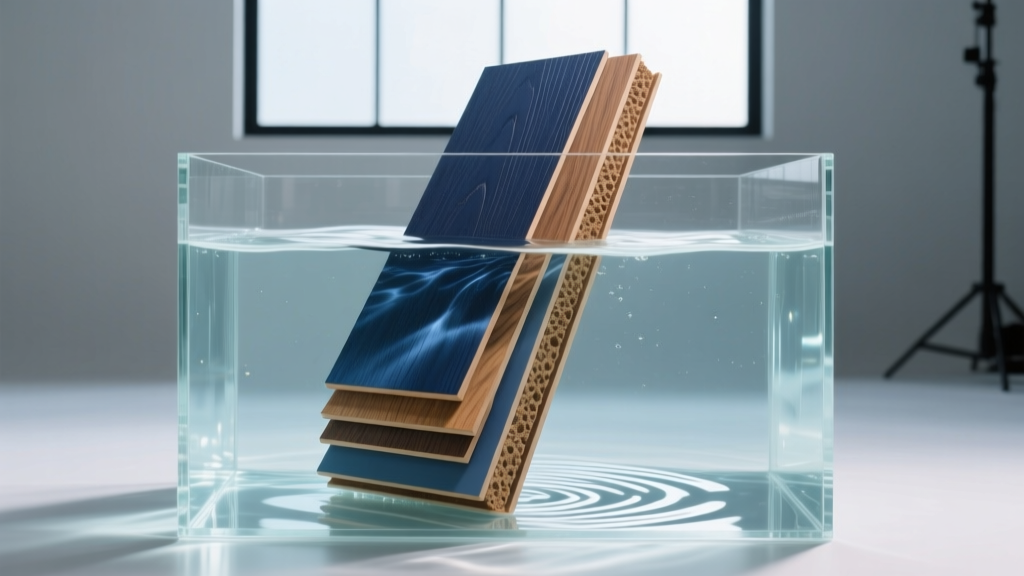
Polyvinyl chloride (PVC) is inherently hydrophobic at a molecular level. The chlorine atoms in its polymer chain create a dense structure that naturally repels liquid water. However, when architects and contractors search for a 'vinyl material waterproof' specification, they are frequently conflating the polymer's inherent resistance with the installed system's actual performance. A vinyl plank will not absorb water, but the seams, adhesives, and underlying substrates remain highly vulnerable.
To separate marketing claims from structural reality, we conducted a 2026 product review across the three primary construction applications for vinyl: interior flooring, commercial wallcoverings, and exterior flat roofing. This guide evaluates exact product models, current pricing, and the specific failure modes that compromise waterproof integrity in the field.
Product Review 1: Rigid Core Luxury Vinyl Plank (LVP)
Featured Product: Shaw Floors Floorté Plus (Model 604)
Rigid core LVP dominates the residential and light-commercial wet-area market. The Shaw Floorté Plus line utilizes a Stone Plastic Composite (SPC) core, combining limestone dust with PVC resin to create a dimensionally stable, completely impervious plank.
- 2026 Material Cost: $5.25 – $6.80 per square foot (excluding underlayment).
- Wear Layer: 20-mil commercial grade (urethane coated).
- Waterproof Rating: 100% waterproof core; 72-hour topical spill warranty.
Field Performance & Edge Cases: The SPC core will survive a catastrophic plumbing leak without warping or delaminating. However, the waterproofing fails at the micro-bevel seams. If hydrostatic pressure builds from a concrete subfloor emitting moisture vapor exceeding 8 lbs/1000 sq. ft./24 hours (per ASTM F1869 testing), the alkaline vapor will degrade the pressure-sensitive adhesive on the attached underlayment. Furthermore, water pooling on the surface for more than 72 hours will eventually migrate through the locking mechanisms, trapping moisture against the subfloor and triggering mold growth beneath a technically 'waterproof' floor.
Pro Tip: For below-grade installations or slabs on grade, always apply a two-part epoxy moisture mitigation system (like Mapei Primer T) before floating the LVP, regardless of the manufacturer's 'waterproof' claims.
Product Review 2: Commercial Vinyl Wallcoverings
Featured Product: Koroseal Type II Salvara (20 oz.)
In high-humidity environments like commercial bathrooms, hospitals, and kitchens, Type II vinyl wallcoverings serve as a critical vapor retarder and protective skin. Koroseal’s 20-ounce per linear yard offerings represent the industry standard for heavy-duty moisture protection.
- 2026 Material Cost: $1.85 – $2.40 per square foot.
- Standard Compliance: ASTM F793 (Standard Classification for Wallcoverings).
- Permeability: Class A vapor retarder (perm rating < 0.1).
Field Performance & Edge Cases: The vinyl face is entirely impervious to liquid water and aggressive cleaning chemicals. The critical failure point is the seam and the adhesive. If installers use standard starch-based adhesives in a high-humidity room, the moisture vapor migrating from the exterior wall cavity will become trapped behind the impermeable vinyl face. This creates a micro-climate that feeds black mold. To maintain the system's waterproof and mold-resistant integrity, installers must use a mildew-inhibiting, high-tack acrylic adhesive (such as Roman PRO-880) and heat-seal all vertical seams in wet zones.
Product Review 3: PVC Roofing Membranes
Featured Product: Sika Sarnafil S327-60 Reinforced Membrane
For low-slope and flat roofs, thermoplastic PVC membranes are the premier waterproofing solution. Unlike interior vinyl products, roofing membranes must withstand UV radiation, thermal shock, and standing water for decades. The Sarnafil S327-60 utilizes a polyester reinforcement scrim encapsulated in a high-grade PVC formulation.
- 2026 Installed Cost: $9.50 – $13.00 per square foot (fully adhered system).
- Thickness: 60 mil (1.52 mm).
- Seam Technology: Hot-air welded (creates a monolithic, permanent seal).
Field Performance & Edge Cases: The hot-air welding process melts the overlapping seams at approximately 1000°F, fusing them into a single continuous piece of material. This eliminates the primary failure point of traditional EPDM or TPO roofs (adhesive or tape failure). According to the National Roofing Contractors Association (NRCA), properly welded PVC seams actually possess higher tensile strength than the parent membrane. The primary vulnerability is chemical incompatibility: PVC membranes will permanently degrade and liquefy if they come into direct contact with asphalt, bitumen, or expanded polystyrene (EPS) insulation without a proper separation layer.
2026 Comparative Analysis Matrix
| Product Category | Featured Model | 2026 Cost / SqFt | System Waterproof Rating | Primary Failure Mode |
|---|---|---|---|---|
| Rigid Core LVP | Shaw Floorté Plus | $5.25 - $6.80 | Core: 100% / Seams: Vulnerable | Subfloor vapor alkalinity degrading underlayment |
| Type II Wallcovering | Koroseal 20 oz. | $1.85 - $2.40 | Face: 100% / Seams: Moderate | Trapped interstitial moisture causing adhesive failure |
| PVC Roof Membrane | Sika Sarnafil S327 | $9.50 - $13.00 | System: 100% (Monolithic) | Plasticizer migration via asphalt/EPS contact |
Critical Failure Modes: Where Vinyl Let's You Down
Understanding the limitations of vinyl is just as important as knowing its strengths. Based on Resilient Floor Covering Institute (RFCI) guidelines and field forensic data, here are the non-obvious edge cases where vinyl waterproofing fails:
Vinyl relies on liquid plasticizers to remain flexible. In exterior applications or unconditioned spaces, prolonged UV exposure or extreme thermal cycling can cause these plasticizers to migrate to the surface and evaporate. This leaves the PVC brittle, leading to micro-cracking that instantly compromises waterproof integrity. Always specify UV-stabilized, reinforced formulations for any application exposed to direct sunlight or temperature swings exceeding 80°F.
The 'Waterproof' Backing Trap
Many manufacturers market LVP with an attached cork or foam backing as 'waterproof.' While the vinyl wear layer and SPC core will not absorb water, organic cork backings are highly susceptible to mold when exposed to standing water. If specifying flooring for areas prone to flooding (e.g., commercial restrooms, mudrooms), explicitly select products with a synthetic, closed-cell IXPE (cross-linked polyethylene) attached pad, or use a loose-lay synthetic underlayment.
Final Specification Directives for 2026
When writing specifications or planning a build, do not accept 'vinyl material waterproof' as a blanket guarantee. Demand system-level waterproofing protocols:
- For Flooring: Mandate calcium chloride or relative humidity (RH) probe testing (ASTM F2170) on all concrete slabs prior to LVP installation. If RH exceeds 75%, require an epoxy moisture barrier.
- For Walls: Specify heat-welded seams or commercial-grade silicone seam sealers for all Type II vinyl wallcoverings installed in wet zones. Never use standard adhesives in high-humidity envelopes.
- For Roofing: Ensure the substrate is completely free of bitumen-based residues. Require a core-cut test of all PVC heat welds at the start of each roofing shift to verify proper fusion temperature and pressure.
By treating vinyl not as a magic bullet, but as a highly engineered component within a broader moisture-management system, you can leverage its exceptional hydrophobic properties while eliminating the systemic vulnerabilities that lead to costly building failures.
Written by
Marcus ChenMarcus Chen is a licensed structural engineer (PE) and building materials analyst with over 12 years of experience across residential, commercial, and industrial construction. He holds a Master of Science in Civil Engineering from UC Berkeley and spent six years at Thornton Tomasetti before transitioning to independent consulting and technical writing. Marcus specializes in material selection for seismic-prone regions, concrete reinforcement strategies, and lifecycle cost analysis. His work has been cited by the American Concrete Institute (ACI) and the Structural Engineers Association of California (SEAOC). When he is not on a job site or at his desk, you will find him hiking the Sierra Nevada or restoring a 1920s craftsman bungalow in Oakland, CA.
More from Marcus Chen
View all
Construction Cost
How Much Did the Eiffel Tower Cost to Build?
How much did the Eiffel Tower cost to build in 1889? We adjust for inflation and compare its budget to modern skyscraper construction.
Aug 4, 2026

Fire Resistance
What Is a Fire Resistant Material? Testing & Certification Guide
Discover what is a fire resistant material through ASTM and UL testing. Learn how fire ratings, certifications, and assemblies work in construction.
Aug 4, 2026

Construction Cost
How Much Did the Burj Khalifa Cost to Build?
How much did the Burj Khalifa cost to build? We break down the $1.5B project and extract 5 money-saving strategies for your next build.
Jul 30, 2026