Matching LED Solar Lights Outdoor Waterproof Tech to Climate Zones
Discover how to match LED solar lights outdoor waterproof ratings, gasket materials, and IP codes to specific climate zones for long-lasting performance.
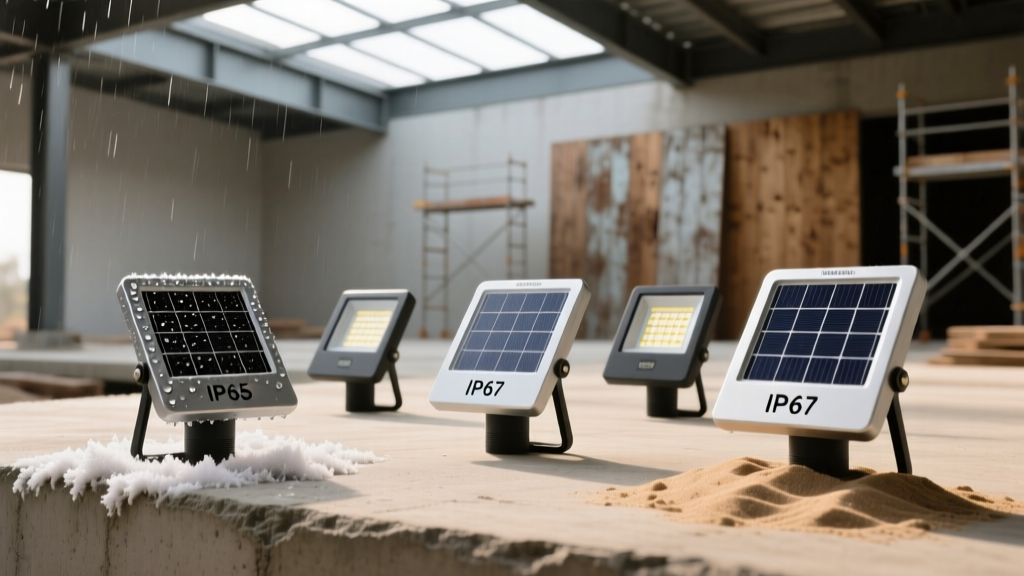
Homeowners and landscape architects evaluating led solar lights outdoor waterproof performance must look beyond the marketing claims on the packaging. The longevity of exterior solar illumination depends entirely on the specific waterproofing materials used in the housing, the chemical composition of the internal seals, and the ingress protection (IP) rating matched to your local microclimate. A fixture that survives a dry, mild winter in California will rapidly fail in the freeze-thaw cycles of the Midwest or the salt-laden air of the Eastern Seaboard.
This guide breaks down the material science behind exterior solar lighting enclosures and provides a scenario-matching framework to ensure your investment survives the elements.
The Anatomy of Waterproof LED Solar Housings
The physical barrier between sensitive lithium iron phosphate (LiFePO4) batteries and the environment is determined by three critical material choices: the outer shell, the compression gaskets, and the internal potting compounds.
Outer Shell Polymers: Polycarbonate vs. ABS
Most budget-tier solar lights utilize Acrylonitrile Butadiene Styrene (ABS) plastic. While ABS is impact-resistant, it is highly susceptible to ultraviolet (UV) degradation. Without expensive UV-inhibitor coatings, ABS housings will yellow, become brittle, and develop micro-fractures within 18 to 24 months of direct sun exposure, compromising the waterproof seal. Premium fixtures utilize UV-stabilized Polycarbonate (PC) or marine-grade powder-coated aluminum. Polycarbonate maintains its structural integrity and impact resistance across a temperature range of -40°F to 240°F, making it the superior choice for long-term waterproofing.
Compression Gaskets: Silicone vs. EPDM Rubber
The seal between the solar panel lens and the main housing is the most common failure point. Manufacturers typically use either Ethylene Propylene Diene Monomer (EPDM) rubber or platinum-cured silicone. EPDM is cost-effective but loses its elasticity and compresses permanently (compression set) when exposed to prolonged freezing temperatures. Platinum-cured silicone gaskets, typically rated at 40 to 50 Shore A durometer, retain their flexibility and rebound properties even at -40°F, ensuring the housing remains sealed during severe winter contractions.
Internal Potting and Conformal Coatings
Even with perfect external seals, internal condensation can destroy a circuit board. High-end waterproof solar lights use polyurethane potting compounds to completely encapsulate the printed circuit board (PCB). This thermosetting polymer creates a solid, impenetrable block that prevents moisture from reaching the solder joints, effectively eliminating internal corrosion.
Decoding IP Ratings for Exterior Lighting Scenarios
The Ingress Protection (IP) code, defined by the IEC 60529 standard, is the universal metric for enclosure sealing. According to Underwriters Laboratories (UL), the first digit represents dust ingress, while the second digit represents water ingress. For exterior solar lighting, the first digit should always be a 6 (dust-tight). The second digit dictates the climate suitability.
| IP Rating | Water Protection Level | Testing Standard | Ideal Climate Scenario |
|---|---|---|---|
| IP65 | Low-pressure water jets | 6.3mm nozzle, 12.5 L/min for 3 mins | Arid climates, covered patios, light seasonal rain |
| IP66 | Powerful water jets | 12.5mm nozzle, 100 L/min for 3 mins | Heavy rain zones, Pacific Northwest, exposed gardens |
| IP67 | Temporary submersion | Submerged 1 meter for 30 minutes | Flood-prone areas, low-lying landscape borders |
| IP68 | Continuous submersion | Manufacturer specified (usually >1m) | Pond lighting, water features, extreme monsoon zones |
Scenario Matching: Climate Zones & Material Fit
Selecting the right fixture requires matching the IP rating and housing materials to your specific environmental stressors.
Scenario A: Coastal and Salt-Spray Environments
The Threat: Salt accelerates galvanic corrosion and degrades standard plastics.
The Solution: Require a minimum of IP66. The housing must be UV-stabilized polycarbonate or anodized aluminum. Crucially, all external fasteners must be 316-grade stainless steel; standard 304 stainless steel or zinc-plated screws will rust and stain the fixture within a single season. Look for fixtures that explicitly state compliance with ASTM B117 salt fog testing standards.
Scenario B: Heavy Rain and High Humidity Zones
The Threat: Driving rain forces water past weak lens seals, and high ambient humidity leads to internal condensation when the fixture cools at night.
The Solution: IP66 is mandatory. To combat the 'breathing' effect (where cooling air inside the fixture creates a vacuum that sucks in humid air), premium fixtures incorporate expanded polytetrafluoroethylene (ePTFE) venting membranes. These microscopic vents allow water vapor to escape while blocking liquid water droplets, equalizing internal pressure without compromising the waterproof seal.
Scenario C: Freeze-Thaw and Snow Load Regions
The Threat: Water ingress that freezes expands by 9%, cracking brittle plastics and shattering glass lenses. Ice buildup can also physically sheer weak mounting stakes.
The Solution: IP67 or IP68 is required to ensure no liquid water enters the housing to freeze. The housing must be constructed of thick-walled polycarbonate or aluminum. Avoid glass lenses entirely; opt for tempered, anti-reflective coated polycarbonate lenses that can withstand the impact of falling icicles and the pressure of snowplow drifts.
Warning: The Solar Panel Delamination Trap
Many IP67-rated lights fail not at the housing seam, but at the solar panel. The photovoltaic cells are typically laminated under a layer of PET (polyethylene terephthalate) or EVA (ethylene-vinyl acetate). In high-heat environments, cheap EVA degrades, allowing water to seep beneath the solar cells, destroying the panel's output. For longevity, specify fixtures that use glass-covered solar panels or high-grade, edge-sealed PET laminates.
Critical Failure Points and Field Remediation
Even the best waterproofing materials degrade over a 5-to-7-year lifecycle. Understanding how to maintain and remediate these fixtures extends their operational life significantly.
Battery Compartment Corrosion
The battery bay is often a separate sub-chamber. If the O-ring seal fails, moisture pools around the LiFePO4 or NiMH cells. Remediation: Annually inspect the battery contacts. Apply a thin layer of dielectric grease to the battery terminals to prevent oxidation. If the existing foam or rubber O-ring shows signs of flattening (compression set), replace it with a correctly sized Viton or silicone O-ring from a hardware supplier.
Sealant Reapplication Protocols
When factory silicone gaskets fail, homeowners often reach for standard acrylic or latex caulks. These are entirely unsuitable for exterior solar lighting, as they lack UV resistance and will shrink and crack within months. Remediation: Use a 100% silicone sealant (like GE Silicone II) for lens-to-housing seams. For structural joints or base-to-stake connections, use a marine-grade polyurethane adhesive sealant, such as 3M 5200. Polyurethane sealants offer superior adhesion to polycarbonate and remain flexible through extreme temperature fluctuations.
Alignment with Industry Standards
When procuring commercial-grade or high-end residential led solar lights, outdoor waterproof specifications should align with broader electrical enclosure standards. The National Electrical Manufacturers Association (NEMA) provides enclosure ratings that parallel IP codes. For exterior solar lighting, a NEMA 3R (rainproof) or NEMA 4 (watertight) rating is the commercial equivalent of IP65/IP66. Furthermore, the U.S. Department of Energy's Solid-State Lighting program emphasizes that thermal management and moisture ingress are the two leading causes of lumen depreciation in exterior LED fixtures. Ensuring your chosen fixtures utilize advanced potting and ePTFE venting directly addresses these DOE-identified failure vectors.
True waterproofing in solar lighting is not achieved by a single gasket, but by a holistic system of UV-stable polymers, flexible compression seals, and pressure-equalizing membranes working in unison against environmental stressors.
Summary Decision Matrix
Use this quick-reference framework when comparing product specifications:
- Arid / Mild Climates: IP65, ABS or PC housing, EPDM gaskets, standard EVA solar lamination.
- Heavy Rain / Humid Climates: IP66, UV-stabilized PC housing, Silicone gaskets, ePTFE venting membrane required.
- Coastal / Salt-Spray Climates: IP66 minimum, Anodized Aluminum or PC housing, 316 Stainless Steel fasteners, ASTM B117 tested.
- Freeze-Thaw / Snow Climates: IP67/IP68, Thick-walled PC housing, Platinum-cured silicone gaskets, Polyurethane PCB potting required.
By prioritizing the specific waterproofing materials and ingress ratings that match your local environmental stressors, you transition from replacing cheap solar fixtures annually to maintaining a permanent, reliable exterior lighting infrastructure.