PUL Waterproof Material vs Acrylic: Which Membrane Wins?
Compare PUL waterproof material with acrylic and bitumen membranes. Discover costs, durability, and ideal use cases for your next construction project.

Defining PUL Waterproof Material in Modern Construction
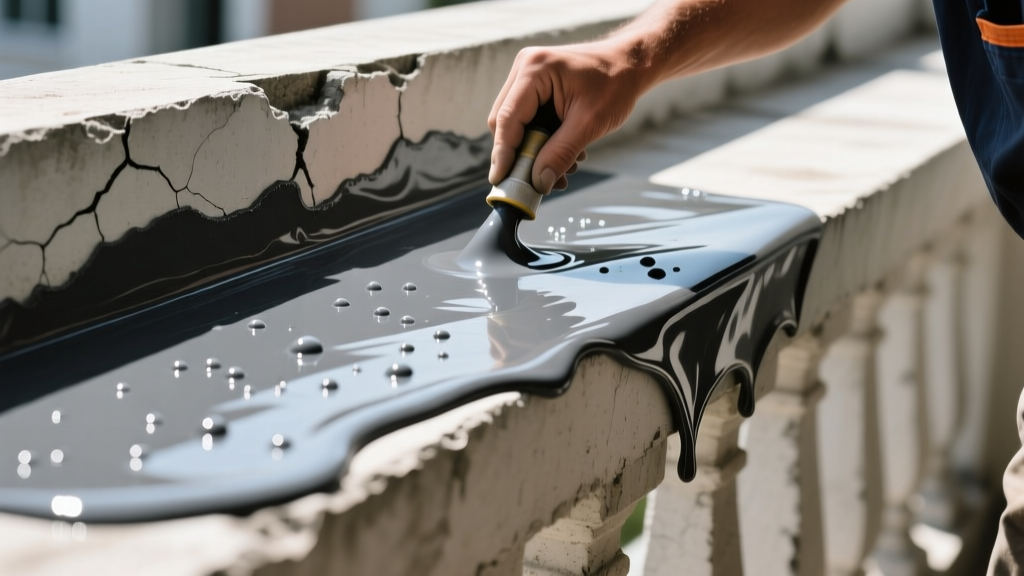
When architects and structural engineers specify a pul waterproof material for exposed podiums, balconies, and plaza decks, they are referring to Polyurethane Liquid (PUL) elastomeric membranes. Unlike sheet goods or torch-applied systems, PUL is a cold-applied, liquid-based resin that cures into a continuous, seamless, and highly flexible monolithic barrier. In 2026, advancements in hybrid-polyurethane chemistry have significantly reduced curing times and improved volatile organic compound (VOC) profiles, making PUL the preferred choice for complex geometries where sheet membranes struggle with detailing.
The Chemistry: Aromatic vs. Aliphatic PUL
Understanding the chemical backbone of your pul waterproof material is critical for long-term performance. PUL membranes are broadly categorized into two chemical families:
- Aromatic Polyurethanes: These are the workhorses of the industry. They offer exceptional tensile strength and crack-bridging capabilities at a lower cost. However, they are inherently susceptible to ultraviolet (UV) degradation. If left exposed to direct sunlight, aromatic PUL will chalk, discolor, and eventually lose elasticity. They must be top-coated with an aliphatic UV-resistant finish or buried under a wearing course (like pavers or a concrete screed).
- Aliphatic Polyurethanes: Engineered with UV-stable molecular bonds, aliphatic PUL retains its color and physical properties under direct solar exposure. Products like MAPEI Purtop 400 M or SikaRoof MTC utilize aliphatic or moisture-triggered chemistries that allow them to serve as both the waterproofing layer and the final aesthetic wearing surface. They cost approximately 30% to 45% more than aromatic variants but eliminate the need for secondary topcoats.
Head-to-Head: PUL vs. Acrylic vs. SBS Bitumen
To understand where a pul waterproof material excels, it must be benchmarked against the most common alternatives in the commercial and residential waterproofing market: cold-applied acrylics and SBS (Styrene-Butadiene-Styrene) modified bitumen sheets.
| Performance Metric | PUL (Polyurethane Liquid) | Acrylic Liquid Membrane | SBS Modified Bitumen |
|---|---|---|---|
| ASTM Standard | ASTM C836 | ASTM D6083 | ASTM D6164 |
| Tensile Strength | 2.5 - 4.0 MPa | 1.5 - 2.0 MPa | 3.0 - 5.0 MPa |
| Elongation at Break | 400% - 600% | 200% - 300% | 40% - 60% |
| Ponding Water Resistance | Excellent (Hydrophobic) | Poor (Re-emulsifies) | Good |
| Seam Integrity | Seamless / Monolithic | Seamless / Monolithic | Seam-dependent (Torch/Mop) |
| Application Temp Range | 25°F to 100°F | 50°F to 100°F | Requires heat (Torch) |
The Ponding Water Dealbreaker
The most glaring vulnerability of acrylic liquid membranes is their inability to withstand continuous ponding water. Because acrylics are water-based emulsions, prolonged submersion can cause the cured film to re-emulsify, blister, and fail. According to roofing and waterproofing guidelines published by The Construction Specifier, acrylics should only be used on slopes greater than 1/4 inch per foot where positive drainage is guaranteed. A pul waterproof material, being inherently hydrophobic once cured, remains entirely stable in zero-slope applications and contained water features, making it vastly superior for flat balconies and planter boxes.
Substrate Preparation and Primer Selection
The number one cause of PUL membrane failure is not product defect, but improper substrate preparation. Polyurethane liquids are highly sensitive to moisture and dust during the curing phase.
Detailing Internal and External Corners
While PUL is liquid and seamless, it will pull away from sharp 90-degree internal corners due to surface tension during the curing process. Best practice dictates the installation of a polyurethane sealant cant (fillet) at all wall-to-floor transitions. For external corners, embedding a reinforced polyester fleece fabric into the wet base coat is mandatory to prevent the membrane from thinning and tearing under structural movement.
Cost Analysis: 2026 Material and Labor Breakdown
Budgeting for a pul waterproof material requires looking beyond the per-gallon cost of the resin. The total installed cost is heavily influenced by substrate condition, the number of coats required to achieve the specified mil thickness, and regional labor rates.
| Cost Component | PUL (Aliphatic Exposed) | PUL (Aromatic Buried) | Acrylic Liquid |
|---|---|---|---|
| Material Cost (per sq. ft.) | $3.50 - $5.20 | $2.20 - $3.80 | $1.10 - $1.80 |
| Primer & Consumables | $0.60 - $0.90 | $0.60 - $0.90 | $0.20 - $0.40 |
| Labor (Commercial Rates) | $2.50 - $4.00 | $2.50 - $4.00 | $1.50 - $2.50 |
| Total Installed Cost | $6.60 - $10.10 | $5.30 - $8.70 | $2.80 - $4.70 |
| Expected Lifespan | 15 - 20 Years | 10 - 15 Years | 5 - 8 Years |
While the upfront capital expenditure for PUL is roughly double that of acrylic, the lifecycle cost heavily favors polyurethane. The U.S. Department of Energy notes that extending the lifecycle of exposed roof and deck membranes significantly reduces the embodied carbon and financial waste associated with tear-offs and reapplications. An aliphatic PUL system lasting 20 years eliminates the need for two to three re-coating cycles that an acrylic system would demand in the same timeframe.
Real-World Failure Modes and Edge Cases
Even the best pul waterproof material will fail if deployed in the wrong scenario. Understanding edge cases separates expert specifiers from novices.
1. Thermal Shock and Substrate Cracking
If a PUL membrane is applied over a concrete slab that lacks proper control joints, the concrete will inevitably crack. While PUL boasts 400% elongation, a rapidly opening structural crack can exceed the membrane's localized strain capacity, especially in freezing temperatures where the elastomer stiffens. Solution: Always mirror substrate control joints in the membrane using a bond-breaker tape and a localized fabric reinforcement strip, allowing the slab to move without transferring tensile stress to the waterproofing layer.
2. Chemical Exposure in Vehicular Areas
Standard PUL membranes are not designed to withstand the continuous shear force of pneumatic tires or the chemical attack of automotive oils and transmission fluids. If waterproofing a vehicular ramp or parking podium, a standard PUL will delaminate and shred. Solution: You must upgrade to a heavy-duty, aggregate-broadcast polyurethane system or a PMMA (Polymethyl Methacrylate) resin specifically rated for vehicular traffic.
Expert Verdict: Making the Final Selection
Choosing between a pul waterproof material, acrylic, or bitumen ultimately hinges on the specific environmental and structural demands of your project.
- Choose PUL (Aliphatic) when: You need a seamless, UV-stable, exposed wearing surface for pedestrian balconies, rooftop terraces, or zero-slope plaza decks where ponding water is unavoidable.
- Choose PUL (Aromatic) when: You are waterproofing a buried environment, such as under a concrete topping slab, paver system, or green roof assembly, and need maximum crack-bridging without paying for UV stabilizers.
- Choose Acrylic when: You are executing a low-budget residential re-roof over a steeply sloped metal or wood deck with guaranteed positive drainage, and the membrane will be protected by immediate over-cladding.
By prioritizing chemical compatibility, rigorous substrate preparation, and lifecycle costing over initial material savings, specifiers can leverage PUL technology to deliver watertight, durable structures that perform flawlessly for decades. For further technical specifications on elastomeric membrane testing, refer to the Building Design+Construction archives on advanced building envelope technologies.
Written by
Priya KapoorPriya Kapoor is a real estate market analyst and construction economics researcher with expertise in housing affordability, development feasibility, and infrastructure investment. She holds a Master of Regional Planning from Cornell University and previously worked as a senior analyst at CBRE's Investment Properties group, where she modeled returns for $4B in mixed-use development pipelines. Priya now runs an independent research practice advising developers, municipalities, and REITs on construction cost forecasting and market timing. She publishes the quarterly "BuildMat Market Pulse" report tracking material price indices across 12 commodity categories. Based in Austin, TX, Priya serves on the board of Habitat for Humanity Austin and is a marathon runner.
More from Priya Kapoor
View all
Construction Cost
Cost to Build a 1600 Sq Ft Home in 2026: Full Breakdown
Accurate 2026 cost to build a 1600 sq ft home—material, labor, and regional pricing breakdowns included. Plan your budget with real-time estimates.
Aug 11, 2026

Wood & Lumber
Name the Types of Wood for Pressure Treatment and Preservation
Learn how to name the types of wood best suited for pressure treatment. Compare species treatability, chemical retention levels, and 2026 preservation costs.
Aug 4, 2026

Stone & Masonry
Stone Veneer Suppliers Lindenhurst: 2026 Cost Analysis
Analyze 2026 stone veneer costs in Lindenhurst, NY. Compare local supplier pricing, delivery fees, and Suffolk County installation labor rates.
Aug 4, 2026