Is Neoprene Material Waterproof? 2026 Construction Product Review
Expert review of neoprene material waterproof performance in 2026. Compare top flashing cements, joint seals, and coatings for commercial construction.

The Molecular Reality of Neoprene Waterproofing
Polychloroprene, universally known as neoprene, has been a staple in commercial waterproofing since the 1930s. When evaluating whether neoprene material waterproof performance holds up in 2026’s demanding construction environments, the short answer is yes—but with critical caveats regarding UV exposure and chemical compatibility. According to the Whole Building Design Guide (WBDG), neoprene’s closed-cell molecular structure yields a water absorption rate of less than 5% when tested under ASTM D2240, making it highly effective at halting liquid moisture migration.
However, "waterproof" does not mean "indestructible." Neoprene relies on its chlorine cross-links to repel water, but these same bonds are vulnerable to ozone and ultraviolet degradation. This comprehensive product review evaluates the top neoprene-based waterproofing systems on the 2026 market, analyzing their real-world failure modes, installation nuances, and cost-efficiency for commercial and heavy civil applications.
Top Neoprene Waterproofing Products Reviewed (2026 Market)
1. Henry 208 Neoprene Flashing Cement
Application: Trowel-grade mastic for parapet coping, pipe penetrations, and roofing transitions.
2026 Pricing: $44.00 – $49.00 per gallon.
Coverage: ~100 sq. ft. per gallon at 1/16" thickness.
Henry 208 remains a benchmark in the industry for vertical and flashing applications. Unlike standard asphalt-based mastics, this neoprene formulation retains high elasticity (up to 800% elongation) even after curing. It bridges gaps up to 1/4" without the need for reinforcing mesh, though embedding a polyester fabric is recommended for dynamic joints. Pro Tip: It requires a strictly dry substrate. Applying Henry 208 over damp concrete traps moisture, leading to blistering within 6 to 8 months under thermal cycling.
2. Watson Bowman Acme (WBA) Pre-formed Neoprene Compression Seals
Application: Dynamic expansion joints in parking garages, bridge decks, and plaza decks.
2026 Pricing: $14.50 – $19.00 per linear foot (depending on joint width).
Movement Capacity: Up to 50% compression/extension.
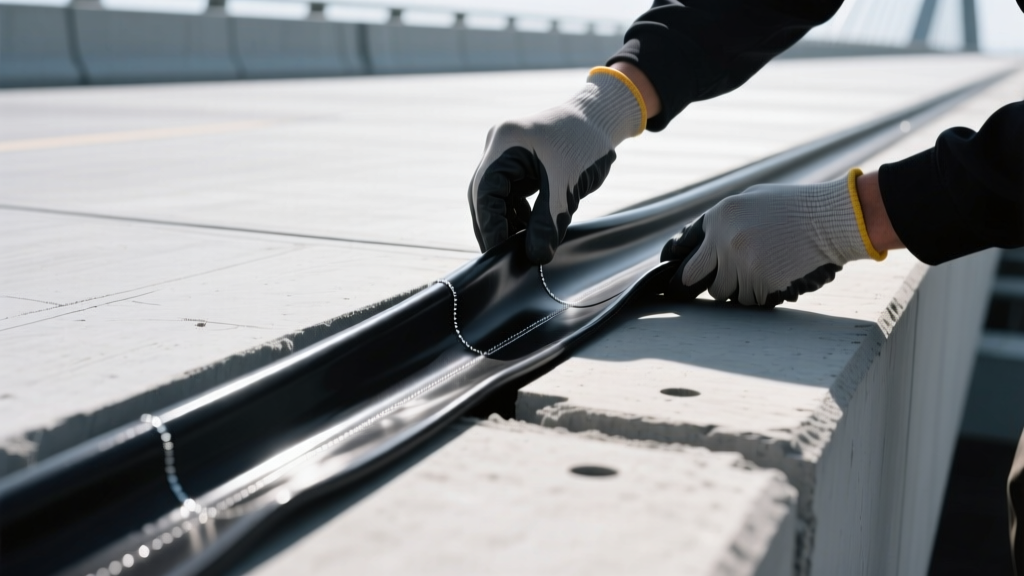
For structural joints that experience heavy vehicular shear and thermal expansion, liquid sealants fail prematurely. WBA’s pre-formed neoprene glands utilize a multi-web internal geometry that provides continuous outward pressure against the concrete substrate. When paired with a high-modulus silicone or epoxy adhesive, these glands create a watertight seal that accommodates up to 2 inches of lateral movement. The Federal Highway Administration (FHWA) frequently specifies pre-formed neoprene glands for bridge preservation due to their 20+ year service life under continuous traffic loading.
3. Karnak 109 Neoprene Flashing Cement (Mineral Surfaced)
Application: Exposed roofing flashings and masonry counter-flashing.
2026 Pricing: $52.00 – $58.00 per gallon.
Key Advantage: Embedded mineral granules for UV reflection.
Standard black neoprene degrades into a chalky, alligatored surface when left exposed to direct sunlight. Karnak 109 solves this by suspending mineral granules within the polychloroprene matrix. This eliminates the need for a secondary acrylic or urethane topcoat, reducing labor costs by roughly 30% on exposed parapet details. It cures to a tough, rubber-like membrane that resists ponding water indefinitely.
Performance Matrix: Neoprene vs. EPDM vs. PVC
Choosing the right elastomeric waterproofing membrane requires understanding how neoprene stacks up against modern alternatives like EPDM (Ethylene Propylene Diene Monomer) and PVC (Polyvinyl Chloride).
| Metric | Neoprene (Polychloroprene) | EPDM Rubber | PVC Membrane |
|---|---|---|---|
| Water Absorption | < 5% (Excellent) | < 3% (Superior) | < 1% (Superior) |
| UV / Ozone Resistance | Moderate (Requires topcoat) | Excellent (Inherently stable) | Excellent (UV stabilized) |
| Tensile Strength | 2,000 - 3,000 psi | 1,200 - 1,500 psi | 1,500 - 2,200 psi |
| Chemical Resistance | High (Oils, mild acids) | Poor (Swells in oils) | Moderate (Vulnerable to solvents) |
| Avg. Material Cost (2026) | $3.50 - $5.00 / sq. ft. | $2.00 - $3.50 / sq. ft. | $2.50 - $4.00 / sq. ft. |
Real-World Failure Modes and Edge Cases
Despite its robust water-repelling properties, neoprene waterproofing systems frequently fail when installers ignore chemical and environmental edge cases. Based on field forensic analysis and National Roofing Contractors Association (NRCA) guidelines, here are the primary failure modes:
- Plasticizer Migration (The Polystyrene Trap): Neoprene liquid coatings and membranes will chemically react with expanded polystyrene (EPS) and extruded polystyrene (XPS) insulation. The solvents in the neoprene melt the foam, while the foam's blowing agents prevent the neoprene from curing, resulting in a permanent, tacky mess. Always use a separation layer (like polyiso or a gypsum cover board) between neoprene and EPS/XPS.
- Ozone Cracking in Tension: While neoprene resists water, atmospheric ozone attacks the double bonds in the polymer chain when the material is under continuous physical tension. If a neoprene flashing is stretched too tightly over an outside corner without adequate adhesive support, micro-cracks will form within 3 to 5 years, eventually allowing water ingress.
- Cold-Weather Adhesion Failure: Neoprene mastics require ambient temperatures above 40°F (4°C) for proper solvent evaporation and cross-linking. Applying these products at 35°F traps solvents within the film, leading to cohesive tearing when the joint moves during spring thaw cycles.
Installation Best Practices & Cost Breakdown
Proper installation dictates the lifespan of any neoprene waterproofing system. Below is a standard cost and labor breakdown for a commercial parapet flashing detail using a liquid-applied neoprene system reinforced with polyester mesh.
Step-by-Step Application Protocol
- Substrate Preparation: Power-wash the concrete or masonry substrate. Allow 48 hours for complete moisture evaporation. Prime porous surfaces with a neoprene-compatible solvent primer ($0.85/sq. ft.).
- Base Coat Application: Trowel the first layer of neoprene flashing cement at a rate of 1.5 gallons per 100 sq. ft. ($0.65/sq. ft. material cost).
- Reinforcement Embedment: Immediately press a 4-inch wide polyester reinforcing fabric into the wet base coat, ensuring no wrinkles or air pockets.
- Top Coat & UV Protection: Apply a second layer of neoprene cement over the fabric. If the surface will be exposed to sunlight, finish with an acrylic elastomeric topcoat or use a mineral-surfaced neoprene product ($1.10/sq. ft.).
Final Verdict: When to Specify Neoprene
Is neoprene material waterproof? Absolutely. Its impermeability to liquid water is virtually unmatched in the elastomeric category. However, its true value in 2026 lies not just in water resistance, but in its tensile strength, chemical resistance, and adhesion to difficult substrates like metal, glass, and masonry.
Specify Neoprene When: You are detailing complex penetrations, flashing transitions in high-wind zones, or waterproofing joints in industrial environments where oil, grease, or mild chemical exposure is expected.
Avoid Neoprene When: You are covering large, flat, exposed roof areas (where single-ply TPO or EPDM is more cost-effective) or when applying directly over polystyrene insulation without a separation barrier.
By matching the specific neoprene formulation—whether a trowel-grade mastic, a pre-formed compression gland, or a mineral-surfaced coating—to the exact environmental stresses of your project, you secure a watertight envelope capable of lasting decades.
Written by
Priya KapoorPriya Kapoor is a real estate market analyst and construction economics researcher with expertise in housing affordability, development feasibility, and infrastructure investment. She holds a Master of Regional Planning from Cornell University and previously worked as a senior analyst at CBRE's Investment Properties group, where she modeled returns for $4B in mixed-use development pipelines. Priya now runs an independent research practice advising developers, municipalities, and REITs on construction cost forecasting and market timing. She publishes the quarterly "BuildMat Market Pulse" report tracking material price indices across 12 commodity categories. Based in Austin, TX, Priya serves on the board of Habitat for Humanity Austin and is a marathon runner.
More from Priya Kapoor
View all
Construction Cost
Cost to Build a 1600 Sq Ft Home in 2026: Full Breakdown
Accurate 2026 cost to build a 1600 sq ft home—material, labor, and regional pricing breakdowns included. Plan your budget with real-time estimates.
Aug 11, 2026

Wood & Lumber
Name the Types of Wood for Pressure Treatment and Preservation
Learn how to name the types of wood best suited for pressure treatment. Compare species treatability, chemical retention levels, and 2026 preservation costs.
Aug 4, 2026

Stone & Masonry
Stone Veneer Suppliers Lindenhurst: 2026 Cost Analysis
Analyze 2026 stone veneer costs in Lindenhurst, NY. Compare local supplier pricing, delivery fees, and Suffolk County installation labor rates.
Aug 4, 2026