Waterproof Coat Material Guide: Polyurethane vs Acrylic
Compare polyurethane and acrylic waterproof coat materials for concrete. Explore costs, ASTM standards, durability, and best applications for 2026.

The Core Differences in Chemical Composition
When selecting a waterproof coat material for below-grade foundations, plaza decks, or balcony surfaces, the decision typically narrows down to two dominant chemistries: acrylics and polyurethanes (PU). Understanding the molecular behavior of these coatings under environmental stress is critical for long-term structural integrity.
Acrylic waterproofing membranes are water-based, elastomeric polymers. They cure through coalescence as the water evaporates, forming a continuous, breathable film. Because they are inherently UV-stable, acrylics are the default choice for above-grade, exposed applications where sunlight resistance is mandatory. However, their water-based nature means they remain susceptible to re-emulsification if exposed to continuous ponding water before full cure, or over extended periods if formulated without high-quality hydrophobic additives.
Polyurethane coatings, conversely, are formed by the reaction of isocyanates with polyols. Available in both solvent-based and advanced water-based formulations, PU membranes cure via chemical cross-linking or moisture reaction. This creates a dense, non-porous, and highly flexible elastomeric barrier. Polyurethanes excel in high-strain environments and areas subject to hydrostatic pressure or continuous water immersion, making them the premier choice for below-grade walls, podium decks, and planter boxes.
Quick Decision Framework
- Choose Acrylic if: The substrate is above-grade, fully exposed to UV radiation, requires high vapor permeability (breathability), and the budget is constrained.
- Choose Polyurethane if: The application is below-grade, subject to hydrostatic pressure, exposed to continuous ponding water, or requires high elongation to bridge active structural cracks.
Performance Metrics and ASTM Standards
Evaluating a waterproof coat material requires looking beyond manufacturer marketing and focusing on standardized testing. The American Society for Testing and Materials (ASTM) provides the benchmarks for elongation, tensile strength, and permeability. According to the Whole Building Design Guide (WBDG), specifying materials that meet or exceed specific ASTM standards is non-negotiable for commercial and high-end residential projects.
| Metric | Elastomeric Acrylic (ASTM D6083) | Polyurethane (ASTM C836) |
|---|---|---|
| Dry Film Thickness (DFT) | 20 - 30 mils (minimum) | 60 - 120 mils (minimum) |
| Elongation at Break | 100% - 300% | 400% - 800% |
| Tensile Strength | 200 - 350 psi | 400 - 800 psi |
| Vapor Permeability | High (Breathable) | Very Low (Vapor Retarder) |
| UV Resistance | Excellent (No topcoat needed) | Poor (Requires UV aliphatic topcoat) |
| Ponding Water Tolerance | Low to Moderate | Excellent (Continuous immersion OK) |
Real-World Cost Breakdown: Material and Labor
Budgeting for a waterproofing project requires analyzing both the raw material cost and the labor intensity of the application. While acrylics are cheaper per gallon, polyurethanes offer a lower lifecycle cost in demanding environments due to their extended service life (often 20+ years compared to 5-10 years for acrylics).
Acrylic Coating Economics
High-solids elastomeric acrylics typically cost between $0.60 and $1.20 per square foot for materials. Because they are applied at thinner mil thicknesses (usually two coats at 10-15 wet mils each), labor is relatively straightforward. Roll-on or airless spray application allows crews to cover 400 to 600 square feet per man-hour. Total installed costs generally range from $2.50 to $4.50 per square foot, heavily dependent on surface preparation requirements.
Polyurethane Coating Economics
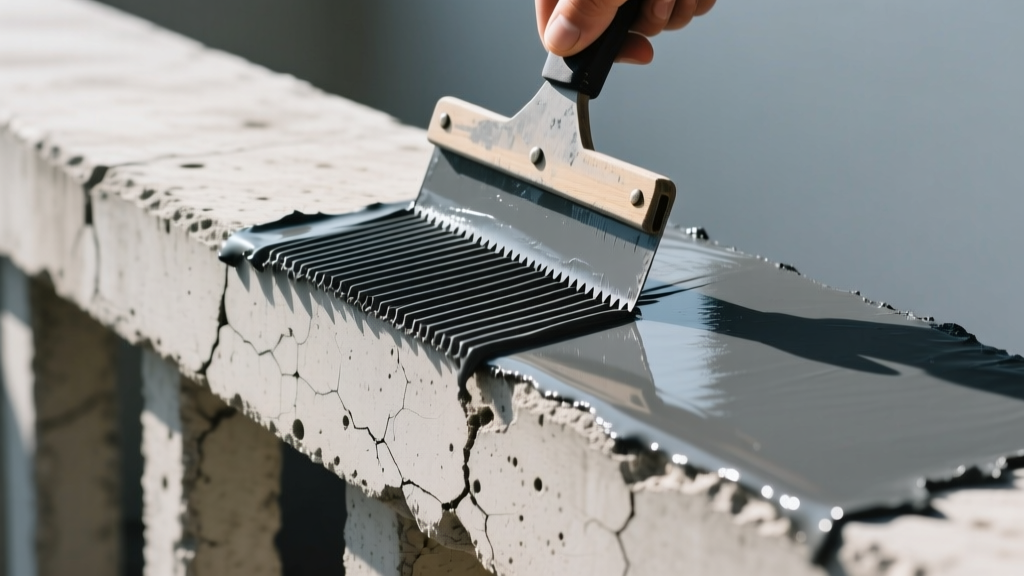
Polyurethane membranes are significantly denser and more expensive, with material costs ranging from $1.80 to $3.50 per square foot. The application is more labor-intensive; achieving the required 60+ mil DFT often requires notched squeegees, back-rolling, and the installation of reinforcing fabric at joints and inside corners. Furthermore, solvent-based PUs require strict adherence to EPA VOC regulations, which may mandate specialized respiratory PPE and ventilation equipment for the crew. Total installed costs for heavy-duty PU systems typically fall between $6.00 and $11.00 per square foot.
Application Scenarios and Critical Failure Modes
Specifying the correct waterproof coat material is only half the battle; understanding how these materials fail in the field is what separates adequate construction from elite building science. The American Concrete Institute (ACI) frequently highlights that the vast majority of waterproofing failures are not due to material defects, but rather improper substrate preparation and environmental misapplication.
Warning: Moisture Vapor Transmission (MVT)
Applying a non-breathable polyurethane membrane over a concrete slab with high moisture vapor emission rates (MVER) is a catastrophic error. As moisture migrates upward through the concrete capillaries, it becomes trapped beneath the impermeable PU film. Solar heating then vaporizes this trapped moisture, creating osmotic blisters that can grow to the size of dinner plates, completely rupturing the waterproofing bond. Always perform an ASTM F1869 Calcium Chloride test or an ASTM D4263 plastic sheet test before applying vapor-impermeable coatings.
Common Acrylic Failure Modes
- Re-emulsification in Ponding Water: If applied to flat roofs or balconies with poor slope (less than 1/4 inch per foot), standard acrylics will soften, blister, and wash away after prolonged water exposure. Use polyurethane or polyurea for zero-slope applications.
- Dirt Pick-Up and Chalking: Lower-grade acrylics lack advanced cross-linking polymers, leading to a tacky surface that attracts dirt and degrades under UV exposure, reducing reflectivity and aesthetic appeal over time.
- Crack Bridging Failure: While acrylics stretch, they lack the tensile strength to bridge active structural cracks wider than 1/16 inch without a reinforcing polyester mesh embedded in the base coat.
Common Polyurethane Failure Modes
- Pinholing and Outgassing: When solvent-based PU is applied to porous concrete in high heat, the solvent flashes off too quickly, or trapped air expands, leaving microscopic pinholes that compromise the hydrostatic seal. Applying a specialized PU primer is mandatory to seal the pores before the main coat.
- UV Degradation (Chalking): Aromatic polyurethanes will chalk and degrade when exposed to direct sunlight. If the PU membrane will be exposed, it must be top-coated with an aliphatic (UV-stable) polyurethane or an acrylic finish coat within 48 hours of application.
- Adhesion Loss on Damp Substrates: Unlike moisture-cured urethanes, standard two-component PUs will foam and lose adhesion if applied to concrete with surface moisture. The substrate must be bone dry (typically less than 5% moisture content by weight).
Top Product Recommendations for 2026
Based on field performance, technical data sheet specifications, and contractor feedback, the following specific products represent the current industry benchmarks for their respective chemistries.
Premier Acrylic Systems
- Sika SikaCoat Plus: A high-build, 100% acrylic elastomeric coating. Excellent for above-grade masonry and concrete. Features built-in biocides to prevent algae growth in humid climates. Coverage: 50-70 sq ft per gallon per coat.
- Henry 587 Dura-Brite: Highly reflective, fiber-reinforced acrylic. Ideal for exterior walls and parapets where micro-crack bridging is required without a separate fabric layer. Reflects up to 88% of solar rays, reducing thermal shock to the substrate.
Premier Polyurethane Systems
- Master Builders MasterSeal HLM 5000: A cold-applied, high-modulus polyurethane membrane. The industry standard for below-grade foundations and plaza decks. Exceptional resistance to hydrostatic pressure and soil chemicals. Requires a primer like MasterSeal P 222 for porous concrete.
- Sika Sikaflex-11 FC+: While primarily a sealant, Sika's broader polyurethane liquid-applied membranes (like the Sikalastic line) offer incredible elongation (up to 600%) and are highly favored for complex podium deck geometries where sheet membranes are difficult to detail.
Expert Surface Prep Tip: Never rely solely on acid etching for concrete preparation before applying a high-performance polyurethane. Acid etching opens the pores but can leave residual salts that disrupt chemical bonding. For PU membranes, mechanical preparation via shot blasting or diamond grinding to a CSP-3 or CSP-4 (Concrete Surface Profile) is the only reliable method to guarantee long-term adhesion.
Summary Verdict
There is no universal best waterproof coat material; there is only the correct material for the specific environmental and structural variables of your project. Acrylics remain the undisputed champions for cost-effective, breathable, UV-exposed above-grade applications. However, when the design calls for below-grade hydrostatic resistance, continuous water immersion, or the ability to span dynamic structural joints, the superior elongation and impermeability of polyurethane justify its higher upfront cost and stricter application requirements. Specify based on the substrate's moisture profile, the expected structural movement, and the long-term maintenance lifecycle of the building.
Written by
James ThorntonJames Thornton is a construction industry veteran with 25 years of hands-on experience in wood framing, lumber grading, and residential building codes. He started as a framing carpenter in rural Oregon, earned his ICC Residential Building Inspector certification, and eventually became a senior plan reviewer for the City of Portland Bureau of Development Services. James holds a B.S. in Wood Science & Technology from Oregon State University and is a certified lumber grader through the West Coast Lumber Inspection Bureau (WCLIB). He has inspected over 3,000 residential construction sites and authored the city's internal guide on advanced framing techniques (2x6 at 24" O.C.). James lives in Bend, OR, where he builds custom timber-frame cabins and competes in lumberjack sports.
More from James Thornton
View all
Insulation
Best Home Insulation Materials: Complete 2026 Guide
Compare top home insulation materials for 2026. Find R-values, installed costs per square foot, and best uses for fiberglass, spray foam, and mineral wool.
Aug 4, 2026

Sustainable Building
Certify Your Green Building Material for LEED and WELL
Step-by-step guide to certifying a green building material for LEED v5 and WELL v2. Master EPDs, HPDs, and VOC limits for 2026 project specifications.
Aug 4, 2026

Stone & Masonry
Veneer Stacked Stone Panels: Interior Design & Style Showcase
Discover how veneer stacked stone panels transform interiors. Explore modern design profiles, material pairings, and technical installation specs.
Aug 4, 2026