Troubleshooting Waterproof Material for Coats: Leaks and DWR Failure
Diagnose and fix leaks in industrial waterproof coats. Expert troubleshooting for DWR degradation, PU hydrolysis, and seam tape failure.

Waterproof workwear is critical personal protective equipment (PPE) on active construction sites. When a waterproof coat fails, it compromises worker safety, reduces productivity, and exposes crews to hypothermia or environmental hazards. However, diagnosing a leak is rarely as simple as finding a hole. Modern waterproof materials for coats rely on complex multi-layer systems consisting of a face fabric, a microporous or monolithic membrane, and a Durable Water Repellent (DWR) finish. Failure in any one of these layers mimics a catastrophic leak.
Diagnostic Matrix: Identifying Waterproof Material Failures
Before attempting repairs, site safety managers and gear technicians must accurately identify the failure mode. Use the following diagnostic matrix to map symptoms to their underlying material science causes.
| Symptom | Material Component | Root Cause | Corrective Action |
|---|---|---|---|
| Exterior fabric absorbs water (wets out), coat feels heavy and cold. | DWR Finish | Surface contamination (dirt, oils) or polymer chain degradation. | Deep clean and heat-reactivate or reapply C0 DWR treatment. |
| Interior is wet, but exterior is shedding water normally. | Membrane (PTFE/PU) | Internal condensation due to blocked breathability (sweat/oil clogged pores). | Wash with technical textile cleaner to strip body oils from membrane pores. |
| Sticky residue on the inside; flaking white or yellowish material. | PU Coating | Hydrolysis (chemical breakdown of polyurethane from alkaline sweat exposure). | Irreversible. Coat must be retired and replaced with ether-based PU or PTFE. |
| Water ingress specifically at stitching lines under mechanical stress. | Seam Tape | Hot-melt adhesive delamination due to UV exposure, heat, or improper washing. | Clean with isopropyl alcohol and apply liquid seam sealer or heat-reactivate tape. |
Troubleshooting DWR (Durable Water Repellent) Degradation
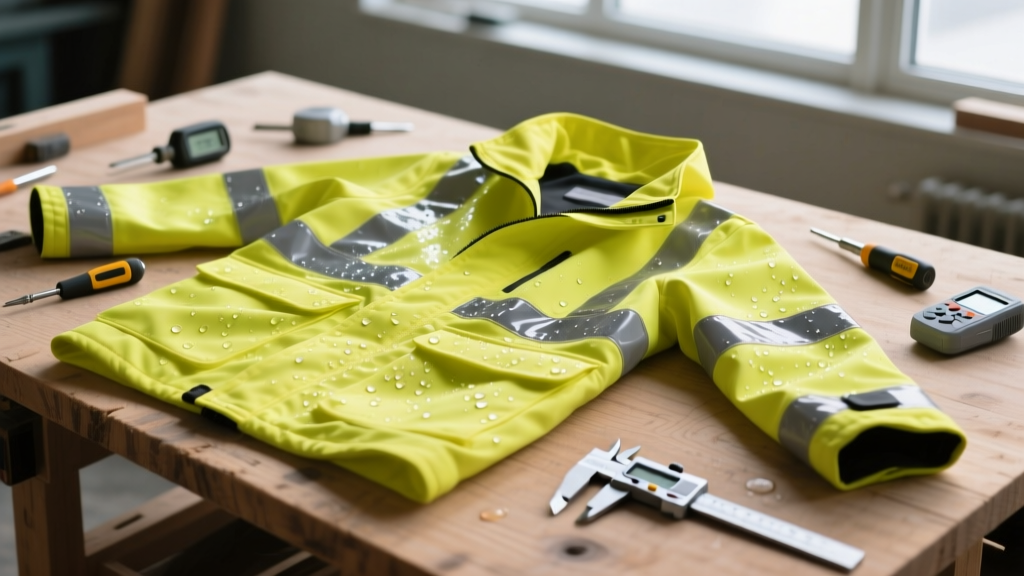
The DWR finish is a factory-applied polymer treatment on the coat's outermost face fabric. It does not provide actual waterproofing; rather, it lowers the surface tension of the fabric so water beads up and rolls off. When DWR fails, the face fabric 'wets out.' While the interior membrane may still stop water penetration, a wet face fabric destroys the coat's breathability, trapping sweat inside and creating the illusion of a leak.
The Shift from C6 to C0 (PFAS-Free) Chemistry
Historically, DWR treatments relied on long-chain fluorocarbons (C8) and later short-chain fluorocarbons (C6) due to their extreme durability. However, following strict environmental regulations and EPA guidelines on PFAS in consumer products, the textile industry has largely transitioned to C0 (PFC-free) DWR treatments by 2026. C0 treatments are highly effective at repelling water but are significantly more vulnerable to oil and dirt contamination. They also require more frequent heat reactivation to realign the polymer chains.
Step-by-Step DWR Restoration Protocol
- Strip Contaminants: Wash the coat using a technical, non-detergent cleaner (e.g., Nikwax Tech Wash or Grangers Performance Wash). Standard laundry detergents contain surfactants and fabric softeners that permanently attract water to the fabric fibers, destroying the DWR.
- Heat Reactivation: Tumble dry the coat on medium heat for 20-30 minutes. Heat is required to mobilize the C0 polymer chains, forcing them to stand up on the fiber surface and restore the lotus effect. If a dryer is unavailable, use an iron on a low, steam-free setting with a protective towel between the iron and the coat.
- Reapplication (If Necessary): If water no longer beads up after heat reactivation, the DWR polymer is depleted. Apply a spray-on C0 DWR replenisher to the damp, clean exterior, focusing on high-wear areas like the shoulders and cuffs. Tumble dry again to set the treatment.
Polyurethane (PU) Hydrolysis: The Invisible Coat Killer
Many mid-tier industrial work coats utilize a Polyurethane (PU) coating rather than a laminated membrane to keep costs down. While PU offers excellent waterproofing—often exceeding 10,000mm in hydrostatic head tests—it is highly susceptible to a chemical degradation process called hydrolysis.
Identifying and Preventing Hydrolysis
Hydrolysis occurs when water molecules and alkaline substances (specifically human sweat, which has a pH of 6.5 to 7.5) attack the ester linkages in the PU polymer chain. The interior of the coat will first develop a tacky, sticky feel, eventually progressing to brittle, flaking patches that expose the base fabric to water ingress.
To prevent this in heavy-exertion construction environments (e.g., roofing, framing), procurement managers must specify polyether-based PU coatings or ePTFE laminated membranes. Polyether PU lacks the ester linkages vulnerable to alkaline hydrolysis, extending the functional lifespan of the coat from 1-2 years to 5+ years in harsh conditions.
Seam Tape Delamination and Repair Protocols
A coat is only as waterproof as its seams. To prevent needle holes from leaking, manufacturers apply a hot-melt polyurethane seam tape over the interior stitching. In industrial environments, exposure to extreme temperature fluctuations, UV radiation, and improper high-heat washing can cause the adhesive to crystallize and peel away.
Field Repair Procedure for Peeling Seam Tape:
- Assessment: If the tape is brittle and cracking, it must be entirely removed. If it is merely peeling at the edges but remains flexible, it can be reactivated.
- Cleaning: Wipe the exposed seam and the underside of the tape with 90% isopropyl alcohol to remove body oils and site dust. Allow to dry completely.
- Reactivation: Use a heat gun set precisely to 140°F (60°C). Gently warm the tape while pressing down with a silicone roller or a smooth, hard edge. Do not exceed 160°F, as this will melt the PU tape and compromise the waterproof membrane beneath it.
- Liquid Sealer Alternative: For tape that is too degraded to re-save, carefully peel it off and apply a flexible, waterproof liquid seam sealer (such as Gear Aid Seam Grip FC) directly over the stitching line. Allow 24 hours to cure before site deployment.
Material Selection Framework for Heavy-Duty Work Coats
When replacing failed coats, selecting the correct waterproof material is paramount. Waterproofing is measured via hydrostatic pressure testing, standardized under ISO 811:2018, which determines the water column height (in millimeters) a fabric can support before water penetrates. Breathability is measured via Resistance to Evaporative Heat Transfer (RET); lower numbers indicate higher breathability.
| Material Technology | Hydrostatic Head (Waterproofness) | Breathability (RET) | Best Construction Application | Estimated Lifespan |
|---|---|---|---|---|
| ePTFE Membrane (e.g., Gore-Tex) | 28,000mm+ | < 6 (Extremely High) | High-exertion roles (roofing, scaffolding) requiring maximum sweat vapor escape. | 5 - 8 Years |
| Monolithic PU Laminate | 15,000 - 20,000mm | 8 - 12 (Moderate) | General site work, equipment operation, and moderate physical exertion. | 3 - 5 Years |
| Polyether PU Coating | 10,000 - 15,000mm | 15 - 25 (Low) | Low-exertion, high-wetness environments (traffic control, heavy rain static work). | 3 - 4 Years |
| PVC / Tarpaulin | 100% Impervious | 0 (None) | Wash-down environments, chemical spill zones, or static heavy-weather monitoring. | 2 - 4 Years |
Establishing a PPE Inspection Schedule
To maintain compliance with OSHA PPE standards, site safety officers should implement a bi-annual waterproof integrity audit. This involves a simple spray test on the exterior to verify DWR beading, and a visual inspection of the interior lining for early signs of PU hydrolysis or seam tape delamination. Proactive maintenance of waterproof materials for coats not only extends the lifecycle of the garment but ensures critical thermal regulation for crews operating in adverse weather conditions.
Written by
James ThorntonJames Thornton is a construction industry veteran with 25 years of hands-on experience in wood framing, lumber grading, and residential building codes. He started as a framing carpenter in rural Oregon, earned his ICC Residential Building Inspector certification, and eventually became a senior plan reviewer for the City of Portland Bureau of Development Services. James holds a B.S. in Wood Science & Technology from Oregon State University and is a certified lumber grader through the West Coast Lumber Inspection Bureau (WCLIB). He has inspected over 3,000 residential construction sites and authored the city's internal guide on advanced framing techniques (2x6 at 24" O.C.). James lives in Bend, OR, where he builds custom timber-frame cabins and competes in lumberjack sports.
More from James Thornton
View all
Insulation
Best Home Insulation Materials: Complete 2026 Guide
Compare top home insulation materials for 2026. Find R-values, installed costs per square foot, and best uses for fiberglass, spray foam, and mineral wool.
Aug 4, 2026

Sustainable Building
Certify Your Green Building Material for LEED and WELL
Step-by-step guide to certifying a green building material for LEED v5 and WELL v2. Master EPDs, HPDs, and VOC limits for 2026 project specifications.
Aug 4, 2026

Stone & Masonry
Veneer Stacked Stone Panels: Interior Design & Style Showcase
Discover how veneer stacked stone panels transform interiors. Explore modern design profiles, material pairings, and technical installation specs.
Aug 4, 2026