Waterproofing Sunbrella Material: Top Fabric Guards Reviewed
Discover the best products for waterproofing Sunbrella material. We review 303 Fabric Guard, Star brite, and Iosso for coverage, cost, and breathability.

The Reality of Sunbrella's Factory Water Resistance
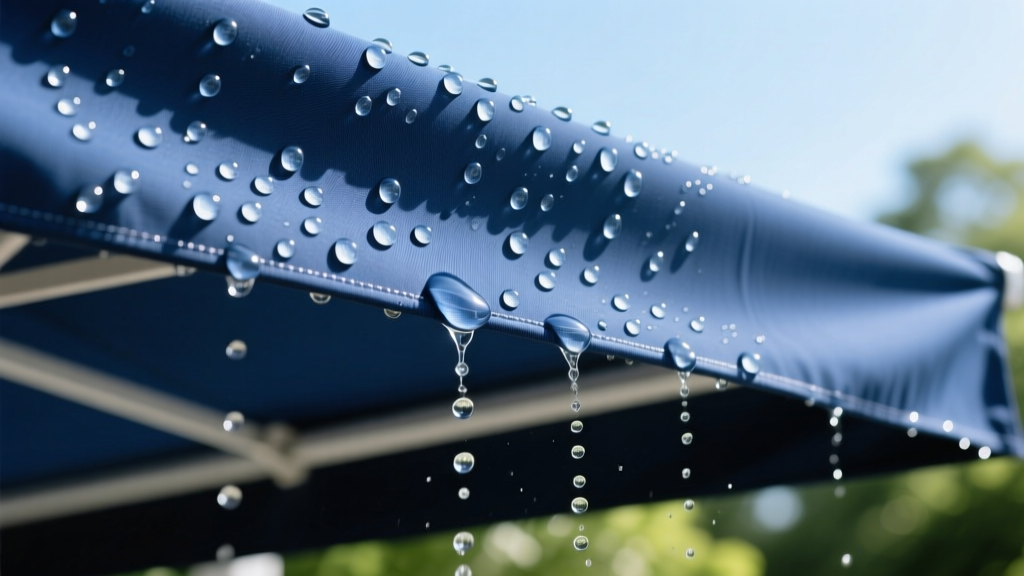
Solution-dyed acrylic fabrics like Sunbrella do not rely on a surface coating for their UV resistance; the color is extruded directly into the polymer core. However, their water repellency depends entirely on a factory-applied fluorocarbon finish. This finish lowers the surface tension of the fibers, causing water to bead and roll off. Under normal outdoor exposure, this factory treatment degrades within 3 to 5 years due to UV radiation, environmental pollutants, and mechanical abrasion. Once the fabric begins to 'wet out' (absorbing water and turning dark), it is time to re-treat it.
According to Sunbrella's official care guidelines, restoring this repellency requires specific chemistry that repels water while maintaining the fabric's critical breathability. Choosing the wrong aftermarket spray can permanently ruin the canvas.
The Chemistry of Acrylic Repellency: Fluoropolymer vs. Silicone
To properly waterproof Sunbrella material, you must use a fluoropolymer-based or PTFE-based fabric guard. These chemicals bond to the individual fiber strands, creating a microscopic 'hairy' surface that repels liquid water while leaving the pores between the yarns open for air transfer. Due to shifting EPA and state-level regulations regarding PFAS, the chemical landscape of fabric guards has evolved significantly by 2026, with manufacturers transitioning to C6 short-chain or PFAS-free formulations that require slightly different application techniques to achieve the same hydrostatic resistance.
2026 Product Comparison Matrix
| Product | Active Chemistry | Coverage (16 oz) | Breathability | Est. Price | OEM Approved |
|---|---|---|---|---|---|
| 303 Fabric Guard | C6 Fluoropolymer | 50 - 75 sq ft | Excellent | $24.99 | Yes (Glen Raven) |
| Star brite Spray | PTFE Dispersion | 60 - 80 sq ft | Very Good | $19.99 | No |
| Iosso Repellent | Fluorocarbon Blend | 40 - 60 sq ft | Good | $28.50 | No |
In-Depth Product Reviews
303 Products Fabric Guard (The OEM Standard)
303 Fabric Guard remains the only aftermarket treatment officially recommended by Glen Raven, the manufacturer of Sunbrella. The current formulation utilizes a C6 short-chain fluoropolymer, which provides a lower environmental persistence profile than older C8 formulas while maintaining high oleophobic (oil-repelling) and hydrophobic properties.
- Pros: Restores factory-level water beading; retains original fabric hand-feel (stiffness); resists oil-based stains and bird droppings.
- Cons: Highest cost per square foot; requires two light coats for optimal cross-linking; strong solvent odor during application.
- Best For: High-end marine biminis, residential patio awnings, and expensive outdoor upholstery where maintaining the exact factory warranty is paramount.
Star brite Waterproofing Spray (The Marine Alternative)
Star brite utilizes a PTFE (polytetrafluoroethylene) dispersion rather than a traditional fluoropolymer. PTFE creates an incredibly slick surface tension barrier. While it excels at shedding fresh water, it is slightly less effective at repelling oil-based contaminants compared to 303.
- Pros: Lower price point; excellent water shedding; slightly higher coverage rate per ounce; faster flash-off (drying) time.
- Cons: Does not provide the same level of oil and dirt resistance; may require more frequent re-application in high-friction areas (like boat covers that are frequently folded).
- Best For: Large canvas enclosures, boat winter covers, and RV awnings where sheer square footage makes 303 cost-prohibitive.
Iosso Water Repellent (The Heavy-Duty Contender)
Iosso formulates their repellent for extreme marine environments. It leaves a slightly more noticeable 'tacky' hand-feel immediately after curing, which eventually settles into a stiffer drape than the factory finish.
- Pros: Exceptional durability against salt spray and heavy driving rain; highly resistant to UV degradation of the treatment itself.
- Cons: Lowest coverage rate (requires heavy saturation); alters the drape and flexibility of lighter-weight Sunbrella upholstery fabrics.
- Best For: Heavy-duty marine dodgers, bimini tops in coastal environments, and commercial shade structures.
Step-by-Step Application Protocol for Maximum Durability
The most common failure mode when waterproofing Sunbrella material is applying the guard to a contaminated surface. Fabric guards will bond to dirt, pollen, and mildew spores instead of the acrylic fibers, causing the treatment to wash away in the first rainstorm.
- Deep Clean: Brush off loose debris. Mix 1/4 cup of mild liquid soap (like Woolite or Dawn) per gallon of lukewarm water. Scrub the fabric with a soft-bristle brush. For stubborn mildew, use a dedicated canvas cleaner like Iosso Mold & Mildew Stain Remover.
- Absolute Drying: Rinse thoroughly and allow the fabric to air dry completely. The fibers must be 100% bone-dry; any trapped moisture will be sealed inside by the fluoropolymer.
- Environmental Check: Apply only when ambient temperatures are between 55°F and 85°F (13°C - 29°C) and humidity is below 70%. High humidity prevents the carrier solvents from flashing off, resulting in a white, chalky residue on dark fabrics.
- First Coat (The Penetration Layer): Hold the sprayer 6 to 8 inches from the fabric. Apply a light, misting coat in a sweeping motion. Overlap each pass by 50%. Do not saturate the fabric to the point of dripping.
- Flash Time: Allow 6 to 12 hours for the first coat to cure. This allows the solvent to evaporate and the polymers to begin orienting on the fiber surface.
- Second Coat (The Cross-Linking Layer): Apply a second light coat perpendicular to the first (if you sprayed horizontally, spray vertically). This ensures complete interstitial coverage without over-saturating the yarns.
Cost Analysis: Re-treating vs. Replacing
Fabric replacement is exponentially more expensive than chemical maintenance. Consider a standard 12-foot RV awning (approximately 96 square feet of Sunbrella fabric).
12-Foot Awning Maintenance Economics
Replacement Cost: Custom canvas fabrication and installation averages $18 to $24 per square foot. Total: $1,728 - $2,304.
Re-treatment Cost: Requires approximately 32 oz of 303 Fabric Guard (two 16 oz bottles). Total material cost: $49.98. Labor: 45 minutes.
ROI: Spending $50 every 3 years extends the life of a $2,000 awning by up to a decade, yielding a massive return on investment compared to premature replacement due to water-logging and subsequent underside rot.
Frequently Asked Questions
Can I use a pump sprayer instead of an aerosol?
Yes. For large areas like sail covers or extensive patio enclosures, buying 303 Fabric Guard in 1-gallon jugs and using a clean, dedicated pump garden sprayer is highly cost-effective. Ensure the sprayer has never held pesticides or fertilizers, and use a fine-mist nozzle to prevent localized pooling.
How do I know if the fabric needs re-treating?
Perform the 'splash test'. Toss a cup of clean water onto the dry fabric. If the water beads up into tight, round spheres and rolls off, the fluoropolymer is intact. If the water flattens out, darkens the fabric, and absorbs into the weave within 60 seconds, the factory finish has failed and immediate re-treatment is required.
Written by
Sarah WhitfieldSarah Whitfield is a chartered quantity surveyor (MRICS) and construction cost analyst with 15 years of experience in material pricing, procurement strategy, and project budgeting. She earned her degree in Construction Management from the University of Reading (UK) and has worked on projects ranging from $2M custom homes to $180M mixed-use developments across North America and Europe. Sarah currently leads cost estimating for BuildMat Insight, maintaining a proprietary database of 4,000+ material price points updated quarterly. She is a frequent contributor to RSMeans cost data panels and has presented at the International Cost Engineering Council (ICEC) congress. Based in Denver, CO, Sarah is an avid trail runner and volunteer mentor for Women in Construction.
More from Sarah Whitfield
View all
Wood & Lumber
What Are the Different Types of Wood? A Builder's Guide
Compare structural softwoods, finish hardwoods, and engineered lumber. Analyze Janka ratings, MOE values, and 2026 pricing for construction.
Aug 4, 2026

Walls & Panels
Steel Framing vs Wood Framing: Corrosion and Moisture Defense
Compare steel framing vs wood framing for moisture resistance. Learn about galvanized coatings, condensation risks, and corrosion protection strategies.
Jul 21, 2026

Stone & Masonry
How to Cut Stone Veneer: Wet Saw vs Grinder Comparison
Compare the best tools for cutting stone veneer. We review wet saws, angle grinders, and chop saws to help you achieve clean, chip-free cuts.
Jul 21, 2026