Troubleshooting Waterproof Rubber Gasket Material Failures
Diagnose and fix waterproof rubber gasket material failures. Expert troubleshooting for EPDM, silicone, and neoprene compression, extrusion, and leaks.
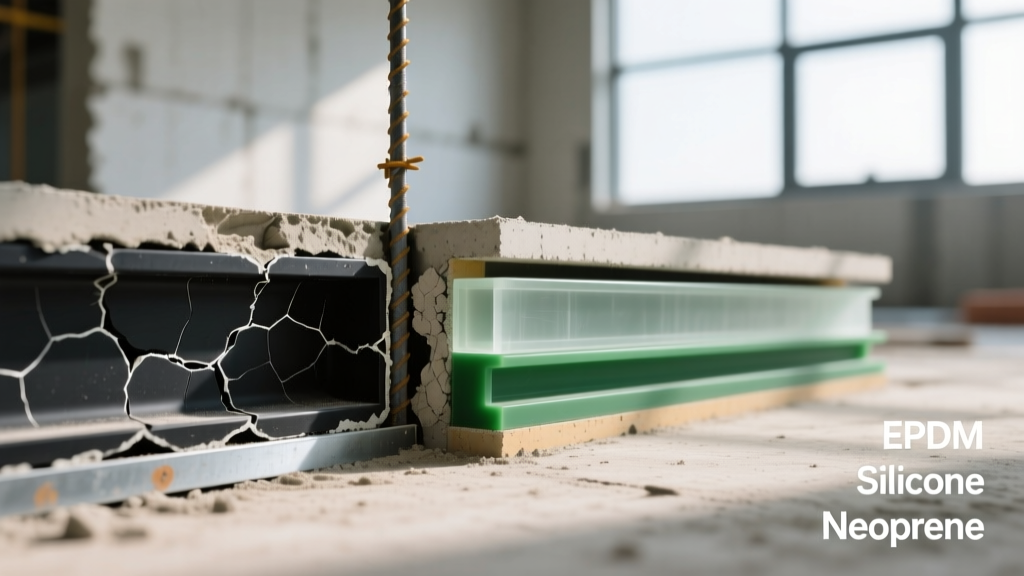
The Anatomy of a Gasket Failure
When a sealed enclosure, pipe flange, or marine hatch begins to leak, the immediate assumption is often that the waterproof rubber gasket material has simply 'worn out.' In reality, true material exhaustion is rare compared to application-specific failures. Gasket leaks are typically the result of a mismatch between the elastomer's physical properties, the gland design, and the operational environment. Troubleshooting requires moving beyond visual inspection to analyze compression set data, durometer hardness, and flange mechanics.
According to sealing engineering guidelines from Apple Rubber, over 75% of O-ring and gasket failures are traced back to improper gland design, incorrect material selection, or flawed installation procedures rather than manufacturing defects. This guide provides a diagnostic framework to isolate the root cause of your waterproofing failure and engineer a permanent solution.
Symptom-to-Solution Diagnostic Matrix
Use the following matrix to map the physical evidence left on the failed elastomer to its underlying mechanical or chemical cause.
| Visual Symptom | Primary Root Cause | Corrective Engineering Action |
|---|---|---|
| Flattened profile, fails to rebound when removed | Compression Set / Thermal Degradation | Upgrade to a low-compression-set EPDM or platinum-cured silicone; verify operating temps do not exceed material limits. |
| Material extruded into the gap or 'bitten' edges | Over-pressurization / Excessive Gland Fill | Increase durometer (e.g., from 50A to 70A Shore A); reduce gasket cross-section to achieve 85-90% gland fill. |
| Surface checking, chalking, or micro-cracks | UV / Ozone Degradation | Replace Nitrile or Natural Rubber with EPDM, which contains inherent carbon black UV stabilizers. |
| Swelling, softening, or sticky residue | Chemical Incompatibility (Hydrocarbons) | Switch from EPDM to Nitrile (Buna-N) or Viton if petroleum-based oils are present in the water stream. |
| Leaking exclusively at bolt-hole radii | Flange Distortion / Improper Torque | Implement a star-pattern torque sequence; machine flanges to within 0.005-inch flatness tolerance. |
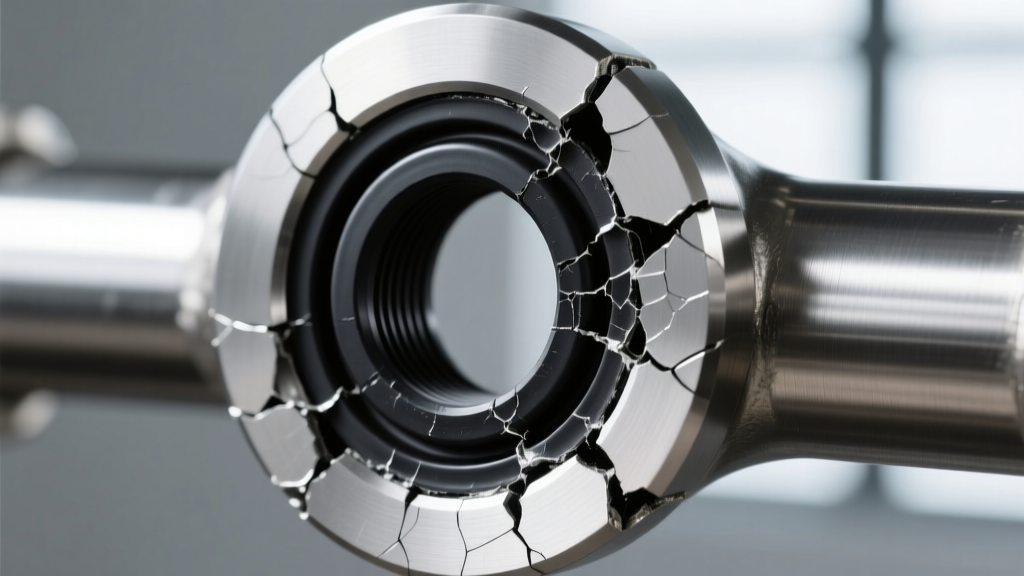
Material Incompatibility: When the Wrong Rubber Meets the Environment
Selecting the correct waterproof rubber gasket material requires understanding the chemical limitations of common elastomers. A material that excels in one environment will catastrophically fail in another.
EPDM (Ethylene Propylene Diene Monomer)
EPDM is the industry standard for outdoor water sealing, marine applications, and potable water systems. Its saturated polymer backbone provides exceptional resistance to ozone, UV radiation, and weathering. However, EPDM is strictly incompatible with petroleum-based fluids. If your water system contains oil-lubricated pumps or trace hydrocarbons, EPDM will swell and lose its structural integrity within weeks.
Silicone (VMQ)
Silicone is unmatched for extreme temperature ranges (-60°F to 450°F) and is frequently specified for NSF-61 certified potable water applications. Its primary weakness is low tear strength and poor abrasion resistance. Silicone gaskets should never be used in dynamic applications or high-pressure water systems where extrusion forces are present, unless reinforced with fabric or paired with anti-extrusion rings.
Nitrile (Buna-N)
The Compression Set Trap and Gland Design
Compression set is the measure of an elastomer's ability to return to its original thickness after prolonged compression. It is tested under ASTM D395 standards. A gasket with a high compression set takes a 'permanent set'—meaning it flattens out and loses the internal stress required to maintain a waterproof seal against the flange.
When sourcing replacement materials, demand the manufacturer's compression set data. For critical waterproofing applications, specify EPDM compounds with a compression set of less than 20% at 212°F (100°C). Standard commercial-grade rubbers often exhibit compression sets of 40% to 60%, which guarantees a leak within the first thermal cycling season.
Calculating Proper Gland Fill
A common installation error is using a gasket that is too thick for the groove (gland). Rubber is effectively incompressible; it changes shape, not volume. If a gasket completely fills the gland (100% fill) and the flange is tightened, the rubber has nowhere to expand. This creates massive internal hydrostatic pressure that will either blow out the gasket or warp the metal flange.
- Target Gland Fill: 85% to 90% maximum.
- Target Squeeze (Compression): 15% to 25% of the original cross-section.
- Surface Finish: Flanges should have a roughness of 32 to 63 RMS (micro-inches) to allow the rubber to grip without being abraded.
Flange Mechanics and Torque Sequencing
If your gasket material shows no signs of chemical degradation, swelling, or compression set, the failure is likely mechanical. Flange distortion is a silent killer of waterproof seals. When bolts are tightened in a circular sequence, the flange acts like a saucer, bowing in the center and lifting at the edges. This creates microscopic gaps that water pressure will easily exploit.
Additionally, verify the hardness of your elastomer against the flange material. Machined steel flanges can utilize harder 70A durometer gaskets to resist high internal pressures. Conversely, cast iron or fiberglass flanges often have surface pitting and uneven tolerances; these require a softer 40A or 50A durometer gasket that can deform and conform to the microscopic imperfections in the mating surface.
Sourcing and Specification Best Practices
When ordering replacement gaskets, avoid generic descriptions like 'waterproof rubber.' Provide your supplier with a precise specification sheet. According to material property databases maintained by distributors like Marco Rubber, specifying the exact polymer family, durometer, and curing method eliminates the guesswork that leads to premature failures.
Your purchase order should explicitly state:
- Polymer Type: e.g., EPDM, Peroxide-Cured (for superior heat and compression set resistance compared to sulfur-cured).
- Durometer: e.g., 60A Shore A (±5 points).
- Certifications: NSF-61 (if potable water), ASTM D2000 callout line.
- Dimensions: Exact inner diameter, outer diameter, and thickness, noting whether it is a solid extrusion or a sponge/cellular profile for uneven flanges.
By treating gasket selection as an engineering decision rather than a hardware store afterthought, you eliminate recurring leaks, reduce maintenance downtime, and ensure long-term structural waterproofing integrity.
Written by
Elena RodriguezElena Rodriguez is a civil engineer and technical writer specializing in concrete technology, masonry systems, and ASTM/ACI compliance. She earned her B.S. in Civil Engineering from Texas A&M University and spent a decade at a materials testing laboratory, performing over 2,000 concrete compressive strength tests and masonry prism evaluations. Elena is an ACI-certified Field Testing Technician (Grade I) and a member of ASTM Committee C12 on Natural Building Stone. She currently consults on forensic engineering cases involving concrete failures and moisture intrusion. Based in San Antonio, TX, Elena is a proud member of the Society of Women Engineers (SWE) and coaches her daughter's FIRST Robotics team.
More from Elena Rodriguez
View all
Walls & Panels
Cost Analysis: Light Gauge Steel Framing Advantages and Disadvantages
Evaluate light gauge steel framing advantages and disadvantages through a strict cost analysis lens, comparing material, labor, and lifecycle expenses.
Aug 4, 2026

Walls & Panels
Gypsum Board Types: Exact Specifications, Thickness & Dimensions
Compare standard, Type X, and moisture-resistant gypsum board types. Get exact specifications, thicknesses, dimensions, and ASTM standards for your project.
Aug 4, 2026

Fire Resistance
Best Fire-Resistant Outdoor Decking Materials: 2026 Buyer Guide
Discover the best fire-resistant outdoor decking materials for 2026. Compare Class A PVC, aluminum, and hardwood options for WUI compliance and safety.
Aug 4, 2026