Water Resistant Flooring Durability: WPC, SPC, and Tile Lifespan
Analyze the true lifespan and failure modes of water resistant flooring. Compare WPC, SPC, and tile durability, costs, and subfloor moisture limits.
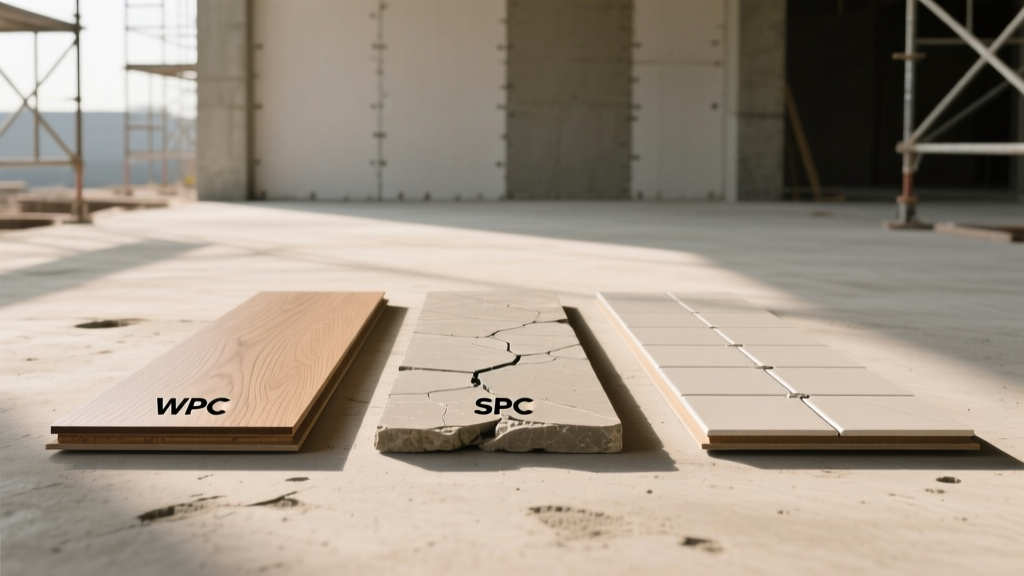
The "Waterproof" vs. "Water Resistant" Marketing Illusion
In the building materials industry, the terms "waterproof" and "water resistant" are frequently conflated, leading to catastrophic moisture failures in residential and commercial builds. When evaluating water resistant flooring, it is critical to distinguish between the core material and the installation system. While the extruded cores of Wood Plastic Composite (WPC) and Stone Plastic Composite (SPC) luxury vinyl are inherently impervious to water absorption, the floating click-lock installation method is strictly water resistant. If surface water is allowed to pool for 48 to 72 hours, it will inevitably migrate through the microscopic gaps in the tongue-and-groove joints, becoming trapped against the subfloor. This creates a hidden incubator for mold and compromises the structural integrity of wood-based subfloors, regardless of the flooring’s core composition.
Material Lifespan & Failure Mode Matrix
To make an informed specification, contractors and homeowners must look beyond the showroom and analyze the physical failure modes of each material class. The following matrix outlines the realistic lifespan, primary vulnerabilities, and 2026 market pricing for the three dominant water-resistant flooring categories.
| Material Class | Expected Lifespan | Primary Failure Mode | Avg. Installed Cost (2026) |
|---|---|---|---|
| WPC (Wood Plastic Composite) | 10 – 15 Years | Point-load denting; thermal expansion joint failure | $6.50 – $9.00 / sq. ft. |
| SPC (Stone Plastic Composite) | 15 – 20 Years | Subfloor telegraphing; brittle edge chipping | $5.50 – $8.00 / sq. ft. |
| Glazed Porcelain Tile | 50+ Years | Cementitious grout degradation; substrate cracking | $12.00 – $18.00 / sq. ft. |
| Homogeneous Sheet Vinyl | 15 – 25 Years | Seam separation; adhesive hydrolysis | $4.50 – $7.00 / sq. ft. |
WPC (Wood Plastic Composite) Core Analysis
WPC flooring incorporates a foaming agent into its PVC and wood-flour composite core, creating an expanded cellular structure. This provides superior acoustic dampening and underfoot comfort compared to rigid alternatives. However, this expanded structure is its Achilles’ heel regarding durability. WPC is highly susceptible to point-load indentation. A heavy appliance resting on a narrow caster, or a 200-lb point load from a stiletto heel, can permanently compress the cellular core. Furthermore, WPC exhibits a higher coefficient of thermal expansion. In sunrooms or spaces with extreme temperature fluctuations, WPC planks can expand up to 1/4 inch over a 30-foot run, requiring strict adherence to perimeter expansion gaps to prevent peaking at the seams.
SPC (Stone Plastic Composite) Core Analysis
SPC replaces the wood flour and foaming agents with pulverized limestone (calcium carbonate) and PVC stabilizers. The result is an ultra-dense, dimensionally stable core that resists point loads and thermal expansion almost entirely. High-end commercial SPC products, such as the Karndean Korlok Select line, utilize a 20-mil to 28-mil polyurethane wear layer reinforced with ceramic bead technology, pushing the functional lifespan to two decades in high-traffic zones. The critical vulnerability of SPC is subfloor telegraphing. Because the core is completely rigid, any deviation in the subfloor exceeding 3/16 inch over a 10-foot radius will cause the click-lock joints to bear excessive shear stress, eventually snapping the milled edges and breaking the water-resistant seal.
Glazed Porcelain Tile (The True Waterproof Baseline)
Manufactured under the strict parameters of the Tile Council of North America (TCNA) and ANSI A137.1 standards, glazed porcelain tile possesses a water absorption rate of 0.5% or less, making the material itself genuinely waterproof. The lifespan of porcelain is practically indefinite. However, the system’s water resistance relies entirely on the grout and the substrate membrane. Standard cementitious grout is porous and will wick moisture to the subfloor. For true waterproofing in wet areas, specifications must mandate single-component urethane grout or epoxy grout, paired with an ANSI A118.10 bonded waterproof membrane (such as Schluter-DITRA or Laticrete Hydro Ban) applied directly to the subfloor.
Subfloor Moisture & Hydrostatic Pressure: The Silent Killers
The most common cause of premature failure in water resistant flooring is not water spilling from above, but moisture vapor emitting from below. Concrete slabs continuously emit moisture vapor. If a floating LVP floor is installed over a slab with high hydrostatic pressure, the vapor becomes trapped beneath the impermeable vinyl core, condensing into liquid water and fostering toxic mold growth.
Before installing any adhered or floating water resistant flooring over a concrete slab, in-situ relative humidity (RH) testing per ASTM F2170 is mandatory. According to the Resilient Floor Covering Institute (RFCI), installation must be halted if:
- RH probe readings exceed 75% to 80% (depending on specific manufacturer limits).
- Calcium Chloride (MVER) tests exceed 3 to 5 lbs. per 1,000 sq. ft. per 24 hours.
- The concrete pH level exceeds 9.0, which will chemically break down acrylic adhesives.
When moisture limits are exceeded, contractors must apply a two-part epoxy moisture mitigation system (such as Mapei Primer MF or Bostik’s MVP) to seal the slab before proceeding. Skipping this $2.50 to $4.00 per square foot mitigation step to save on upfront costs routinely results in total floor replacement within 24 months.
Wear Layer Degradation: When Water Resistance Fails
The core of an SPC or WPC plank may be waterproof, but the surface wear layer dictates the floor’s functional lifespan. The wear layer is a clear PVC or PET film coated with a chemical topcoat (urethane, aluminum oxide, or ceramic bead). When this topcoat degrades from UV exposure, micro-scratches from abrasive grit, or harsh alkaline cleaning chemicals, the porous printed decor layer beneath is exposed.
"Once water penetrates a micro-scratch in the wear layer and reaches the printed film, it causes irreversible ‘white hazing’ and delamination. No amount of resealing can fix this; the plank must be replaced."
To maximize the lifespan of water resistant flooring in moisture-heavy environments (like mudrooms or commercial kitchens), specify products with a minimum 20-mil wear layer and a dual-UV cured polyurethane topcoat. Avoid products with 6-mil or 8-mil wear layers for any application beyond low-traffic residential bedrooms.
Cost-to-Lifespan Ratio (ROI Analysis)
Evaluating flooring strictly on initial material cost is a false economy. A true durability analysis requires calculating the annualized cost of ownership over a 30-year building lifecycle.
- SPC Luxury Vinyl (20-mil wear layer): Initial installed cost of $7.00/sq. ft. Expected lifespan of 15 years before the wear layer requires replacement. Over 30 years, the floor must be installed twice. Total 30-year cost: $14.00/sq. ft.
- Glazed Porcelain Tile with Epoxy Grout: Initial installed cost of $16.00/sq. ft. Expected lifespan of 50+ years. Zero replacement required within the 30-year window. Total 30-year cost: $16.00/sq. ft.
- Homogeneous Sheet Vinyl (Heat-Welded Seams): Initial installed cost of $6.00/sq. ft. Expected lifespan of 20 years. Total 30-year cost: $12.00/sq. ft. (Requires one replacement).
While porcelain tile commands a premium upfront, its annualized cost is nearly identical to high-end SPC when factoring in tear-out, disposal, and subfloor prep for a second installation. For moisture-critical environments like below-grade basements, where the Environmental Protection Agency (EPA) warns that trapped moisture inevitably leads to structural mold remediation costs exceeding $10,000, investing in a fully bonded, membrane-isolated tile system provides the highest long-term risk mitigation.
Final Selection Framework
Do not select water resistant flooring based solely on the "100% Waterproof” badge on the retail box. Base your specification on the environmental realities of the space:
- Choose SPC (20-mil+) for above-grade living spaces requiring a wood-look aesthetic, high point-load resistance, and moderate budget constraints. Ensure the subfloor is perfectly leveled to prevent joint shear.
- Choose WPC only for above-grade, climate-controlled bedrooms where acoustic dampening and underfoot comfort outweigh the need for extreme point-load durability.
- Choose Porcelain Tile with an ANSI A118.10 membrane for all below-grade basements, wet rooms, and commercial entries where hydrostatic pressure and constant surface water are guaranteed variables.
By aligning the material’s physical properties with the specific moisture and load vectors of the environment, you ensure the flooring system performs to its maximum engineered lifespan.