Application Techniques for Waterproof Camo Material Fabrics
Learn expert application techniques for waterproof camo material. Discover the best sealants, prep steps, and coating methods for tactical fabrics and hides.
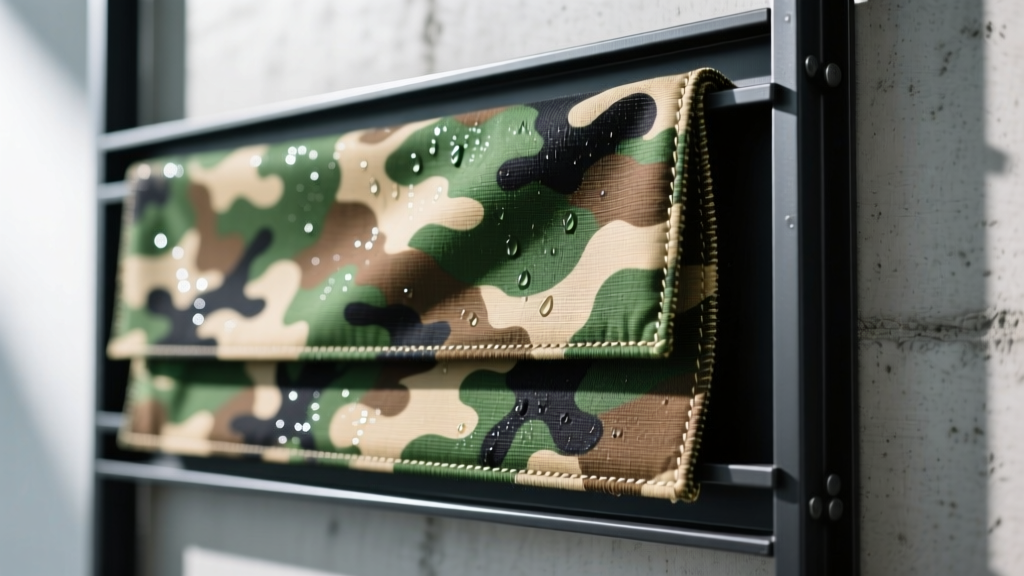
The Science of Camo Substrates and Water Repellency
Waterproofing camouflage textiles presents a unique engineering challenge that standard architectural fabrics do not face. When treating waterproof camo material, the objective extends far beyond achieving a high hydrostatic head; the application must preserve the precise visual and near-infrared (NIR) reflectance properties of the camouflage pattern. Standard waterproofing agents, particularly heavy waxes or unmodified silicones, can alter the NIR signature of the fabric, causing it to 'glow' under night vision optics or fail to blend with natural foliage in the 700-1200 nm spectrum.
Modern tactical fabrics, hunting blind meshes, and wildlife observation hides typically utilize ripstop nylon, polyester-cotton blends, or specialized polyethylene netting. According to testing protocols by the U.S. Army Combat Capabilities Development Command, any chemical treatment applied to these substrates must maintain the original spectral reflectance curve. As of 2026, the industry has aggressively pivoted toward C0 (fluorocarbon-free) durable water repellent (DWR) finishes and aliphatic polyurethane dispersions to meet stringent environmental regulations without compromising tactical efficacy.

Pre-Treatment: Preserving the Visual and IR Signature
Adhesion failure and IR signature degradation usually stem from inadequate substrate preparation. Factory-fresh camouflage fabrics are often coated with spin finishes, lubricants, and anti-static agents that repel water-based sealants.
Scouring and Degreasing
- Alkaline Scouring: Wash the fabric in a mild alkaline bath (pH 9-10) at 60°C for 20 minutes to strip manufacturing sizing.
- Rinsing: Use deionized water to prevent mineral deposits from leaving white residue on dark camo patterns.
- Drying: Tumble dry at a low heat (max 80°C) to avoid melting the polyurethane yarns often used in ripstop grids.
Coating Selection Matrix for Tactical Fabrics
Selecting the right chemical formulation is the most critical decision in the application process. The table below compares the primary coating classes used for waterproof camo material in 2026, evaluated by independent textile testing laboratories for performance and environmental impact.
| Coating Type | Hydrostatic Head | IR Signature Impact | Cost per Sq Ft | Best Application Method |
|---|---|---|---|---|
| C0 (PFC-Free) DWR | Surface Repellency Only | None (Excellent) | $0.12 - $0.18 | Pad-Dry-Cure |
| Aliphatic PU Coating | 3,000 - 10,000 mm | Low (Requires matte agents) | $0.35 - $0.55 | Knife-Over-Edge |
| Silicone Elastomer | 1,500 - 4,000 mm | High Risk (Alters NIR) | $0.40 - $0.60 | HVLP Spray |
| Wax/Emulsion Blend | 800 - 1,500 mm | Moderate Risk | $0.08 - $0.15 | Dip and Squeeze |
For high-performance hunting blinds and military hides, an aliphatic polyurethane back-coating paired with a C0 DWR face-finish provides the optimal balance of hydrostatic resistance and signature preservation. The EPA's Safer Choice program provides extensive guidelines on selecting fluorocarbon-free ingredients that do not bioaccumulate while maintaining textile performance.
Precision Application Techniques
The method of application dictates the final hand-feel, breathability, and waterproof integrity of the camo material. Below are the three primary industrial and prosumer techniques.
1. HVLP Spraying for Lightweight Netting and Meshes
High Volume Low Pressure (HVLP) spraying is mandatory for camouflage netting and open-weave meshes where traditional roller or knife methods would push the coating through the gaps and cause web-blocking.
- Equipment Setup: Use a 1.3mm to 1.5mm fluid nozzle. Set the air pressure to 15-20 PSI at the cap.
- Viscosity: Thin water-based PU dispersions to a flow-cup viscosity of 18-22 seconds (Zahn Cup #2).
- Technique: Maintain a strict 6-to-8-inch distance from the substrate. Apply in a 50% overlapping cross-hatch pattern. This atomizes the sealant into a fine mist that coats the individual yarns without filling the negative space of the mesh.
2. Knife-Over-Edge for Heavy-Duty Ripstop Blinds
For solid woven fabrics used in pop-up blinds and architectural hides, knife-over-edge coating applies a continuous, impermeable film to the back of the fabric.
- Web Tension: Maintain fabric tension at 150-200 N/m to prevent wrinkling, which causes uneven coating thickness.
- Blade Gap: Set the knife gap to 0.5mm for a light breathable coating, or 1.2mm for heavy-duty, fully waterproof applications (10,000mm+ hydrostatic head).
- Matte Additives: To prevent the coating from creating a glossy sheen that reflects sunlight, mix 2-4% silica matting agent into the PU dispersion before application.
3. Pad-Dry-Cure for C0 DWR Face Finishes
Applying a DWR to the face of the camo material requires the pad-dry-cure method to ensure the chemical bonds to the fiber at a molecular level without stiffening the fabric.
- Nip Pressure: Set the padder rollers to 2-3 bar, achieving a wet pickup of 60-70%.
- Drying: Pass through a multi-zone oven. Zone 1 at 100°C to evaporate water, Zone 2 at 150°C for 90 seconds to cross-link the C0 polymers.
Curing Protocols and Hydrostatic Testing
Incomplete cross-linking is the leading cause of premature delamination in field-applied camo coatings. If ambient humidity exceeds 65% during air-curing, the isocyanate groups in two-part PU systems will react with moisture in the air rather than the polyol, resulting in a brittle, chalky finish that flakes off when the blind is folded.
For field applications where industrial ovens are unavailable, utilize moisture-cure aliphatic urethanes. These single-component systems require a minimum of 48 hours at 20°C (68°F) to achieve full tensile strength. After curing, validate the application using the AATCC 127 hydrostatic head test. A properly applied waterproof camo material for tactical or hunting use should withstand a minimum of 3,000 mm of water pressure before the third drop penetrates the fabric.
Maintenance and Reapplication Cycles
Even the most robust waterproof camo material degrades under UV exposure and mechanical abrasion from brush and branches. Establish a strict maintenance protocol to ensure long-term viability:
- Field Cleaning: Never use standard detergents. Wash with a specialized, non-detergent technical fabric cleaner that does not leave hydrophilic residues.
- DWR Reactivation: The C0 face finish can often be reactivated by applying gentle heat (tumble drying on low or ironing on a synthetic setting with a press cloth) for 10 minutes.
- Re-coating Interval: Reapply a spray-on C0 DWR replenisher every 40-50 days of active field use, or immediately if water stops beading and begins to wet out the face fabric.
Written by
Sarah WhitfieldSarah Whitfield is a chartered quantity surveyor (MRICS) and construction cost analyst with 15 years of experience in material pricing, procurement strategy, and project budgeting. She earned her degree in Construction Management from the University of Reading (UK) and has worked on projects ranging from $2M custom homes to $180M mixed-use developments across North America and Europe. Sarah currently leads cost estimating for BuildMat Insight, maintaining a proprietary database of 4,000+ material price points updated quarterly. She is a frequent contributor to RSMeans cost data panels and has presented at the International Cost Engineering Council (ICEC) congress. Based in Denver, CO, Sarah is an avid trail runner and volunteer mentor for Women in Construction.
More from Sarah Whitfield
View all
Wood & Lumber
What Are the Different Types of Wood? A Builder's Guide
Compare structural softwoods, finish hardwoods, and engineered lumber. Analyze Janka ratings, MOE values, and 2026 pricing for construction.
Aug 4, 2026

Walls & Panels
Steel Framing vs Wood Framing: Corrosion and Moisture Defense
Compare steel framing vs wood framing for moisture resistance. Learn about galvanized coatings, condensation risks, and corrosion protection strategies.
Jul 21, 2026

Stone & Masonry
How to Cut Stone Veneer: Wet Saw vs Grinder Comparison
Compare the best tools for cutting stone veneer. We review wet saws, angle grinders, and chop saws to help you achieve clean, chip-free cuts.
Jul 21, 2026