Best Waterproof Material for Clothing: 2026 Selection Guide
Compare ePTFE, PU, and electrospun membranes. Learn hydrostatic head ratings, MVTR metrics, and 2026 PFC-free DWR standards for technical apparel.

Membrane Architecture: The Core of Technical Apparel
Selecting the optimal waterproof material for clothing requires moving beyond brand marketing to evaluate the underlying polymer chemistry. Modern technical apparel relies on a multi-layer construction, typically a face fabric, a waterproof-breathable membrane, and an inner backer. The membrane is the functional engine, and its microscopic architecture dictates the garment's performance envelope. In 2026, material science has bifurcated into three primary membrane categories, each with distinct mechanical and thermodynamic properties.
Microporous ePTFE (Expanded Polytetrafluoroethylene)
ePTFE membranes, pioneered by Gore-Tex, remain the industry benchmark for extreme environments. The material is stretched to create a matrix containing approximately 9 billion microscopic pores per square inch. Each pore is roughly 20,000 times smaller than a liquid water droplet, preventing external moisture ingress, yet 700 times larger than a water vapor molecule, allowing perspiration to escape. Because ePTFE is chemically inert and hydrophobic, it does not rely on body heat to initiate moisture transfer, making it highly effective in freezing, static conditions. However, the pores are susceptible to contamination from body oils and surfactants, necessitating rigorous maintenance.
Hydrophilic Polyurethane (PU) and Sympatex
Unlike microporous membranes, hydrophilic PU membranes (such as Sympatex) contain zero physical pores. Instead, they utilize a solid, continuous polymer film embedded with hydrophilic molecular chains. These chains absorb moisture vapor from the high-humidity microclimate inside the garment and transport it outward via solid-state diffusion along the molecular chain to the lower-humidity exterior. This poreless architecture makes hydrophilic membranes completely impervious to wind, body oils, and dirt contamination. The trade-off is that breathability is thermally dependent; the vapor transfer rate scales directly with the temperature and humidity gradient between the wearer's skin and the external environment.
Electrospun Nanofiber Membranes
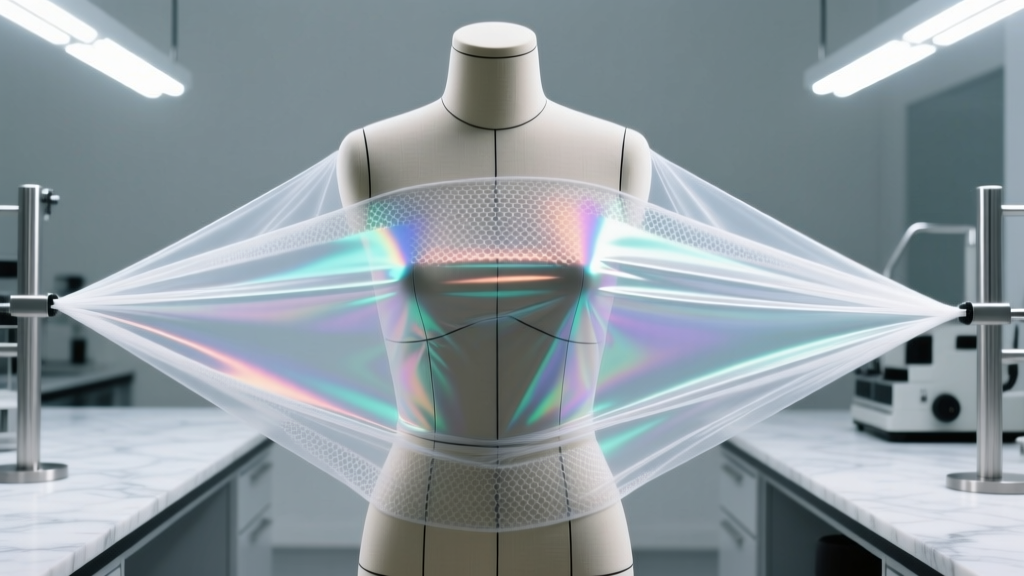
Electrospinning represents the cutting edge of 2026 textile engineering, utilized in technologies like Polartec NeoShell and eVent. Instead of stretching a film, a polyurethane solution is subjected to a high-voltage electrical field, spinning it into a chaotic web of nanoscale fibers. This creates an interconnected, highly tortuous pore structure that is inherently air-permeable. Unlike traditional ePTFE which requires a high vapor-pressure gradient to 'push' moisture through, electrospun membranes allow continuous, passive air exchange. This results in superior active breathability, preventing the clammy buildup of sweat during high-output aerobic activities, though they sacrifice a marginal degree of absolute windproofness.
Quantifying Performance: The Metrics That Matter
Evaluating waterproof materials requires strict adherence to standardized laboratory testing. Relying on proprietary brand terminology often obscures actual performance. When sourcing or selecting materials, demand data based on ISO 811:2018 standards for hydrostatic head and standardized MVTR (Moisture Vapor Transmission Rate) or RET (Resistance to Evaporative Heat Transfer) protocols.
| Metric | Threshold / Value | Performance Classification | Target Application |
|---|---|---|---|
| Hydrostatic Head (HH) | 10,000 mm | Baseline Waterproof | Urban commuting, light hiking, brief exposure |
| Hydrostatic Head (HH) | 20,000 mm | High-Performance | Alpine climbing, heavy rain, prolonged exposure |
| Hydrostatic Head (HH) | 28,000+ mm | Expedition Grade | Kneeling in wet snow, extreme pressure environments |
| MVTR (B1 Method) | 10,000 g/m²/24h | Moderate Breathability | Low-output activities, cold environments |
| MVTR (B1 Method) | 20,000+ g/m²/24h | High Breathability | High-output aerobic activities, humid conditions |
| RET Value (ISO 11092) | < 6 | Extremely Breathable | Trail running, ski mountaineering |
| RET Value (ISO 11092) | 6 - 13 | Very Breathable | General mountaineering, hiking |
The 2026 DWR Landscape: Navigating the PFC-Free Mandate
A waterproof membrane is only half the equation. The exterior face fabric must be treated with a Durable Water Repellent (DWR) to prevent 'wet-out'—a condition where the face fabric saturates, blocking the membrane's ability to vent vapor and causing internal condensation. Historically, DWRs relied on long-chain perfluorocarbons (C8) and short-chain fluorocarbons (C6) to achieve ultra-low surface tension.
However, due to the extreme environmental persistence and bioaccumulation of PFAS (per- and polyfluoroalkyl substances), global regulatory frameworks have aggressively phased out fluorinated chemistries. According to the EPA guidelines on PFAS and the EU's REACH regulations, the outdoor textile industry has been forced into a rapid transition toward C0 (PFC-free) DWRs by 2026.
'The shift to C0 DWRs represents the most significant supply chain disruption in technical apparel history. Formulators have had to abandon the universal efficacy of fluorocarbons in favor of specialized, substrate-specific hydrocarbon, silicone, and dendrimer-based alternatives.'
Evaluating Modern C0 DWR Chemistries
- Dendrimer-Based (e.g., Gore-Tex ePE, HeiQ EcoDry): These utilize highly branched, tree-like polymer structures that align on the fabric surface to create a dense hydrophobic shield. They offer excellent initial water repellency and durability against washing, though they require more frequent thermal reactivation (tumble drying) than legacy C6 treatments.
- Silicone and Wax Emulsions: Often used in eco-conscious or budget-tier garments. While they provide adequate bead-up for light precipitation, they lack the oleophobic (oil-repelling) properties of fluorocarbons, making them highly susceptible to degradation from skin oils, sunscreen, and insect repellent.
- Plasma Treatment: An emerging, chemical-free surface modification where fabrics are bombarded with ionized gas to alter the surface energy at the nanoscale. While highly durable and environmentally benign, it is currently limited by high capital costs and specific fabric compatibility.
Application-Specific Selection Framework
There is no universal 'best' waterproof material. Selection must be dictated by the specific thermodynamic and mechanical demands of the end-use scenario.
Scenario A: High-Output Aerobic (Trail Running, Backcountry Skiing)
Priority: Maximum air permeability and vapor transfer over absolute hydrostatic head.
Optimal Material: Electrospun nanofiber membranes (e.g., Polartec NeoShell, eVent).
Specification Target: 10,000mm - 15,000mm HH; RET < 4. The slight sacrifice in waterproofness is offset by the prevention of internal sweat accumulation, which is the primary cause of hypothermia in high-output scenarios.
Scenario B: Static Extreme Exposure (Alpine Bivouacs, Ice Climbing)
Priority: Maximum hydrostatic head, absolute windproofness, and cold-weather vapor transfer.
Optimal Material: 3-Layer ePTFE membranes (e.g., Gore-Tex Pro).
Specification Target: 28,000mm+ HH; RET < 6. The inert nature of ePTFE ensures the membrane does not freeze or stiffen in sub-zero temperatures, and its microporous structure continues to vent vapor even when the external environment is below freezing and the wearer is relatively static.
Scenario C: Urban Commuting and Travel
Priority: Drape, quietness, aesthetics, and resistance to urban contaminants.
Optimal Material: Hydrophilic PU laminates or advanced 2.5-layer constructions.
Specification Target: 10,000mm HH; moderate MVTR. Hydrophilic membranes are less prone to permanent degradation from the oils, lotions, and environmental pollutants encountered in urban settings, and they can be bonded to softer, quieter face fabrics that lack the 'crinkle' of traditional hardshells.
Membrane Longevity and Care Protocols
The functional lifespan of a waterproof garment is rarely determined by the membrane's structural failure; it is almost always dictated by DWR degradation and pore contamination. To maintain the specified performance metrics, strict maintenance protocols must be followed.
Standard laundry detergents contain surfactants, optical brighteners, and fabric softeners that leave hydrophilic residues on the face fabric. These residues attract water, causing immediate wet-out and effectively neutralizing the DWR. Garments must be washed exclusively with specialized, non-detergent technical cleansers (e.g., Nikwax Tech Wash or Grangers Performance Cleaner) that strip contaminants without leaving residue.
Furthermore, modern C0 DWRs rely heavily on thermal energy to realign their polymer chains on the fabric surface. After washing and air drying, the garment must be subjected to controlled heat—either via a commercial tumble dryer on a medium setting or by applying a specialized iron (without steam) over a protective towel—for 20 to 30 minutes. This thermal reactivation is non-negotiable for maintaining the surface tension required to shed water in 2026's PFC-free textile landscape.
Written by
Marcus ChenMarcus Chen is a licensed structural engineer (PE) and building materials analyst with over 12 years of experience across residential, commercial, and industrial construction. He holds a Master of Science in Civil Engineering from UC Berkeley and spent six years at Thornton Tomasetti before transitioning to independent consulting and technical writing. Marcus specializes in material selection for seismic-prone regions, concrete reinforcement strategies, and lifecycle cost analysis. His work has been cited by the American Concrete Institute (ACI) and the Structural Engineers Association of California (SEAOC). When he is not on a job site or at his desk, you will find him hiking the Sierra Nevada or restoring a 1920s craftsman bungalow in Oakland, CA.
More from Marcus Chen
View all
Construction Cost
How Much Did the Eiffel Tower Cost to Build?
How much did the Eiffel Tower cost to build in 1889? We adjust for inflation and compare its budget to modern skyscraper construction.
Aug 4, 2026

Fire Resistance
What Is a Fire Resistant Material? Testing & Certification Guide
Discover what is a fire resistant material through ASTM and UL testing. Learn how fire ratings, certifications, and assemblies work in construction.
Aug 4, 2026

Construction Cost
How Much Did the Burj Khalifa Cost to Build?
How much did the Burj Khalifa cost to build? We break down the $1.5B project and extract 5 money-saving strategies for your next build.
Jul 30, 2026