Ark Building Materials Compared: Best Flood-Resilient Options
Compare top ark building materials for flood-resilient homes. We analyze HDPE polymers, hydrophobic concrete, and galvanized steel for 2026 projects.

The Engineering Reality of Ark Construction
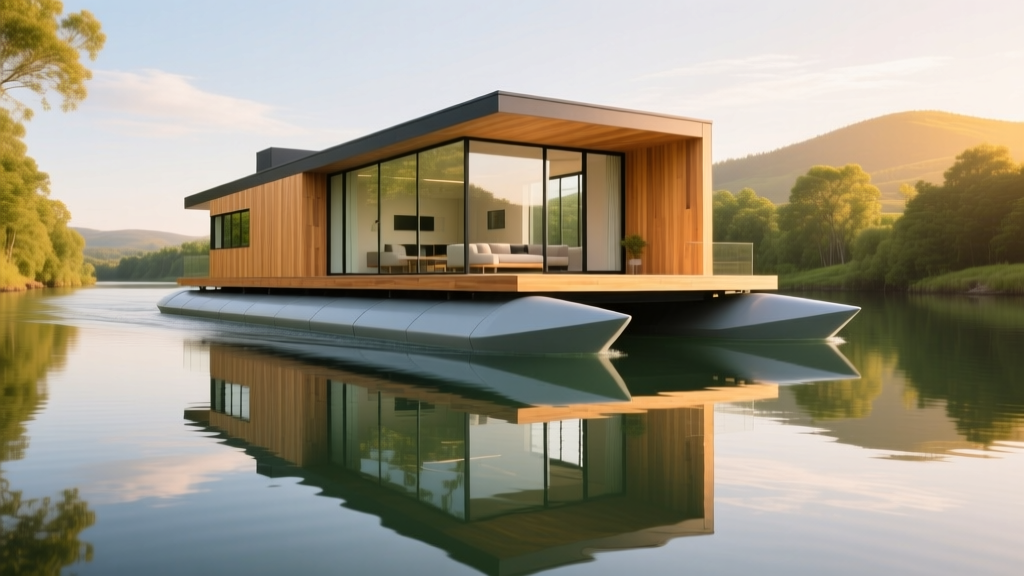
In modern climate-adaptive architecture, "Ark" structures refer to amphibious, floating, or extreme-flood-resilient homes designed to rise with water levels rather than resist them. Selecting the correct ark building materials requires abandoning standard residential codes in favor of marine and civil engineering standards. Standard pressure-treated lumber and conventional drywall will fail catastrophically within months of continuous submersion due to copper leaching, cell wall collapse, and mold proliferation.
This comparison review evaluates the four primary material categories used in 2026 for amphibious and floating Ark foundations, hulls, and superstructures, providing exact specifications, failure modes, and cost metrics.
Core Material Contenders: Comparison Matrix
| Material Category | Primary Ark Application | 2026 Avg. Cost | Marine Lifespan | Key Vulnerability |
|---|---|---|---|---|
| Solid Marine HDPE | Buoyancy pontoons, guide sleeves | $45 - $65 / cu. ft. displacement | 50+ years | UV degradation if unshielded |
| Hydrophobic FRC | Ballast keels, lower hulls | $190 - $240 / cubic yard | 75+ years | Spalling if w/c ratio > 0.40 |
| HDGS (Z350 Coating) | Primary structural framing | $3.20 - $4.50 / sq. ft. footprint | 40 - 60 years | White rust in stagnant water |
| Acetylated Wood | Decking, exterior cladding | $14.00 - $19.00 / board foot | 50 years (marine warranty) | Mechanical fastener corrosion |
Buoyancy & Base: HDPE vs. Hydrophobic Concrete
The foundation of an Ark home must either provide positive buoyancy (floating) or controlled negative buoyancy (amphibious ballast). The material choice dictates the structure's hydrodynamic behavior.
Marine-Grade High-Density Polyethylene (HDPE)
For true floating Ark homes, rotomolded or solid-extruded HDPE is the industry standard. Unlike expanded polystyrene (EPS) foam, which can become waterlogged if the outer membrane is punctured, solid HDPE has a closed-cell molecular structure with a density of 0.95 g/cm³, meaning it is naturally buoyant even when cut or abraded.
- Specification: Require UV-stabilized HDPE with carbon black additives (minimum 2% concentration) to prevent photo-oxidative embrittlement.
- Failure Mode: Creep deformation under sustained static loads. Engineers must design pontoon supports with a maximum continuous load limit of 60% of the material's yield strength (typically 3,800 psi per FEMA Building Science guidelines for marine polymers).
Hydrophobic Fiber-Reinforced Concrete (FRC)
For amphibious Ark homes that rest on the ground and float only during flood events, a heavy ballast keel is required to prevent the house from tipping or drifting. Standard concrete is highly porous, allowing chloride ions to penetrate and corrode internal rebar.
Modern Ark hulls use FRC dosed with crystalline waterproofing admixtures (such as Xypex Admix C-500 at 2% by weight of cement). This lowers the permeability to near-zero and self-seals micro-cracks up to 0.4mm wide.
Structural Framing: Galvanized Steel vs. Acetylated Timber
Once the buoyancy or ballast base is established, the superstructure framing must withstand 100% relative humidity, salt spray, and constant thermal cycling.
Hot-Dipped Galvanized Steel (HDGS)
Cold-formed steel framing is preferred for Ark superstructures due to its high strength-to-weight ratio, which is critical for maintaining a low center of gravity. However, standard G60 galvanized coatings will fail in a marine splash zone within a decade.
According to the American Galvanizers Association, Ark structures in tidal or brackish water environments require a Z350 coating designation (minimum 3.9 mils or 100 microns of zinc thickness per ASTM A123).
Installation Gotcha: Never weld HDGS framing without immediately applying a zinc-rich cold galvanizing compound (e.g., ZRC) to the heat-affected zones. The heat from welding vaporizes the zinc coating, leaving the bare steel highly susceptible to galvanic corrosion.
Acetylated Wood (Accoya)
For architectural elements, cladding, and decking where the aesthetic of timber is required, standard cedar or Ipe is increasingly being replaced by acetylated wood. The acetylation process modifies the free hydroxyl groups in the wood's cell walls into acetyl groups, drastically reducing its equilibrium moisture content (EMC).
While standard timber swells and shrinks with moisture changes, Accoya technical specifications demonstrate that acetylated wood maintains dimensional stability and carries a 50-year warranty against rot, even when fully submerged in freshwater. It is the premier choice for Ark home exterior siding and guide-pole sleeves.
2026 Cost & Lifecycle Analysis
Building an Ark home requires a higher initial capital expenditure (CapEx) compared to traditional elevated foundations, but the operational expenditure (OpEx) and insurance premiums are significantly lower in high-risk flood zones.
- HDPE Pontoon Base System: $85,000 - $110,000 (Includes mooring pylons)
- Hydrophobic FRC Amphibious Base: $55,000 - $70,000
- Z350 HDGS Framing Package: $38,000 - $45,000
- Accoya Cladding (1,500 sq. ft. exterior): $42,000 - $55,000
ROI Factor: Flood insurance premiums for certified amphibious Ark structures are typically 40-60% lower than for standard slab-on-grade homes in FEMA Zone A or V.
Site-Specific Decision Framework
Do not select ark building materials based solely on budget; the hydrology of your specific site dictates the material matrix.
Scenario A: Permanent Deep Water (Lakes, Canals, Coastal)
Recommendation: HDPE Marine Pontoons + HDGS Z350 Framing + Aluminum/Fiberglass Cladding.
Why: Continuous submersion requires permanent positive buoyancy. HDPE will not absorb water over decades. Avoid wood entirely for the substructure to prevent marine borer infestation in saltwater environments.
Scenario B: Seasonal Floodplains (River Basins, Flash Flood Zones)
Recommendation: Hydrophobic FRC Ballast Keel + HDGS Framing + Acetylated Wood Cladding.
Why: The home needs to sit firmly on the ground for 10 months of the year (requiring the heavy FRC ballast to resist wind uplift) and float smoothly on vertical guide pylons during the 2-month flood season. Accoya wood provides the necessary rot resistance for the splash zone without the maintenance of marine paints.
Final Procurement Advice
When sourcing ark building materials, demand third-party mill certifications. For HDPE, request the resin manufacturer's UV-stabilization data sheet. For concrete, require the batch plant to provide a certified mix design showing the exact dosage of crystalline admixtures and silica fume. For galvanized steel, require the galvanizer's certificate of compliance verifying the Z350 coating thickness via magnetic induction testing. In amphibious architecture, material substitution or unverified "equivalents" will result in catastrophic structural failure during the first major hydrostatic event.
Written by
Priya KapoorPriya Kapoor is a real estate market analyst and construction economics researcher with expertise in housing affordability, development feasibility, and infrastructure investment. She holds a Master of Regional Planning from Cornell University and previously worked as a senior analyst at CBRE's Investment Properties group, where she modeled returns for $4B in mixed-use development pipelines. Priya now runs an independent research practice advising developers, municipalities, and REITs on construction cost forecasting and market timing. She publishes the quarterly "BuildMat Market Pulse" report tracking material price indices across 12 commodity categories. Based in Austin, TX, Priya serves on the board of Habitat for Humanity Austin and is a marathon runner.
More from Priya Kapoor
View all
Construction Cost
Cost to Build a 1600 Sq Ft Home in 2026: Full Breakdown
Accurate 2026 cost to build a 1600 sq ft home—material, labor, and regional pricing breakdowns included. Plan your budget with real-time estimates.
Aug 11, 2026

Wood & Lumber
Name the Types of Wood for Pressure Treatment and Preservation
Learn how to name the types of wood best suited for pressure treatment. Compare species treatability, chemical retention levels, and 2026 preservation costs.
Aug 4, 2026

Stone & Masonry
Stone Veneer Suppliers Lindenhurst: 2026 Cost Analysis
Analyze 2026 stone veneer costs in Lindenhurst, NY. Compare local supplier pricing, delivery fees, and Suffolk County installation labor rates.
Aug 4, 2026