Hummingbird Nest Building Material Cost Analysis for Habitat Design
Analyze the cost of sourcing and cultivating natural hummingbird nest building material for ecological landscaping and SITES-certified habitat restoration.

The Economics of Ecological Habitat Construction
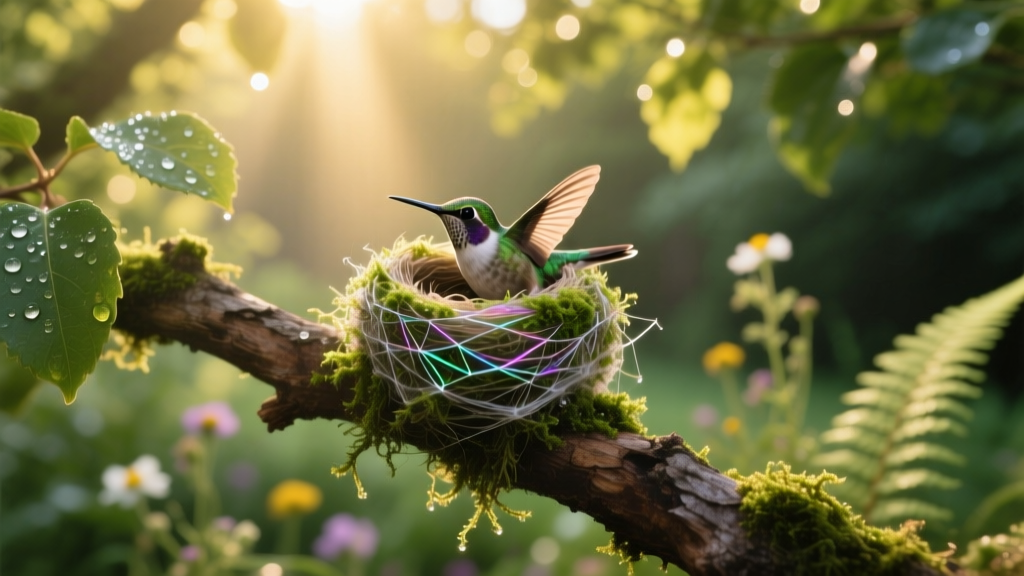
In the specialized field of ecological landscaping and SITES-certified (Sustainable SITES Initiative) habitat restoration, landscape architects must budget for highly specific biological components. While traditional construction relies on lumber, steel, and concrete, building a functional avian sanctuary requires sourcing and cultivating authentic hummingbird nest building material. Unlike artificial nesting boxes—which are frequently rejected by Trochilidae species due to rigid structural limitations—natural nests require a precise combination of tensile binders, moisture-wicking camouflage, and expanding insulating cores.
For commercial ecological contractors and high-end residential landscape designers, the cost of procuring these materials is not measured in linear feet or board yards, but in cultivation time, substrate preparation, and native plant yield. This cost analysis breaks down the material science, sourcing strategies, and line-item budgeting required to integrate authentic hummingbird nesting materials into a 10,000-square-foot habitat restoration project.
Breakdown of Primary Hummingbird Nest Building Materials
To accurately forecast habitat construction costs, we must categorize the three primary material classes required for a structurally sound nest, analyzing the procurement cost for each within a designed landscape.
1. Spider Silk: The Tensile Binder
Spider silk is the foundational anchor that secures the nest to the host branch and provides structural elasticity. Because commercial spider silk harvesting is economically unviable for landscaping projects, contractors must cultivate local arachnid populations. This requires budgeting for undisturbed leaf litter zones, native deciduous shrubs (such as Viburnum dentatum), and the deliberate omission of broad-spectrum pesticides.
- Material Proxy Cost: $2.50 – $4.00 per sq. ft. for native understory shrub installation.
- Yield Timeline: 12 to 18 months for established orb-weaver and jumping spider colonies to reach sufficient density.
2. Moss and Lichen: Camouflage and Moisture Retention
The outer shell of the nest relies on foliose lichens (e.g., Parmelia) and mosses (e.g., Hypnum cupressiforme) for camouflage against bark and moisture wicking. Sourcing these materials presents a distinct cost divergence: purchasing live, mature moss mats yields immediate results but carries a high premium, whereas cultivating via spore slurries reduces material costs by 90% but delays project completion.
3. Plant Down: The Insulating Core
The inner cup is lined with the fine, hydrophobic down of native plants, primarily common milkweed (Asclepias syriaca) and various thistles (Cirsium). According to habitat guidelines outlined by the Xerces Society for Invertebrate Conservation, integrating native milkweed serves the dual purpose of supporting Lepidoptera life cycles while providing critical nesting down for avian species.
- Procurement Cost: $3.50 – $5.50 per deep-root plug (72-cell tray).
- Yield Metric: A single mature milkweed stand produces approximately 200 seed pods of usable down per season, sufficient for 40-50 individual nest linings.
Cost Matrix: Natural Cultivation vs. Artificial Substitutes
When presenting budget options to stakeholders, landscape architects must compare the long-term ecological ROI of natural material cultivation against the upfront costs of artificial alternatives. The Cornell Lab of Ornithology notes that Ruby-throated and Anna's hummingbirds exhibit strong site fidelity when natural nesting materials are abundant, whereas artificial feeders and houses do not support generational nesting behaviors.
| Material Category | Natural Cultivation Method | Cost per 1,000 sq. ft. | Artificial Alternative | Failure Mode of Alternative |
|---|---|---|---|---|
| Tensile Binder | Native shrub & leaf litter integration | $850 - $1,200 | Cotton string / yarn | Tangles around avian limbs; lacks elasticity |
| Outer Camouflage | Moss spore slurry application | $150 - $250 | Green spray paint / plastic moss | Toxic off-gassing; zero moisture retention |
| Inner Insulation | Milkweed & Thistle plug planting | $300 - $450 | Dryer lint / pet hair | Retains moisture; harbors fungal spores |
Project Budget: 10,000 Sq. Ft. SITES-Certified Sanctuary
Below is a generalized material and labor budget for integrating authentic hummingbird nesting infrastructure into a 10,000-square-foot ecological restoration zone. This budget assumes existing mature canopy trees (e.g., Oak, Maple, or Birch) are present to serve as host structures, as hummingbirds typically build on downward-sloping branches 10 to 40 feet above grade.
Phase 1: Substrate and Canopy Preparation ($1,400)
Before moss or lichen can establish, the bark pH of host trees must be optimized. Hypnum moss requires a slightly acidic substrate (pH 5.0–6.5). This phase includes arborist consultations, selective pruning to allow dappled sunlight (crucial for moss photosynthesis without desiccation), and the application of elemental sulfur to adjust bark pH where necessary.
Phase 2: Moss and Lichen Inoculation ($850)
Rather than purchasing expensive live moss mats ($15+ per sq. ft.), commercial ecological contractors utilize a 'moss milkshake' technique. This involves blending dormant Hypnum fragments with buttermilk and water-retaining hydrogels, then applying it via pump sprayer to the host branches and surrounding rocks. Material cost for 20 gallons of inoculant slurry is approximately $350, with $500 allocated for specialized application labor.
Phase 3: Understory and Plant Down Cultivation ($2,200)
Planting 200 native Asclepias syriaca and Cirsium discolor plugs at $4.50 each (including soil amendments and initial irrigation setup). This creates a localized 'down factory' that will self-seed and provide annual nesting material yields within 14 months of installation.
Phase 4: Arachnid Habitat Zoning ($1,100)
Establishing 2,000 sq. ft. of undisturbed 'leave-it' zones. This involves installing deep native leaf litter, coarse woody debris (CWD), and removing all synthetic herbicides. The cost reflects the procurement of untreated hardwood mulch and the installation of subtle physical barriers to prevent pedestrian compaction of the arachnid breeding grounds.
"When designing for SITES certification, the integration of micro-habitats like avian nesting zones yields significant points under the 'Site Design - Provide Habitat' credit. The initial material cultivation cost is routinely offset by the elimination of long-term landscape maintenance contracts, as these zones are designed to be self-sustaining and non-irrigated after year two."
— Ecological Landscape Alliance (ELA) Best Practices Manual
Troubleshooting Material Failures in Designed Habitats
Even with adequate budgeting, ecological construction materials are subject to environmental variables. Below are common failure modes when cultivating hummingbird nest materials and their engineered solutions.
- Failure: Moss desiccation on south-facing branches.
Solution: Restrict moss slurry application to the north and east quadrants of the host tree canopy. Install temporary 40% shade cloth scaffolding during the 8-week establishment phase if ambient humidity drops below 60%. - Failure: Insufficient spider silk density due to local predator pressure (e.g., insectivorous birds).
Solution: Increase the density of Coarse Woody Debris (CWD) in the understory by 30% to provide ground-level refuge for web-building arachnids, ensuring a steady supply of dragline silk for the canopy nests. - Failure: Milkweed down blowing away before avian collection.
Solution: Plant thistle (Cirsium) as a secondary down source. Thistle down is structurally barbed and tends to mat together on the plant head, remaining available for late-season nesters even during high-wind events.
FAQ: Material Sourcing and Maintenance
Can I purchase pre-harvested spider silk for habitat construction?
No. Commercial spider silk is currently only produced in laboratory settings for biomedical and aerospace applications, costing upwards of $30,000 per kilogram. Ecological landscaping relies entirely on in-situ cultivation via habitat design.
How often must the plant down materials be replanted?
Once established, native milkweed and thistle are perennial. A well-designed 10,000 sq. ft. zone will yield surplus nesting down annually. Excess down can be left on the soil surface to decompose, returning nitrogen to the substrate.
Does the SITES rating system mandate specific nesting materials?
SITES does not mandate specific biological materials but requires documented evidence that the landscape provides functional, species-appropriate habitat. Documenting the presence of natural moss, lichen, and native down-producing flora satisfies the rigorous habitat performance criteria required for certification.
Written by
Sarah WhitfieldSarah Whitfield is a chartered quantity surveyor (MRICS) and construction cost analyst with 15 years of experience in material pricing, procurement strategy, and project budgeting. She earned her degree in Construction Management from the University of Reading (UK) and has worked on projects ranging from $2M custom homes to $180M mixed-use developments across North America and Europe. Sarah currently leads cost estimating for BuildMat Insight, maintaining a proprietary database of 4,000+ material price points updated quarterly. She is a frequent contributor to RSMeans cost data panels and has presented at the International Cost Engineering Council (ICEC) congress. Based in Denver, CO, Sarah is an avid trail runner and volunteer mentor for Women in Construction.
More from Sarah Whitfield
View all
Wood & Lumber
What Are the Different Types of Wood? A Builder's Guide
Compare structural softwoods, finish hardwoods, and engineered lumber. Analyze Janka ratings, MOE values, and 2026 pricing for construction.
Aug 4, 2026

Walls & Panels
Steel Framing vs Wood Framing: Corrosion and Moisture Defense
Compare steel framing vs wood framing for moisture resistance. Learn about galvanized coatings, condensation risks, and corrosion protection strategies.
Jul 21, 2026

Stone & Masonry
How to Cut Stone Veneer: Wet Saw vs Grinder Comparison
Compare the best tools for cutting stone veneer. We review wet saws, angle grinders, and chop saws to help you achieve clean, chip-free cuts.
Jul 21, 2026