When Was Asbestos Banned From Building Materials? The Real Timeline
Discover when asbestos was banned from building materials, the 1989 EPA ruling, the 2024 chrysotile ban, and how to identify legacy risks in 2026.

The Short Answer: The Myth of the Total US Ban
Ask most contractors or homeowners when asbestos was banned from building materials in the United States, and they will confidently point to the 1970s or 1980s. This is a dangerous misconception. The reality of US asbestos regulation is far more complex: asbestos was never fully banned in the United States until a landmark ruling in 2024, and even that ruling has specific limitations regarding legacy materials.
While the Environmental Protection Agency (EPA) and the Consumer Product Safety Commission (CPSC) banned specific high-risk applications in the 1970s, a sweeping 1989 EPA ban was largely overturned by a federal court in 1991. Consequently, millions of tons of asbestos-containing materials (ACMs) were legally manufactured, imported, and installed well into the 1990s and early 2000s. For construction professionals operating in 2026, understanding this regulatory timeline is not just a matter of historical curiosity—it is a critical component of site safety, legal compliance, and risk management.
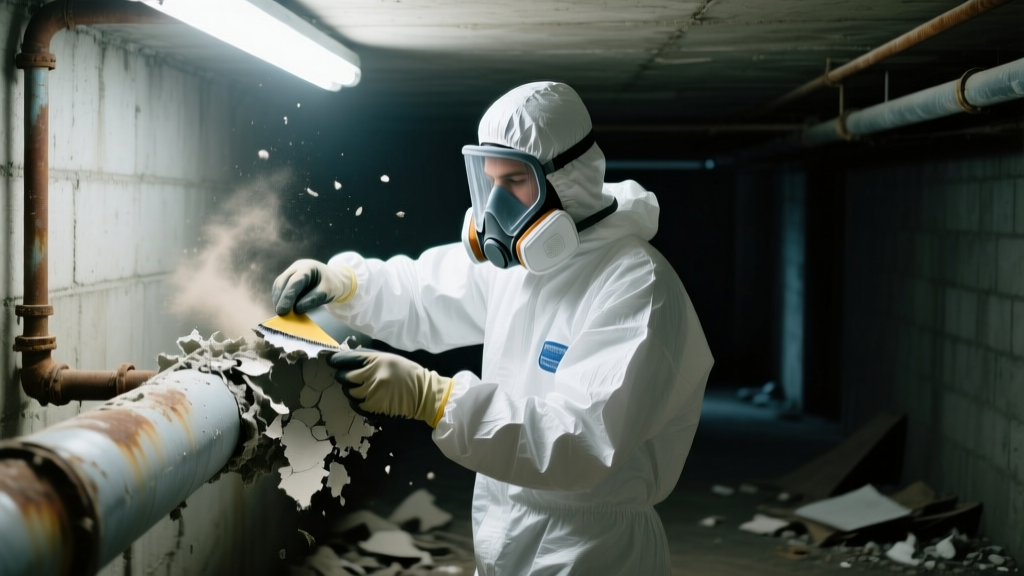
The US Asbestos Regulatory Timeline (1973–2024)
To understand the current landscape of asbestos in building materials, we must examine the fragmented history of its regulation. The following table outlines the major federal actions that shaped what materials are found in today's building stock.
| Year | Regulatory Action | Impact on Building Materials |
|---|---|---|
| 1973 | EPA bans spray-applied surfacing materials. | Ends the use of sprayed-on asbestos fireproofing and acoustic insulation on steel beams and ceilings. |
| 1977 | CPSC bans asbestos in wall-patching compounds. | Removes asbestos from consumer and commercial drywall joint compounds. |
| 1978 | CPSC bans asbestos in artificial fireplace embers. | Niche ban, but relevant for residential hearth renovations. |
| 1989 | EPA issues final rule under TSCA to ban most ACMs. | Attempted total phase-out of manufacturing and importing. |
| 1991 | 5th Circuit Court of Appeals overturns the 1989 ban. | Re-legalizes asbestos in roofing felt, vinyl floor tile, cement shingles, and gaskets. |
| 2024 | EPA finalizes rule banning chrysotile asbestos. | Prohibits ongoing use and new imports of the only asbestos type still entering the US. |
For a comprehensive review of these historical phase-outs, the EPA's official documentation on asbestos bans and phase-outs provides the exact legal parameters of what was and was not prohibited during these decades.
The 2024 EPA Chrysotile Ruling: What Changed?
On March 18, 2024, the EPA finalized a rule under the Toxic Substances Control Act (TSCA) to prohibit the ongoing use of chrysotile asbestos. This was a watershed moment in American building material regulation. Chrysotile (white asbestos) was the sole type of asbestos still being imported into the United States, primarily for use in the chlor-alkali industry, but historically it accounted for 95% of all asbestos used in global construction.
Does the 2024 Ban Require Removing Existing Materials?
No. The 2024 ruling strictly governs the importation, manufacturing, and new installation of chrysotile asbestos. It does not mandate the retroactive abatement of legacy asbestos already installed in commercial or residential structures. For facility managers and demolition contractors in 2026, the physical risk profile of older buildings remains unchanged. The danger lies in the disturbance of these legacy materials during renovations.
High-Risk Legacy Materials Still Found in 2026 Renovations
Because the 1991 court overturn allowed certain products to remain on the market, and because building supply chains often sold through existing inventory for years after manufacturing ceased, construction teams frequently encounter ACMs in buildings constructed up through the late 1990s. Below is a risk matrix of the most common legacy materials.
| Material Type | Peak Usage Era | Friability Risk | Common Locations |
|---|---|---|---|
| Vermiculite Attic Insulation | 1920s–1990 | High (if disturbed) | Attics, wall cavities (often sold under the Zonolite brand) |
| Vinyl Asbestos Floor Tiles (VAT) | 1950s–1980s | Low (unless sanded/scraped) | Kitchens, commercial corridors, basements |
| Transite Roofing & Siding | 1940s–1970s | Moderate (weathering/cutting) | Garages, sheds, industrial exteriors |
| Pipe Lagging & Boiler Insulation | 1930s–1970s | Extremely High | Basements, mechanical rooms, steam tunnels |
| Acoustic "Popcorn" Ceilings | 1950s–1980s | High (scraping/drilling) | Living rooms, hallways, multi-family residential |
Mandatory Testing and Abatement Protocols
Visual identification of asbestos is impossible. The fibers are microscopic, and modern non-asbestos materials often mimic the exact visual texture of legacy ACMs. When a contractor encounters suspect materials, the OSHA construction standards for asbestos dictate strict procedural halts.
Step-by-Step Suspect Material Handling
- Immediate Work Stoppage: Cease all mechanical disturbance, cutting, or demolition in the immediate vicinity.
- Isolate the Zone: Shut down local HVAC systems to prevent potential fiber circulation and seal doorways with 6-mil polyethylene sheeting.
- Engage an AHERA-Certified Inspector: Hire an independent, state-licensed asbestos building inspector to collect bulk samples. Contractors should never collect their own samples due to cross-contamination and liability risks.
- Laboratory Analysis (PLM vs. TEM): Samples are analyzed using Polarized Light Microscopy (PLM). However, if the material is a fine-grained product like vinyl floor tile or certain mastics, Transmission Electron Microscopy (TEM) is required, as PLM cannot reliably detect the ultra-fine fibers embedded in these matrices.
- Abatement or Management: If results return positive (>1% asbestos content), the material must either be managed in place (if intact and undisturbed) or removed by a licensed abatement firm prior to renovation.
Global Bans vs. US Policy
The United States remains an outlier among developed nations regarding the speed and totality of its asbestos bans. While the US struggled with the 1989 overturn and the slow phase-out of chrysotile, other nations took decisive, comprehensive action much earlier. The United Kingdom implemented a total ban on all asbestos types in 1999. Australia followed with a complete ban on the mining, import, and use of all asbestos in 2003. The European Union enacted a union-wide ban on all asbestos types effective in 2005. According to the National Cancer Institute, the latency period for asbestos-related diseases like mesothelioma can be 20 to 60 years, meaning the global construction and demolition sectors will continue to manage legacy risks well into the latter half of the 21st century.
The Bottom Line for Construction Professionals
When evaluating the question of when asbestos was banned from building materials, the most accurate answer is that the US banned specific applications in the 1970s, attempted a total ban in 1989 (which failed), and finally banned new imports and ongoing use of chrysotile in 2024. However, the physical legacy of these materials remains embedded in millions of structures. For general contractors, demolition crews, and real estate developers, treating pre-2000 building materials with rigorous suspicion and adhering strictly to OSHA's PACM guidelines is the only legally and ethically sound approach to modern construction.
Written by
Priya KapoorPriya Kapoor is a real estate market analyst and construction economics researcher with expertise in housing affordability, development feasibility, and infrastructure investment. She holds a Master of Regional Planning from Cornell University and previously worked as a senior analyst at CBRE's Investment Properties group, where she modeled returns for $4B in mixed-use development pipelines. Priya now runs an independent research practice advising developers, municipalities, and REITs on construction cost forecasting and market timing. She publishes the quarterly "BuildMat Market Pulse" report tracking material price indices across 12 commodity categories. Based in Austin, TX, Priya serves on the board of Habitat for Humanity Austin and is a marathon runner.
More from Priya Kapoor
View all
Construction Cost
Cost to Build a 1600 Sq Ft Home in 2026: Full Breakdown
Accurate 2026 cost to build a 1600 sq ft home—material, labor, and regional pricing breakdowns included. Plan your budget with real-time estimates.
Aug 11, 2026

Wood & Lumber
Name the Types of Wood for Pressure Treatment and Preservation
Learn how to name the types of wood best suited for pressure treatment. Compare species treatability, chemical retention levels, and 2026 preservation costs.
Aug 4, 2026

Stone & Masonry
Stone Veneer Suppliers Lindenhurst: 2026 Cost Analysis
Analyze 2026 stone veneer costs in Lindenhurst, NY. Compare local supplier pricing, delivery fees, and Suffolk County installation labor rates.
Aug 4, 2026