Navigating the Building Materials Sector in 2026: Application Guide
Master the 2026 building materials sector with our application guide. Learn procurement strategies, low-carbon specs, and supply chain frameworks.
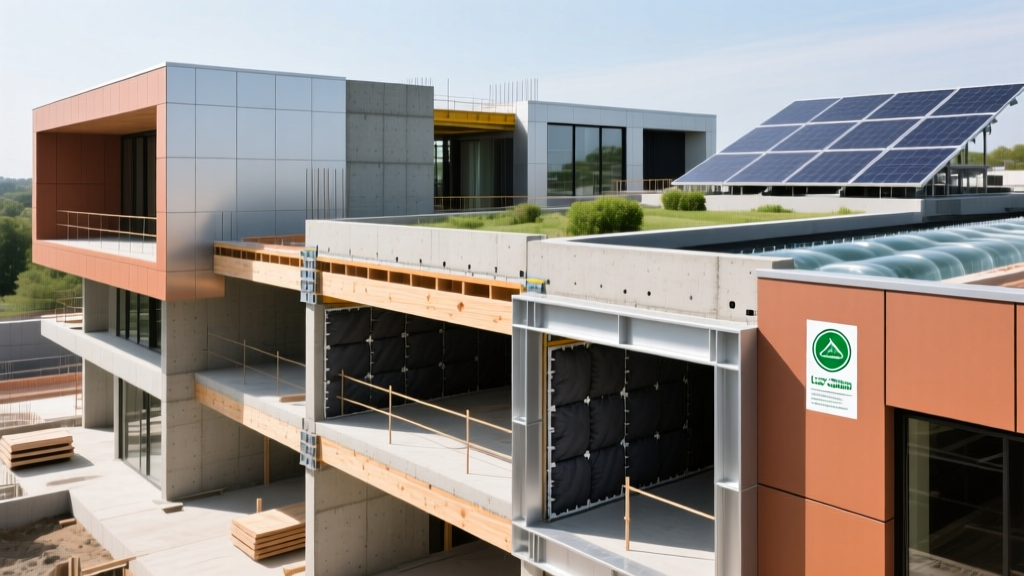
The 2026 Landscape: Shifts in the Building Materials Sector
The building materials sector has undergone a structural transformation over the last 36 months. Driven by stringent federal "Buy Clean" mandates, localized supply chain reshoring, and the widespread adoption of Environmental Product Declarations (EPDs), procurement is no longer just about securing the lowest bid. In 2026, successful project delivery requires integrating material science with macroeconomic forecasting.
For general contractors, architects, and procurement managers, understanding the current state of the building materials sector means recognizing the shift from globalized commodity sourcing to regionalized, compliance-heavy networks. The GSA P100 Facilities Standards now strictly enforce embodied carbon limits for federal projects, a benchmark that commercial developers are rapidly adopting to secure green financing and tax incentives. This guide provides an actionable framework for specifying, sourcing, and applying next-generation materials in today's market.
Material Application Matrix: Traditional vs. Next-Gen Sector Offerings
Specifying legacy materials without considering their 2026 sector equivalents leaves money and LEED points on the table. The table below contrasts traditional baseline materials with their modern, sector-optimized alternatives, detailing specific application advantages and current cost deltas.
| Material Category | Legacy Standard | 2026 Sector Standard | Application Advantage | Cost Delta (Est.) |
|---|---|---|---|---|
| Cementitious | OPC (Type I/II) | PLC (Type IL) | Reduces embodied carbon by 10% without altering mix design water-to-cement ratios. | +$2 to +$5 / CY |
| Structural Framing | Structural Steel (W-Shapes) | Mass Timber (CLT/Glulam) | Spans up to 40 ft; acts as finished ceiling; sequesters carbon. | -5% to +8% overall frame cost |
| Insulation | Fiberglass Batts (R-13) | Vacuum Insulation Panels (VIPs) | Achieves R-50 in a 1-inch profile; ideal for tight urban retrofits. | +$12 to +$18 / Sq Ft |
| Glazing | Double-Pane Low-E | Electrochromic Smart Glass | Dynamic tinting eliminates need for mechanical blinds; cuts HVAC loads by 20%. | +$45 to +$60 / Sq Ft |

Procurement Framework: Adapting to Sector Volatility
Volatility in the building materials sector requires a tiered procurement strategy. Relying on just-in-time delivery for critical path items is a primary cause of schedule overruns in 2026. We recommend the 3-Tier Procurement Matrix to balance cash flow with schedule certainty.
The 3-Tier Procurement Matrix
- Tier 1: Critical Path & Long-Lead (Lock-In 12-18 Months Out)
Includes custom curtain walls, mass timber packages, and specialized MEP equipment. Strategy: Execute forward contracts with fixed pricing and bonded delivery dates. Do not rely on spot market availability. - Tier 2: High-Variance Commodities (Hedge & Monitor 6 Months Out)
Includes structural steel, copper wire, and PVC piping. Strategy: Utilize material escalation clauses in subcontracts and monitor sector futures. Purchase when indices dip below the 12-month moving average. - Tier 3: Standardized Commodities (Spot-Buy 30-60 Days Out)
Includes standard dimensional lumber, drywall, and basic fasteners. Strategy: Maintain three pre-qualified regional suppliers. Leverage just-in-time delivery to minimize site storage and theft risk.
Deep Dive: Applying Low-Carbon Concrete in Commercial Projects
Concrete remains the most consumed material in the building materials sector, and its carbon footprint is under intense regulatory scrutiny. The widespread adoption of Portland Limestone Cement (PLC), designated as Type IL under ASTM C595, has fundamentally changed how we specify flatwork and structural foundations.
Formulation and Performance
Type IL replaces up to 15% of the traditional clinker with finely ground limestone. This seemingly simple adjustment reduces the clinker factor—the most carbon-intensive part of cement production—lowering the mix's global warming potential (GWP) by roughly 10%. Crucially, Type IL is designed to be a drop-in replacement. It performs identically to Type I/II OPC in terms of compressive strength (typically achieving 4,000 PSI at 28 days) and setting times, meaning contractors do not need to retrain finishing crews.
Verification and Compliance
To ensure your concrete supplier is actually delivering the specified low-carbon mix, require a mix-specific EPD (Environmental Product Declaration) verified under ISO 14025 standards. The NIST Building Materials program provides extensive databases and tools for verifying the lifecycle assessments of these mixes. Do not accept generic, industry-average EPDs; they will not satisfy strict LEED v5 or GSA Buy Clean audit requirements.
Strategic Sourcing Checklist for Project Managers
Before finalizing your project's material procurement plan, run through this operational checklist to ensure compliance and cost-efficiency within the current building materials sector:
- Audit the Spec Book for Obsolete Standards: Ensure architects have updated references from legacy ASTM standards to their 2024/2025 revisions, particularly regarding fire ratings for mass timber and structural adhesives.
- Mandate Tier-1 Supplier EPDs: Insert contract language requiring all Tier 1 structural and enclosure materials to submit cradle-to-gate EPDs prior to shop drawing approval.
- Map Regional Supply Sheds: Identify the exact manufacturing plant for high-volume materials (e.g., drywall, insulation). Transport emissions often negate manufacturing carbon savings if materials are shipped over 500 miles.
- Negotiate Storage and Staging: With just-in-time delivery facing regional trucking shortages, negotiate off-site bonded warehouse space for Tier 1 materials to prevent site congestion while guaranteeing availability.
- Verify Buy Clean Tax Credit Eligibility: Cross-reference specified materials with the latest IRS guidance on Section 45L and 179D tax deductions to ensure the owner captures maximum financial incentives for low-embodied-carbon selections.
Frequently Asked Questions
How do I handle material substitutions when a specified product is backordered?
In the current building materials sector, backorders are common for specialized MEP components and custom glazing. Always pre-qualify a "Substitution B" during the design phase. Ensure the alternative product has matching UL fire ratings, equivalent thermal performance, and a compatible warranty structure. Never substitute a material solely based on lead time without running a technical compliance check against the project's performance specifications.
Are mass timber connections standardized across the sector yet?
While Cross-Laminated Timber (CLT) panels are highly standardized under ANSI/APA PRG 320, the steel connection hardware (hangers, hold-downs, and self-tapping screws) remains highly proprietary. Brands like Rothoblaas, Simpson Strong-Tie, and Mitek dominate, but their specific load tables and installation tolerances vary. You must specify the exact hardware manufacturer in the structural drawings to avoid field-fit issues and ensure the engineer of record can sign off on the connection details.
What is the cost impact of requiring EPDs from all subcontractors?
Demanding EPDs adds administrative overhead, typically increasing procurement management costs by 1.5% to 3% of the total material budget. However, this cost is almost always offset by the financial benefits: securing premium green building certifications, qualifying for federal tax incentives, and avoiding compliance penalties on publicly funded projects. To minimize friction, provide subcontractors with a standardized EPD submission template and a pre-approved list of compliant manufacturers.
Written by
Elena RodriguezElena Rodriguez is a civil engineer and technical writer specializing in concrete technology, masonry systems, and ASTM/ACI compliance. She earned her B.S. in Civil Engineering from Texas A&M University and spent a decade at a materials testing laboratory, performing over 2,000 concrete compressive strength tests and masonry prism evaluations. Elena is an ACI-certified Field Testing Technician (Grade I) and a member of ASTM Committee C12 on Natural Building Stone. She currently consults on forensic engineering cases involving concrete failures and moisture intrusion. Based in San Antonio, TX, Elena is a proud member of the Society of Women Engineers (SWE) and coaches her daughter's FIRST Robotics team.
More from Elena Rodriguez
View all
Walls & Panels
Cost Analysis: Light Gauge Steel Framing Advantages and Disadvantages
Evaluate light gauge steel framing advantages and disadvantages through a strict cost analysis lens, comparing material, labor, and lifecycle expenses.
Aug 4, 2026

Walls & Panels
Gypsum Board Types: Exact Specifications, Thickness & Dimensions
Compare standard, Type X, and moisture-resistant gypsum board types. Get exact specifications, thicknesses, dimensions, and ASTM standards for your project.
Aug 4, 2026

Fire Resistance
Best Fire-Resistant Outdoor Decking Materials: 2026 Buyer Guide
Discover the best fire-resistant outdoor decking materials for 2026. Compare Class A PVC, aluminum, and hardwood options for WUI compliance and safety.
Aug 4, 2026