Cherokee Building Materials of OKC: 2026 Masonry & Veneer Trends
Explore 2026 masonry and architectural veneer trends with insights from Cherokee Building Materials of OKC, including costs, structural shifts, and supply data.

The 2026 Shift: Architectural Veneers Overtaking Full-Bed Masonry
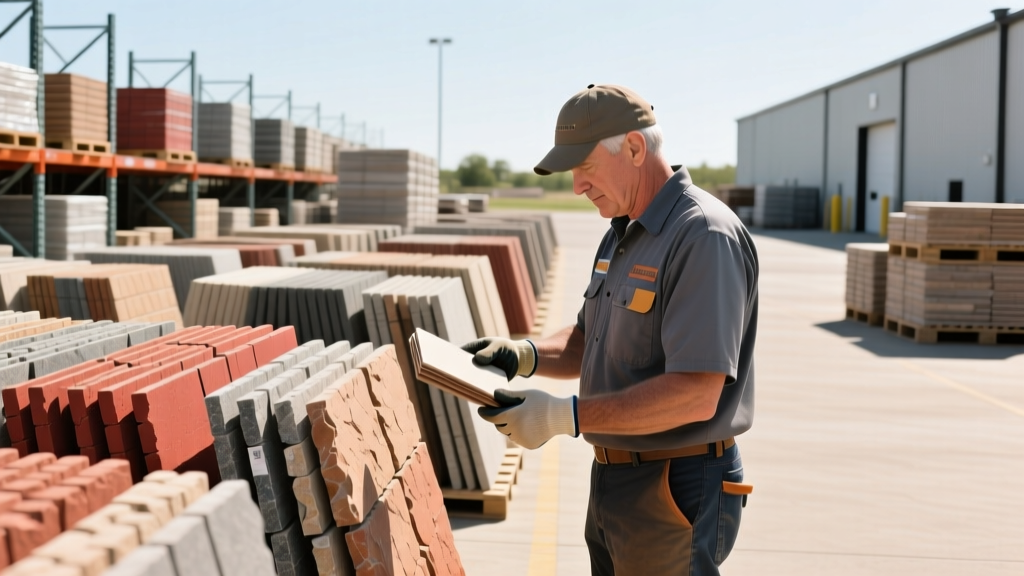
The Sunbelt construction market is undergoing a fundamental shift in cladding and masonry specifications. In the Oklahoma City metropolitan area, distributors are tracking a massive pivot away from traditional full-bed natural stone and standard modular brick toward advanced architectural veneers. Cherokee Building Materials of OKC serves as a critical bellwether for this regional transition, supplying the high-performance manufactured stone veneer (MSV) and thin brick systems that are redefining commercial and high-end residential envelopes in 2026.
The primary driver of this shift is structural dead load reduction. Standard modular clay brick weighs roughly 4.5 lbs per unit, translating to approximately 27 to 30 lbs per square foot of wall area when accounting for mortar joints. In contrast, modern thin brick veneer and MSV systems drop this weight to between 4.5 and 11 lbs per square foot. This drastic reduction eliminates the need for continuous concrete masonry unit (CMU) backing or reinforced brick ledges on the foundation, yielding significant savings in structural steel and concrete footings.
| Cladding System | Weight (lbs/sq ft) | Footing Requirement | 2026 OKC Material Cost | Installation Speed |
|---|---|---|---|---|
| Full-Bed Natural Stone | 35.0 - 50.0 | Reinforced Concrete Ledge | $22.00 - $45.00 | Slow (Requires tying) |
| Standard Modular Brick | 27.0 - 30.0 | Concrete Brick Ledge | $8.50 - $14.00 | Moderate |
| Thin Brick Veneer | 4.5 - 6.5 | Standard Foundation | $7.00 - $12.50 | Fast (Adhered/Panelized) |
| Manufactured Stone Veneer | 8.0 - 11.0 | Standard Foundation | $9.50 - $16.00 | Fast (Adhered) |
By eliminating the 4-inch to 6-inch concrete foundation shelf required for full masonry, general contractors in the OKC metro area are saving an estimated $3.50 to $5.50 per linear foot on foundation costs. According to market data tracked by the National Association of Home Builders, these structural savings frequently offset the premium material costs of high-end architectural veneers, making them the default choice for 2026 speculative and custom builds.
Climate-Responsive Cladding: Stucco and Moisture Management
Oklahoma’s climate presents severe challenges for exterior envelopes, characterized by high-velocity convective storms, driving rain, and extreme summer heat. Traditional hard-coat stucco and adhered masonry systems require strict adherence to moisture management protocols to prevent efflorescence, freeze-thaw spalling, and structural rot. In 2026, the integration of advanced weather-resistive barriers (WRBs) and 3D rainscreen matrices is no longer an optional upgrade—it is a baseline specification for reputable builders sourcing from Cherokee Building Materials.
Modern cladding assemblies now utilize fluid-applied WRBs combined with a 3/16-inch dimpled polypropylene rainscreen mesh installed directly behind the metal lath and scratch coat. This creates a critical capillary break and drainage plane that allows incidental moisture to escape downward and exit through weep screeds at the base of the wall. The Portland Cement Association emphasizes that resilient design in high-wind and high-moisture regions relies entirely on these continuous drainage planes to protect the structural sheathing.
A common failure mode in OKC residential construction is the improper termination of the weep screed. Per ASTM C1063, the weep screed must be installed a minimum of 4 inches above the earth or 2 inches above paved surfaces. In 2026, inspectors are strictly enforcing this gap to prevent soil-borne moisture from wicking back up into the stucco or MSV assembly, which remains the leading cause of premature veneer delamination.
Regional Supply Chain Resilience in the Sunbelt
Global supply chain volatility has forced regional distributors to rethink procurement strategies. Cherokee Building Materials of OKC has capitalized on localized manufacturing to buffer against the 8-to-12-week lead times associated with imported natural stone and overseas architectural elements. By prioritizing regional kilns and manufacturing plants located in Texas, Oklahoma, and the broader Midwest, contractors can secure thin brick and MSV shipments in 2 to 3 weeks.
This regionalization also impacts the carbon footprint of the project. Sourcing fired clay products and cementitious veneers from within a 400-mile radius of Oklahoma City significantly reduces Scope 3 transportation emissions, a metric that is increasingly required for commercial projects pursuing LEED v5 or Green Globes certification in 2026. Furthermore, regional manufacturing ensures better color consistency and faster replacement cycles if material damage occurs on the job site.
2026 Estimating Matrix: OKC Metro Material & Labor Baselines
Accurate estimating requires up-to-date regional labor and material baselines. The following matrix reflects Q1/Q2 2026 averages for the Oklahoma City metropolitan area, factoring in current masonry labor rates and localized material distribution costs.
| Trade / Material Category | 2026 OKC Baseline Rate | Variance / Notes |
|---|---|---|
| Masonry Crew Labor (2-person) | $95.00 - $125.00 / hour | Varies by union vs. open shop and project scale. |
| MSV Installation Labor | $14.00 - $22.00 / sq ft | Highly dependent on profile complexity (e.g., ledge stone vs. fieldstone). |
| Thin Brick Panelized Systems | $18.00 - $28.00 / sq ft | Includes track systems and adhesive; reduces labor time by 40%. |
| Fluid-Applied WRB & Mesh | $2.50 - $4.00 / sq ft | Material cost for high-performance drainage planes. |
| Scaffolding & Hoisting | $0.85 - $1.50 / sq ft | Required for multi-story commercial veneer applications. |
Contractors must note that while thin brick and MSV materials are lighter, the preparation of the substrate (installing WRB, lath, and scratch coat) remains a fixed labor cost that cannot be bypassed. The true labor savings emerge during the setting phase, where panelized thin brick systems can be installed up to 40% faster than traditional hand-laid modular brick, according to U.S. Census Bureau construction productivity metrics.
Specification and Procurement Strategy for Builders
Sourcing from a specialized distributor like Cherokee Building Materials requires a disciplined procurement strategy to avoid the most common aesthetic and logistical pitfalls. Manufactured stone veneer and thin brick rely on iron oxide pigments to achieve their color variations. These pigments are subject to batch-to-batch variance.
- Order 110% Upfront: Never phase your veneer orders. Calculate the total square footage, add 10% for waste and cuts, and order the entire project volume in a single batch. This ensures all material comes from the same dye lot.
- Blend on the Pallet: Even within a single dye lot, color concentration can vary from the top to the bottom of the manufacturing run. Mandate that your masonry crews pull from multiple pallets simultaneously during installation to achieve a natural, randomized aesthetic.
- Site Storage Protocols: Architectural veneers must be stored off the ground on treated dunnage and covered with breathable tarps. Trapping moisture under non-breathable plastic in Oklahoma's humid summer months can cause efflorescence to bloom on the faces of the stone before it is even installed.
'The transition to architectural veneers is not just an aesthetic choice; it is a structural and economic optimization. Builders who master the substrate preparation and procurement logistics of thin masonry systems are currently outperforming their competitors on both margin and schedule.' — Regional Cladding Specialist, 2026 Sunbelt Market Report.
By aligning procurement strategies with regional supply capabilities and adhering to strict moisture management standards, general contractors and architects can leverage the 2026 masonry trends to deliver highly resilient, cost-effective, and visually striking building envelopes across the OKC metro area.
Written by
Priya KapoorPriya Kapoor is a real estate market analyst and construction economics researcher with expertise in housing affordability, development feasibility, and infrastructure investment. She holds a Master of Regional Planning from Cornell University and previously worked as a senior analyst at CBRE's Investment Properties group, where she modeled returns for $4B in mixed-use development pipelines. Priya now runs an independent research practice advising developers, municipalities, and REITs on construction cost forecasting and market timing. She publishes the quarterly "BuildMat Market Pulse" report tracking material price indices across 12 commodity categories. Based in Austin, TX, Priya serves on the board of Habitat for Humanity Austin and is a marathon runner.
More from Priya Kapoor
View all
Construction Cost
Cost to Build a 1600 Sq Ft Home in 2026: Full Breakdown
Accurate 2026 cost to build a 1600 sq ft home—material, labor, and regional pricing breakdowns included. Plan your budget with real-time estimates.
Aug 11, 2026

Wood & Lumber
Name the Types of Wood for Pressure Treatment and Preservation
Learn how to name the types of wood best suited for pressure treatment. Compare species treatability, chemical retention levels, and 2026 preservation costs.
Aug 4, 2026

Stone & Masonry
Stone Veneer Suppliers Lindenhurst: 2026 Cost Analysis
Analyze 2026 stone veneer costs in Lindenhurst, NY. Compare local supplier pricing, delivery fees, and Suffolk County installation labor rates.
Aug 4, 2026