Top Building Materials Brands for Commercial Framing 2026
Compare top building materials brands for commercial framing, envelopes, and concrete. Includes 2026 specs, pricing, and procurement frameworks.

The Hierarchy of Brand Selection in Commercial Construction
Specifying building materials brands for commercial framing and envelope systems requires moving beyond basic catalog comparisons. In 2026, general contractors and architects evaluate manufacturers through a tripartite framework: supply chain velocity, Environmental Product Declaration (EPD) transparency, and technical support responsiveness. A brand that offers a superior W-shape beam profile but suffers from 14-week regional lead times will derail a fast-track commercial schedule. Conversely, a brand with robust LEED v4.1 documentation can accelerate permitting and sustainability certifications.
This application guide dissects the dominant building materials brands across structural steel, cold-formed framing, thermal envelopes, and concrete, providing exact product specifications, current market pricing, and failure-mode avoidance strategies for commercial project managers.
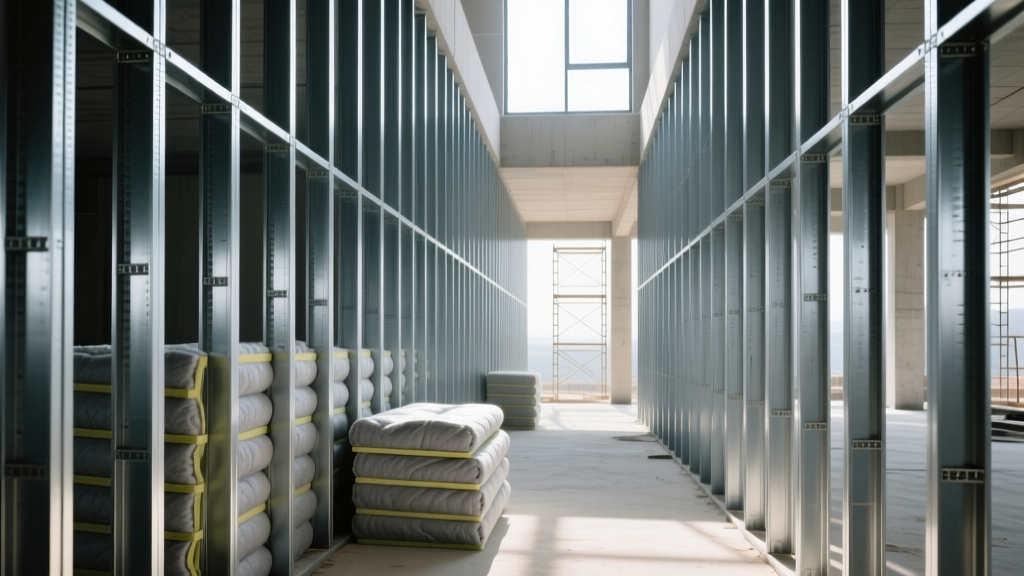
Structural Steel & Cold-Formed Framing: Brand Matrix & Specs
The structural skeleton of mid-rise and commercial builds relies heavily on hot-rolled steel and cold-formed steel (CFS) systems. The selection between brands often hinges on yield strength consistency and regional mill proximity.
| Brand | Core Product Line | Yield / Spec Standard | 2026 Est. Cost | Supply Chain Note |
|---|---|---|---|---|
| Nucor | Hot-Rolled W-Shapes | 50 ksi (ASTM A992) | $980 - $1,050 / ton | Domestic EAF mills offer 6-8 week lead times. |
| Steel Dynamics | Structural Angles & Channels | 36 - 50 ksi (ASTM A36/A992) | $950 - $1,020 / ton | Strong Midwest distribution; limited coastal stock. |
| ClarkDietrich | ProSTUD® CFS System | 33 & 50 ksi (ASTM A1003) | $4.10 - $5.80 / linear ft | Knockout service for MEP routing reduces labor 15%. |
| Marino | WARE™ Framing | 33 & 50 ksi (ASTM C645) | $3.90 - $5.50 / linear ft | Pre-punched webbing standard; excellent for curved walls. |
Application Insight: CFS Deflection & Clip Selection
When utilizing ClarkDietrich or Marino CFS systems for exterior load-bearing walls, the critical failure point is rarely the stud itself, but the deflection clip. For commercial structures subject to high wind loads (e.g., coastal hospitals or data centers), specify slide clips that allow for a minimum of 1.5 inches of vertical deflection. Using rigid top-track connections in multi-story steel framing transfers floor slab deflection directly into the CFS wall, causing drywall fastener pops and, in severe cases, buckling of the 50 ksi studs.
Thermal & Acoustic Envelope Systems: Application by Brand
Commercial building codes, particularly the IECC 2024 and 2026 updates, mandate continuous insulation (ci) and stringent acoustic separation between mixed-use zones. The dominant building materials brands in this space are ROCKWOOL and Owens Corning, each with distinct application strengths.
Mineral wool brands like ROCKWOOL and Thermafiber are highly vapor-permeable. If a Class I vapor retarder (like polyethylene sheeting) is incorrectly applied to the interior warm side in a cooling-dominated climate, moisture will trap within the cavity, corroding the CFS tracks and degrading the acoustic performance. Always specify smart vapor retarders (e.g., CertainTeed MemBrain) or rely on exterior ci for dew point control.
ROCKWOOL vs. Owens Corning for Fire-Rated Assemblies
- ROCKWOOL Safe'n'Sound ®: Ideal for interior partition walls requiring STC (Sound Transmission Class) ratings above 50. The stone wool composition inherently resists temperatures up to 2,150°F, contributing to 1-hour and 2-hour fire-rated assemblies per ASTM E119 without requiring additional intumescent coatings.
- Owens Corning Thermafiber ® SAFB: The Sound Attenuation Fire Blanket is highly compressible, making it the preferred brand for friction-fit applications in irregular stud cavities or retrofits where framing tolerances exceed 1/4 inch. It provides excellent acoustic dampening but requires stricter moisture management during the open-envelope construction phase.
Concrete & Cementitious Products: Regional Supply Chain Realities
Ready-mix concrete is inherently regional due to the 90-minute slump loss window, but the governing building materials brands dictate the mix designs and admixtures available to local batch plants. For 2026 commercial projects targeting LEED or ILFI certification, low-carbon concrete is no longer optional.
Holcim ECOPact & Vulcan Materials Integration
Holcim’s ECOPact line represents the current benchmark for green commercial concrete. By utilizing calcined clay and optimized slag substitutions, ECOPact mixes reduce embodied carbon by 30% to 100% compared to standard OPC (Ordinary Portland Concrete) mixes.
According to the U.S. Green Building Council, documenting the embodied carbon of structural materials via EPDs is now a primary pathway for achieving LEED v4.1 Building Life-Cycle Impact Reduction credits.
Application Specs for Commercial Columns:
- Target Compressive Strength: 6,000 psi at 28 days for ground-floor commercial columns; 4,000 psi for suspended slabs.
- Slump Target: 5 to 7 inches, utilizing high-range water-reducing admixtures (HRWRA) to maintain workability without increasing the water-cement ratio.
- Curing Protocol: Because low-carbon mixes with high SCM (Supplementary Cementitious Material) content hydrate slower, standard 7-day wet curing must be extended to 10-14 days to prevent plastic shrinkage cracking.
Procurement Framework: Matching Brands to Project Risk Profiles
Selecting the right building materials brands requires aligning manufacturer capabilities with the specific risk profile of the commercial build. Use the following decision framework during the pre-construction phase:
Brand Selection Decision Tree
1. Is the project schedule compressed (Fast-Track)?
Yes: Prioritize brands with regional manufacturing hubs and guaranteed allocation agreements (e.g., Nucor for steel, Holcim for concrete). Accept a 5-8% price premium for supply certainty.
No: Bid out to secondary brands and utilize just-in-time delivery to optimize cash flow.
2. Does the project require stringent acoustic/fire separations (e.g., Multi-family, Healthcare)?
Yes: Sole-source ROCKWOOL or specific ClarkDietrich shaft-wall assemblies. Substituting brands mid-stream requires re-testing and re-submitting UL assemblies, risking permitting delays.
No: Allow ‘or-equal’ substitutions in the specification book to encourage competitive bidding among CFS and insulation suppliers.
FAQ: Navigating Brand Substitutions and Equivalencies
How do I handle 'or-equal' requests from subcontractors for specified CFS brands?
Require the subcontractor to submit a side-by-side technical comparison demonstrating that the proposed brand meets the exact ASTM C645 specifications, flange widths, and knockout spacing of the specified brand. Crucially, verify that the substitute brand has a compatible deflection clip ecosystem. Mixing stud brands with mismatched top-track clips is a leading cause of inspection failures in commercial framing.
What are the 2026 lead time expectations for custom architectural steel?
While standard W-shapes and HSS tubes from major building materials brands maintain a 6 to 10-week lead time, custom architectural steel (e.g., exposed AESS 3 or AESS 4 finishes) requires an additional 4 to 6 weeks for specialized fabrication, galvanizing, and intumescent paint application. Procurement packages for custom steel must be released a minimum of 16 weeks prior to the scheduled erection date.
Where can I verify the structural steel standards for brand compliance?
Always cross-reference manufacturer technical data sheets with the American Institute of Steel Construction (AISC) standards. AISC certification ensures the brand’s fabrication facilities undergo rigorous third-party quality management audits, which is non-negotiable for commercial life-safety structures.
Written by
Priya KapoorPriya Kapoor is a real estate market analyst and construction economics researcher with expertise in housing affordability, development feasibility, and infrastructure investment. She holds a Master of Regional Planning from Cornell University and previously worked as a senior analyst at CBRE's Investment Properties group, where she modeled returns for $4B in mixed-use development pipelines. Priya now runs an independent research practice advising developers, municipalities, and REITs on construction cost forecasting and market timing. She publishes the quarterly "BuildMat Market Pulse" report tracking material price indices across 12 commodity categories. Based in Austin, TX, Priya serves on the board of Habitat for Humanity Austin and is a marathon runner.
More from Priya Kapoor
View all
Construction Cost
Cost to Build a 1600 Sq Ft Home in 2026: Full Breakdown
Accurate 2026 cost to build a 1600 sq ft home—material, labor, and regional pricing breakdowns included. Plan your budget with real-time estimates.
Aug 11, 2026

Wood & Lumber
Name the Types of Wood for Pressure Treatment and Preservation
Learn how to name the types of wood best suited for pressure treatment. Compare species treatability, chemical retention levels, and 2026 preservation costs.
Aug 4, 2026

Stone & Masonry
Stone Veneer Suppliers Lindenhurst: 2026 Cost Analysis
Analyze 2026 stone veneer costs in Lindenhurst, NY. Compare local supplier pricing, delivery fees, and Suffolk County installation labor rates.
Aug 4, 2026