Hazardous Building Materials Assessment Cost Analysis
Discover the true costs of a hazardous building materials assessment in 2026. Breakdown of asbestos, lead, and PFAS testing fees and abatement budgets.
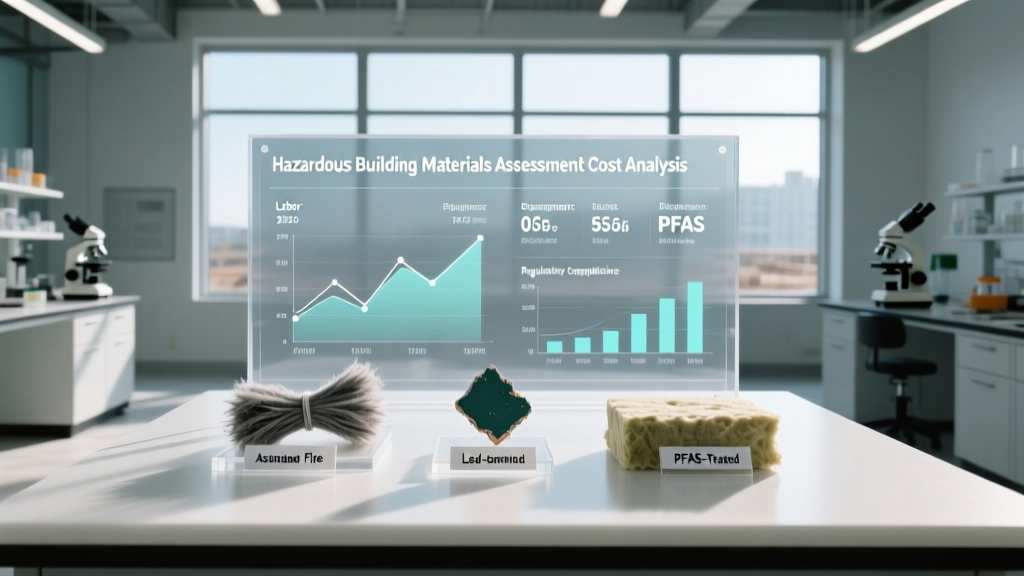
The Financial Scope of Hazardous Material Assessments
Undocumented hazardous materials represent one of the most volatile financial liabilities in commercial and residential real estate transactions. A comprehensive hazardous building materials assessment is not merely a regulatory hurdle; it is a critical financial forecasting tool. In 2026, the cost of these assessments has shifted due to stricter EPA enforcement on emerging contaminants like PFAS and updated OSHA silica standards. Developers, facility managers, and investors must budget accurately for both the diagnostic testing phase and the potential abatement multipliers that follow a positive lab result.
The total expenditure for an assessment depends heavily on the property's square footage, age, construction type, and the specific contaminants targeted. While a standard visual Phase I Environmental Site Assessment (ESA) provides a historical baseline, identifying the physical presence of hazardous materials requires invasive Phase II testing, bulk sampling, and specialized laboratory analysis.
Itemized Cost Breakdown by Material Type
Testing costs vary drastically based on the analytical method required by federal and state regulations. Cheap, unaccredited screening methods often result in false positives, triggering unnecessary abatement costs. All diagnostic sampling should be routed through NVLAP-accredited or state-certified laboratories.
| Contaminant | Standard Testing Method | Avg. Cost Per Sample | Lab Turnaround | Primary Regulatory Trigger |
|---|---|---|---|---|
| Asbestos (Bulk) | PLM (EPA 600/R-93/116) | $35 - $55 | 24 - 48 hrs | EPA NESHAP / OSHA |
| Asbestos (Air) | TEM (NIOSH 7400) | $90 - $140 | 48 - 72 hrs | OSHA PEL / Clearance |
| Lead-Based Paint | XRF + Lab (EPA 7420) | $180 - $250 (per room) | 3 - 5 days | EPA RRP Rule / HUD |
| PFAS (GenX/PFOS) | LC-MS/MS (EPA 537.1) | $350 - $550 | 10 - 14 days | EPA MCLs / State Codes |
| Mold / Fungi | Spore Trap (Non-viable) | $45 - $75 | 24 hrs | State / Local Health Codes |
| Crystalline Silica | XRD (NIOSH 7500) | $60 - $90 | 3 - 5 days | OSHA Respirable Dust Std |
Phase I vs. Phase II Environmental Site Assessments
Understanding the boundary between a Phase I and Phase II ESA is critical for accurate budget allocation. The ASTM E1527-21 standard governs Phase I assessments, which are strictly non-invasive. A Phase I ESA costs between $1,800 and $3,500 and involves historical record reviews, site reconnaissance, and interviews to identify Recognized Environmental Conditions (RECs).
When to Trigger a Phase II Assessment
If the Phase I identifies RECs—such as a former dry cleaner on-site, stained soil, or suspect legacy building materials—a Phase II ESA (governed by ASTM E1903) is triggered. Phase II assessments involve physical intrusion: drilling subsurface monitoring wells, core-drilling concrete slabs, and bulk material sampling. Budget $4,000 to $15,000+ for a Phase II, with costs scaling based on the number of monitoring wells installed (typically $1,500–$2,500 per well) and the complexity of the laboratory matrix.
The 2026 PFAS Reality: Budgeting for Emerging Contaminants
Historically, hazardous material assessments focused on the 'big three': asbestos, lead, and mold. In 2026, per- and polyfluoroalkyl substances (PFAS) have fundamentally altered the assessment landscape. Commonly found in legacy architectural caulking, roofing membranes, and specialized floor sealants, PFAS compounds require highly specialized liquid chromatography-tandem mass spectrometry (LC-MS/MS) for detection.
Because EPA PFAS regulations have established strict maximum contaminant levels (MCLs) and expanded liability under CERCLA, commercial buyers are increasingly demanding PFAS screening. Budget an additional $1,500 to $3,000 per site for targeted PFAS building material and soil sampling. Unlike asbestos, which can be managed in place, PFAS contamination often requires complex thermal desorption or off-site hazardous waste disposal, driving post-assessment mitigation costs into the hundreds of thousands.
'The greatest financial risk in modern real estate acquisition isn't finding asbestos; it's inheriting undocumented PFAS liabilities in roofing and sealant systems that require specialized hazardous waste manifesting.'
— 2025 Commercial Real Estate Environmental Liability Report
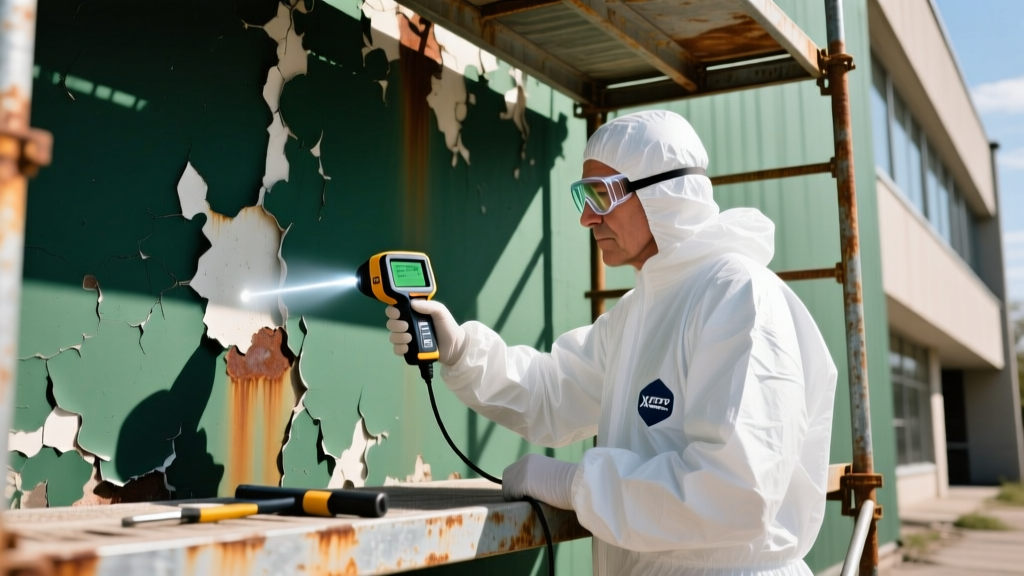
Hidden Multipliers: Post-Assessment Abatement Budgets
An assessment only identifies the problem; it does not solve it. When lab results return positive, developers must immediately pivot to abatement budgeting. Use the following multipliers to estimate remediation costs based on your assessment data:
- Asbestos Abatement: $5 to $15 per square foot for standard friable removal. Add 20% for complex HVAC plenum cleaning or pipe insulation in confined mechanical rooms.
- Lead Paint Encapsulation: $2 to $4 per square foot. Full removal and replacement of lead-painted woodwork or steel beams costs $12 to $25 per square foot.
- Mold Remediation: $10 to $25 per square foot for Category 2 or 3 water damage involving porous materials (drywall, insulation). HVAC system decontamination adds a flat $1,500–$4,000.
- Silica Dust Control: During concrete demolition, HEPA-filtered negative air machines and wet-cutting protocols add 15% to 25% to standard demolition labor costs.
Strategic Cost-Saving Frameworks for Developers
While cutting corners on laboratory accreditation is financially reckless, developers can optimize assessment budgets through strategic scoping and bundling.
- Bundle with Property Condition Assessments (PCA): Order your Phase I ESA and PCA (ASTM E2018) simultaneously from the same engineering firm. The site visit overlap typically saves 15% to 20% on mobilization and travel fees.
- Grid-Based vs. Random Sampling: For large warehouse footprints, use statistical grid-based sampling for asbestos floor tile rather than random sampling. This satisfies regulatory requirements while minimizing the total number of bulk samples sent to the lab.
- Negotiate Lab Rush Fees: Standard turnaround is 3-5 days. If a transaction is delayed, labs charge 50% to 100% premiums for 24-hour rush results. Build a 14-day contingency into your due diligence period specifically for environmental lab analysis to avoid these premiums.
Frequently Asked Questions
Are hazardous material assessment costs tax-deductible?
In many jurisdictions, environmental assessment and subsequent remediation costs qualify for tax benefits. Under IRS guidelines, certain environmental remediation costs can be deducted as ordinary business expenses rather than capitalized, and many states offer specific brownfield tax credits that cover up to 50% of Phase II assessment and abatement costs.
Does general liability insurance cover assessment testing?
Rarely. Standard Commercial General Liability (CGL) policies almost universally contain a 'Total Pollution Exclusion' clause. Specialized environmental impairment liability (EIL) or pollution legal liability (PLL) policies must be secured to cover assessment costs, third-party bodily injury claims, and remediation overruns.
Written by
James ThorntonJames Thornton is a construction industry veteran with 25 years of hands-on experience in wood framing, lumber grading, and residential building codes. He started as a framing carpenter in rural Oregon, earned his ICC Residential Building Inspector certification, and eventually became a senior plan reviewer for the City of Portland Bureau of Development Services. James holds a B.S. in Wood Science & Technology from Oregon State University and is a certified lumber grader through the West Coast Lumber Inspection Bureau (WCLIB). He has inspected over 3,000 residential construction sites and authored the city's internal guide on advanced framing techniques (2x6 at 24" O.C.). James lives in Bend, OR, where he builds custom timber-frame cabins and competes in lumberjack sports.
More from James Thornton
View all
Insulation
Best Home Insulation Materials: Complete 2026 Guide
Compare top home insulation materials for 2026. Find R-values, installed costs per square foot, and best uses for fiberglass, spray foam, and mineral wool.
Aug 4, 2026

Sustainable Building
Certify Your Green Building Material for LEED and WELL
Step-by-step guide to certifying a green building material for LEED v5 and WELL v2. Master EPDs, HPDs, and VOC limits for 2026 project specifications.
Aug 4, 2026

Stone & Masonry
Veneer Stacked Stone Panels: Interior Design & Style Showcase
Discover how veneer stacked stone panels transform interiors. Explore modern design profiles, material pairings, and technical installation specs.
Aug 4, 2026