Henderson Branch Building Materials: Sourcing Desert-Grade Supplies
Explore the 2026 inventory of Henderson branch building materials, focusing on desert-grade roofing, masonry, and insulation for Zone 3B projects.
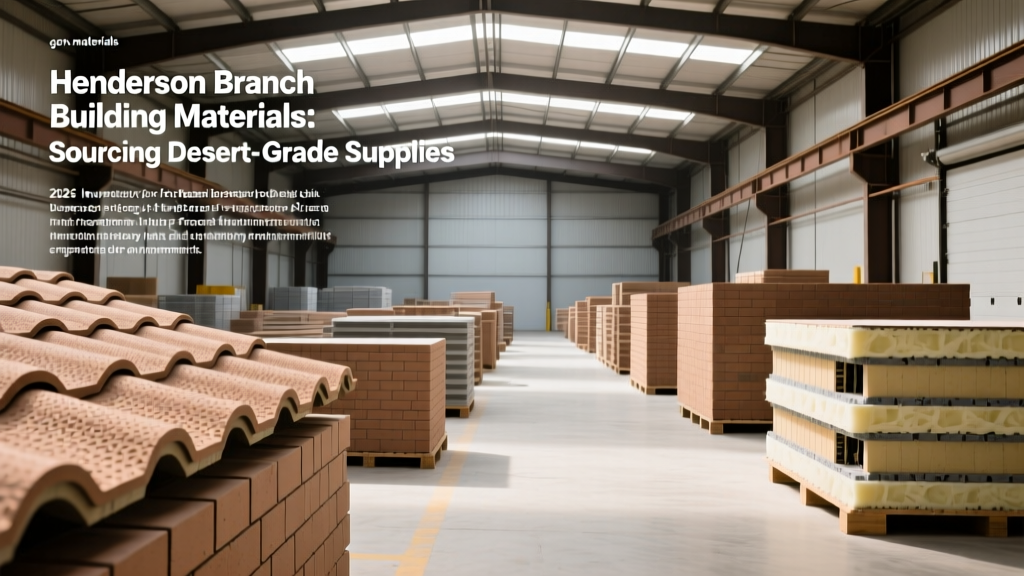
Navigating the Mojave: Why Localized Inventory Matters
Sourcing construction supplies in Southern Nevada requires a fundamental shift in material specifications compared to national averages. The Henderson branch building materials ecosystem is uniquely calibrated for ASHRAE Climate Zone 3B (Hot-Dry). Contractors operating in Henderson, Las Vegas, and the broader Mojave region cannot rely on standard Northern-tier inventory; doing so risks premature envelope failure, thermal bridging, and catastrophic moisture loss in cementitious products. In 2026, regional supply yards have heavily optimized their stock profiles to meet updated International Energy Conservation Code (IECC) mandates and extreme UV resistance requirements.
When procurement managers and general contractors pull from a localized Henderson branch, they are accessing materials engineered to withstand ambient temperatures exceeding 115°F, soil sulfate concentrations that degrade standard concrete, and relentless solar radiation. Understanding the specific product lines, chemical admixtures, and thermal barriers stocked at these branches is critical for project longevity and code compliance.
Core Inventory Breakdown: Envelope and Thermal Systems
The transition to net-zero and high-performance building envelopes in Southern Nevada has forced Henderson branches to stock advanced polyiso boards, radiant barriers, and high-albedo roofing membranes. Below is a snapshot of the primary desert-grade inventory available for commercial and high-end residential projects in 2026.
| Category | Primary Stocked Product / Brand | Desert-Specific Specification | 2026 Est. Unit Cost |
|---|---|---|---|
| Low-Slope Roofing | GAF EverGuard Extreme TPO | 80-mil, SRI > 100, UV-stabilized | $1.95 / sq. ft. |
| Rigid Insulation | Owens Corning FOAMULAR NGX | XPS, 25 PSI compressive, foil-faced | $1.25 / board ft. |
| Radiant Barrier | Reflectix BP24050 | Double bubble, 94% reflectivity | $0.65 / sq. ft. |
| Steep-Slope Roofing | Ludowici Clay Roof Tiles | High thermal mass, breathable air gap | $8.40 / sq. ft. |
Roofing Systems and the Cool Roof Mandate
Southern Nevada's adoption of strict cool roof ordinances means that the U.S. Department of Energy guidelines for Solar Reflectance Index (SRI) are strictly enforced at the municipal inspection level. Henderson branches prioritize 80-mil and 60-mil TPO (Thermoplastic Polyolefin) membranes over EPDM. While black EPDM is a staple in colder climates, it is virtually nonexistent in Henderson branch roofing aisles due to its high thermal absorption. Instead, yards stock heavily reinforced, fleece-backed TPO and PVC membranes that maintain flexibility despite extreme diurnal temperature swings (often 40°F+ differences between day and night).
For steep-slope residential projects, asphalt shingles are increasingly being supplemented or replaced by concrete and clay tiles. Clay tiles provide a natural thermal break; the air space between the tile and the roof deck reduces heat transfer into the attic by up to 45% compared to direct-to-deck asphalt applications.
Masonry, Stucco, and Hot-Weather Concreting
The most critical material science challenges in Henderson involve cementitious products. When ambient temperatures exceed 90°F, the hydration process of concrete and mortar accelerates dangerously, leading to flash sets, plastic shrinkage cracking, and reduced ultimate compressive strength. The Portland Cement Association mandates specific hot-weather protocols, which are directly supported by the chemical admixture inventory at local supply branches.
Concrete Admixtures and Sulfate Resistance
Desert soils in the Henderson basin are notoriously high in soluble sulfates. Standard Type I/II Portland cement is highly susceptible to sulfate attack, which causes expansive cracking and structural spalling over time. Henderson branches maintain deep stock of Type V (sulfate-resistant) cement and specialized blended cements. Furthermore, ready-mix contractors and site-mix crews rely heavily on the following admixtures stocked at the branch:
- Polycarboxylate Ether (PCE) Superplasticizers: Used to achieve high-slump, flowable concrete without adding excess water, which would otherwise evaporate instantly in the dry heat and weaken the mix.
- Retarding Admixtures (e.g., Sika Retarder, Euco Eucotard): Essential for delaying the initial set time, allowing finishing crews adequate time to strike off and trowel surfaces before the concrete crusts over.
- Evaporation Reducers: Aliphatic alcohol sprays applied immediately after screeding to form a microscopic monolayer on the surface, preventing rapid moisture loss and plastic shrinkage cracking.
Exterior Envelope: Stucco vs. EIFS in Zone 3B
When selecting exterior cladding materials from the yard, contractors must weigh the thermal and moisture dynamics of traditional stucco against Exterior Insulation and Finish Systems (EIFS). Both are heavily stocked, but their applications differ vastly in the Mojave.
Traditional 3-Coat Portland Cement Stucco
Pros: Exceptional impact resistance; high thermal mass helps delay heat transfer into the building during peak afternoon hours; highly vapor-permeable, allowing any trapped moisture to escape.
Cons: Requires rigorous wet-curing protocols in Henderson's <15% humidity; prone to hairline cracking if control joints are improperly spaced.
EIFS with Drainage Plane
Pros: Superior continuous insulation (ci) values, easily achieving R-10+ on exterior walls; lightweight; highly resistant to thermal cracking due to flexible polymer base coats.
Cons: Vulnerable to puncture damage; requires meticulous sealing at all penetrations to prevent water intrusion behind the foam, which can go unnoticed in dry climates until structural rot occurs.
Logistics, Will-Call, and Yard Management
Sourcing from a Henderson branch is not just about the materials themselves, but the logistics of handling them in extreme heat. The Cool Roof Rating Council and local building officials emphasize that material storage on-site is just as critical as the installation. Supply branches in the region have adapted their will-call and delivery operations to mitigate heat-related material degradation.
"Contractors must schedule masonry and concrete material deliveries for early morning or late evening drops. Pallets of mortar mix left in direct 110°F sun will experience pre-hydration from ambient humidity and temperature, compromising the tensile bond strength before the bag is even opened." — Regional Procurement Director, Southern Nevada Supply Operations.
Optimizing Procurement for LEED and Local Codes
For commercial projects pursuing LEED v5 certification, sourcing materials from a Henderson branch provides a distinct advantage in the Materials and Resources (MR) credit category. By pulling structural steel, masonry, and insulation from regional manufacturers and distributors within a 100-mile radius of the job site, project managers can maximize their regional materials credits while reducing freight-induced carbon emissions. Branch sales teams in 2026 are now equipped with Environmental Product Declarations (EPDs) for major inventory lines, allowing estimators to factor embodied carbon into their bids directly from the point of sale.
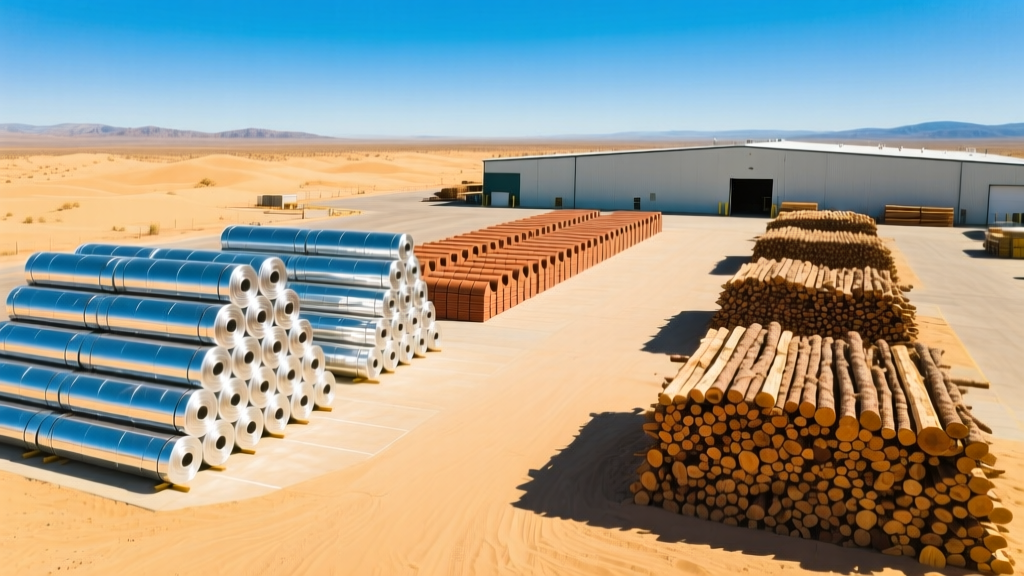
Strategic Sourcing Takeaways for 2026
To maximize the utility of the Henderson branch building materials network, contractors must align their procurement strategies with the realities of the Mojave Desert. Specify Type V cements and PCE admixtures for all below-grade and slab-on-grade work. Mandate high-SRI TPO membranes and foil-faced polyiso for commercial envelopes, and enforce strict on-site storage protocols for all polymers and cementitious powders. By leveraging the specialized, climate-adapted inventory available at local branches, construction teams can eliminate the premature failure modes that plague out-of-state contractors attempting to build in Southern Nevada's unforgiving environment.
Written by
James ThorntonJames Thornton is a construction industry veteran with 25 years of hands-on experience in wood framing, lumber grading, and residential building codes. He started as a framing carpenter in rural Oregon, earned his ICC Residential Building Inspector certification, and eventually became a senior plan reviewer for the City of Portland Bureau of Development Services. James holds a B.S. in Wood Science & Technology from Oregon State University and is a certified lumber grader through the West Coast Lumber Inspection Bureau (WCLIB). He has inspected over 3,000 residential construction sites and authored the city's internal guide on advanced framing techniques (2x6 at 24" O.C.). James lives in Bend, OR, where he builds custom timber-frame cabins and competes in lumberjack sports.
More from James Thornton
View all
Insulation
Best Home Insulation Materials: Complete 2026 Guide
Compare top home insulation materials for 2026. Find R-values, installed costs per square foot, and best uses for fiberglass, spray foam, and mineral wool.
Aug 4, 2026

Sustainable Building
Certify Your Green Building Material for LEED and WELL
Step-by-step guide to certifying a green building material for LEED v5 and WELL v2. Master EPDs, HPDs, and VOC limits for 2026 project specifications.
Aug 4, 2026

Stone & Masonry
Veneer Stacked Stone Panels: Interior Design & Style Showcase
Discover how veneer stacked stone panels transform interiors. Explore modern design profiles, material pairings, and technical installation specs.
Aug 4, 2026