2026 Cost Analysis: Peninsula Building Materials San Martin CA
Detailed 2026 cost analysis of Peninsula Building Materials in San Martin, CA. Compare stone, paver, and masonry pricing, delivery fees, and sourcing tips.

Market Position and 2026 Pricing Realities
Sourcing masonry, hardscape, and stone veneer in the San Francisco Bay Area requires navigating a complex web of premium retail pricing, logistical bottlenecks, and fluctuating freight surcharges. Peninsula Building Materials (PBM), located just off Highway 101 in San Martin, CA, operates as one of the region's largest centralized masonry and landscape supply yards. For contractors and high-end residential builders operating in Santa Clara, San Mateo, and Santa Cruz counties, PBM represents a critical node in the supply chain. However, leveraging this facility effectively requires a granular understanding of their 2026 pricing tiers, delivery zone economics, and material yield variables.
Unlike big-box retailers, PBM specializes in commercial-grade and architectural hardscapes. This analysis breaks down the true landed costs of sourcing from their San Martin facility, moving beyond basic square-footage quotes to expose the hidden logistical and waste-factor costs that routinely derail Bay Area construction budgets.
2026 Material Pricing Matrix: Core Hardscape & Masonry
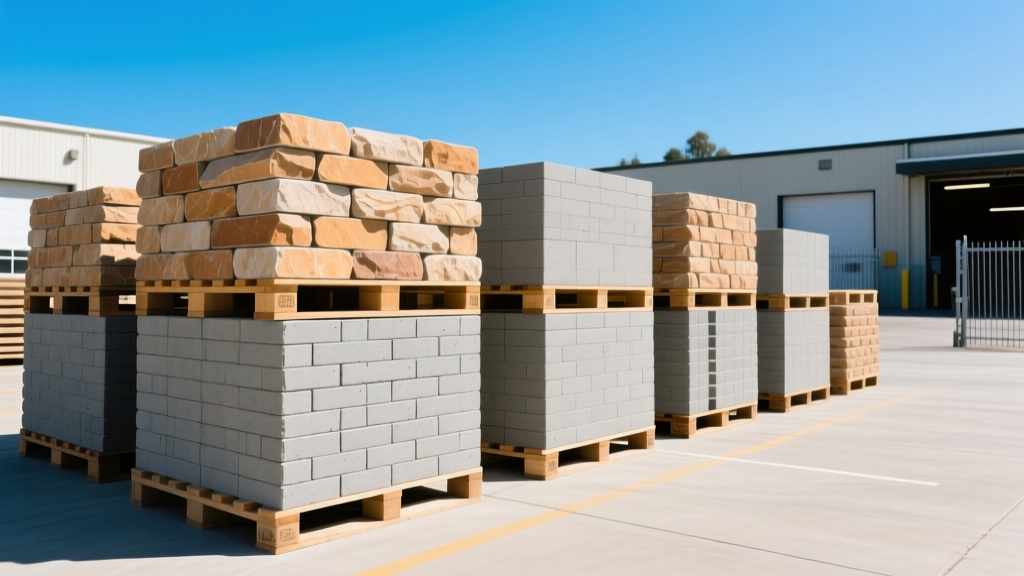
The San Martin yard stocks an extensive inventory ranging from manufactured architectural stone to heavy-duty segmental retaining wall (SRW) blocks. Pricing in 2026 reflects stabilized but elevated manufacturing costs, with regional freight adjustments applied to heavy aggregates. Below is a benchmark cost matrix for high-velocity SKUs frequently sourced by Bay Area contractors.
| Material Category | Representative Brand / Line | Unit of Measure | 2026 Retail Price Range | Pro-Account Price Range |
|---|---|---|---|---|
| Manufactured Stone Veneer | Eldorado Stone / Cultured Stone | Per Sq. Ft. | $9.50 - $14.50 | $8.10 - $12.25 |
| Natural Stone Veneer | Nantucket Stone / Real Stone Thin Veneer | Per Sq. Ft. | $16.00 - $28.00 | $13.50 - $24.00 |
| Concrete Pavers (Standard) | Techo-Bloc / Calstone | Per Sq. Ft. | $4.25 - $6.50 | $3.60 - $5.40 |
| Permeable Pavers | Aqua-Bloc / Eco-Optiloc | Per Sq. Ft. | $6.00 - $8.75 | $5.10 - $7.20 |
| SRW Retaining Blocks | Basalite / Allan Block | Per Block (Face Ft) | $3.80 - $6.25 | $3.15 - $5.10 |
| Bulk Base Aggregate (Class II) | Local Quarry Road Base | Per Ton | $45.00 - $60.00 | $38.00 - $50.00 |
When ordering manufactured stone veneer from the San Martin yard, requesting custom color blends or specific 'select' palettes (e.g., Eldorado's custom color matching) typically incurs a 12% to 18% upcharge and adds 3 to 5 weeks to the lead time. Always order a minimum of 15% overage for blended batches to avoid visible dye-lot variations if a second run is required.
Logistics and the True Landed Cost of Delivery
The sticker price of materials at the San Martin yard is only the baseline. The geographic location of PBM—situated in South Santa Clara County—means delivery costs scale aggressively as you move north toward San Jose, Palo Alto, or west over the Santa Cruz Mountains. According to regional freight data tracked by Masonry Magazine, last-mile delivery for heavy building materials has remained elevated due to persistent commercial insurance hikes and diesel costs in California.
Zone-Based Delivery Cost Estimates (2026)
- Zone 1 (Local: Morgan Hill, Gilroy, San Martin): $150 - $225 per flatbed load (up to 15 miles). Transit time is highly predictable.
- Zone 2 (Mid-County: San Jose, Los Gatos, Campbell): $275 - $375 per flatbed load. Traffic congestion on Hwy 101 and I-280 frequently triggers driver overtime surcharges if delivery windows are missed.
- Zone 3 (Peninsula & Coast: Palo Alto, Redwood City, Santa Cruz): $450 - $650+ per load. Deliveries to the Peninsula often require specific off-peak routing, while Santa Cruz deliveries involve steep grade surcharges due to the weight limits on Hwy 17.
The Crane Truck Variable: Standard flatbed deliveries are 'curbside only.' If your project requires a crane truck (knuckleboom) to lift pallets of pavers or retaining wall blocks over fences or into backyards, expect an additional charge of $165 to $210 per hour, with a strict two-hour minimum. For dense urban infill projects in San Jose or Los Altos, crane truck staging permits may also be required by the municipality, adding indirect administrative costs.
Waste Factors and Yield Calculations
One of the most common budgeting errors when sourcing from large regional yards is miscalculating the waste factor. PBM sells by the pallet or the square foot, but field conditions dictate actual yield. The National Concrete Masonry Association (NCMA) provides strict guidelines on segmental retaining wall tolerances, but natural and manufactured veneers require contractor-side adjustments.
| Material Type | Standard Waste Factor | Complex Geometry Waste Factor | Primary Cause of Loss |
|---|---|---|---|
| Manufactured Stone Veneer | 5% - 8% | 10% - 15% | Cuts around windows, outlets, and corners |
| Natural Fieldstone / Ledge Stone | 10% - 15% | 20% - 25% | Irregular shapes, unusable offcuts, thickness variance |
| Concrete Pavers (Running Bond) | 3% - 5% | 7% - 10% | Perimeter cuts, edge restraints |
| Concrete Pavers (Herringbone) | 8% - 10% | 12% - 15% | High volume of diagonal perimeter cuts |
| SRW Retaining Wall Blocks | 2% - 4% | 5% - 8% | Curved radius cuts, base leveling block waste |
Contractor Accounts vs. Retail: Maximizing Margin
Walking into the San Martin showroom without an established pro account guarantees you will pay peak retail pricing. Setting up a commercial account with Peninsula Building Materials requires a valid California contractor's license (CSLB) and a business reseller certificate. Once established, the financial benefits extend beyond the 12% to 18% baseline discount shown in the pricing matrix.
The San Martin yard has finite outdoor storage space. Between late November and early January, PBM aggressively liquidates discontinued paver colors, odd-lot stone veneer pallets, and slightly weathered retaining wall blocks to make room for spring manufacturing runs. Contractors who maintain relationships with the yard managers can secure these materials at 30% to 45% below standard pro pricing. These lots are ideal for large commercial retaining walls or spec-home landscaping where exact color continuity across multiple phases is not critical.
Pallet Deposit and Return Logistics
Heavy materials are shipped on heavy-duty wooden or composite pallets. PBM charges a pallet deposit (typically $25 to $40 per pallet) which is fully refundable upon return. However, the hidden cost lies in the return logistics. Transporting empty, bulky pallets back to San Martin from a job site in Mountain View or Menlo Park consumes truck space and labor hours. If the cost of fuel and labor to return the pallets exceeds the deposit value, many contractors choose to absorb the deposit as a project overhead cost or repurpose the heavy-duty lumber for site bracing and concrete formwork.
Alternative Sourcing and Competitive Benchmarking
While PBM San Martin offers unparalleled selection and showroom support for architectural clients, it is not always the most cost-effective choice for high-volume, low-aesthetic structural work. For bulk gray CMU (Concrete Masonry Units), standard gray base rock, or utility-grade retaining blocks, direct sourcing from manufacturers like Basalite (with plants in Dixon and Chowchilla) or local aggregate quarries can shave 15% to 22% off the total material cost. PBM's value proposition lies in their curation of premium architectural finishes, technical support for complex SRW engineering, and the ability to consolidate stone, pavers, and drainage aggregates into a single delivery.
Final Budgeting Directives for Bay Area Builders
To accurately forecast hardscape and masonry costs using Peninsula Building Materials in 2026, estimators must build a three-tier budget: base material cost at pro-tier pricing, a localized delivery and crane surcharge based on exact municipal routing, and a mathematically sound waste factor tied to the specific installation pattern. By treating the San Martin yard not just as a retail store, but as a strategic logistics hub, Bay Area contractors can protect their margins while delivering the high-end masonry finishes that the regional market demands.
Written by
David NakamuraDavid Nakamura is a licensed architect (AIA) and construction technology writer focused on sustainable building methods, mass timber engineering, and high-performance building envelopes. He holds a Master of Architecture from the University of Washington and is a certified Passive House Consultant (CPHC). David spent eight years at the Seattle firm Mithun, where he led the design of three LEED Platinum projects, before founding his own practice specializing in net-zero residential design. He serves on the editorial advisory board of GreenBuilder Magazine and has authored peer-reviewed papers on cross-laminated timber (CLT) connections for the Journal of Structural Engineering. In his spare time, David teaches woodworking at Pratt Fine Arts Center and kayaks the Puget Sound.
More from David Nakamura
View all
Construction Cost
Labor Cost to Build a Deck Per Sq Ft: 2026 Installation Guide
Discover the exact labor cost to build a deck per sq ft in 2026. This installation guide breaks down contractor rates, complexity factors, and hidden fees.
Aug 4, 2026

Construction Cost
How Much Does It Cost to Build a 3 Bedroom House? Financing Guide
Learn exactly how much it costs to build a 3 bedroom house and explore 2026 financing options, construction loan types, and budget frameworks for your build.
Aug 4, 2026

Construction Cost
Cost to Build a Tennis Court: 2026 Guide
How much does it cost to build a tennis court in 2026? Breakdowns for asphalt, concrete, and synthetic surfaces plus fencing and lighting.
Jul 30, 2026