Salvage Building Materials in Winston-Salem, North Carolina
Discover where to source authentic salvage building materials in Winston-Salem, North Carolina, from reclaimed heart pine to historic brick.

The Architectural Heritage of the Piedmont Triad
Winston-Salem possesses a deeply layered architectural fabric, ranging from the 18th-century Moravian settlements of Old Salem to the sprawling early-20th-century tobacco and textile warehouses of the R.J. Reynolds and Hanes empires. For contractors, architects, and homeowners renovating in the Piedmont Triad, sourcing authentic salvage building materials in Winston-Salem, North Carolina, is not just an aesthetic choice—it is often a structural and historical necessity. Reclaimed materials offer superior density, old-growth grain patterns, and dimensional stability that modern, fast-grown timber and extruded masonry simply cannot replicate.
As of 2026, the push toward sustainable deconstruction over traditional demolition has expanded the local salvage market. Diverting waste from the Forsyth County landfill means more high-yield materials are entering the secondary market. However, navigating this market requires an understanding of local material provenance, historic district compliance, and rigorous safety testing for legacy toxins.
Top Salvage Materials Native to Winston-Salem
When hunting for reclaimed goods in the region, focus on materials that reflect the area's specific industrial and colonial history. These are the highest-value salvaged items you will encounter in local architectural yards and estate liquidations.
Old-Growth Longleaf Heart Pine
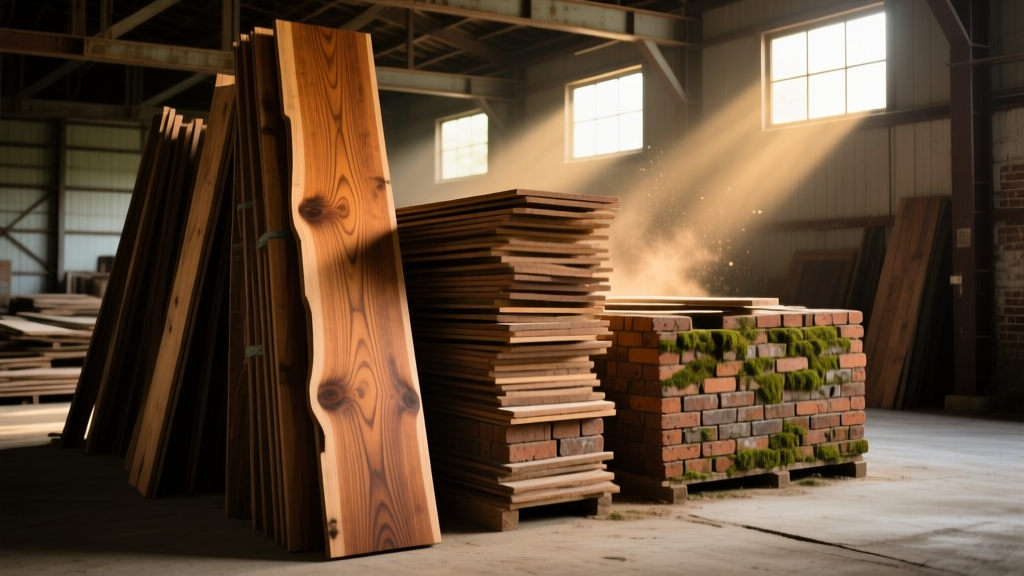
Before the advent of modern steel framing, Winston-Salem’s massive industrial warehouses were supported by old-growth Longleaf Pine. Salvaged heart pine beams and flooring from these structures are highly coveted. Unlike modern pine, reclaimed heart pine boasts a Janka hardness rating of 1,225 lbf (comparable to red oak) and a tight grain pattern with high resin content. When purchasing reclaimed heart pine flooring, verify that the moisture content has been kiln-dried to 6%–9% to match the interior climate of modern HVAC-controlled homes, preventing severe cupping or gapping post-installation.
Handmade Moravian and Local Clay Brick
Bricks salvaged from historic homes in the West End or Buena Vista neighborhoods often feature distinct local clay profiles. Early Moravian and local Piedmont bricks were fired in wood-burning kilns, resulting in a wide color variation and a softer, more porous texture (often scoring below 2,500 psi in compressive strength). When sourcing these for masonry repair, you must pair them with a Type O or Type K lime-based mortar. Using modern Portland cement (Type N or S) will trap moisture and cause the softer antique bricks to spall and crack during North Carolina's freeze-thaw cycles.
Cast Iron and Industrial Hardware
The city's manufacturing history means local salvage yards frequently stock heavy cast-iron structural columns, industrial pulleys, and oversized brass hardware. These pieces are ideal for adaptive reuse projects, particularly in the downtown arts district, where maintaining the industrial-chic aesthetic is paramount.
Any salvaged wood trim, doors, or windows originating from structures built before 1978 are presumed to contain lead-based paint. Under the EPA’s Renovation, Repair and Painting (RRP) Rule, disturbing these materials requires certified containment and abatement procedures. Always request XRF (X-ray fluorescence) testing results from your salvage dealer before bringing painted architectural elements onto an active residential job site.
Where to Source Salvage Materials Locally
Finding reliable salvage building materials in Winston-Salem, North Carolina, requires a mix of visiting established reuse centers, monitoring local deconstruction permits, and networking with specialized dealers. Below is a breakdown of the primary sourcing channels in the Piedmont Triad.
| Source Type | Best For | Local Examples & Strategies |
|---|---|---|
| Non-Profit ReStores | Cabinetry, doors, windows, lighting, and surplus modern materials. | Habitat for Humanity ReStore (North Pointe Blvd). Inventory turns daily; visit early on Tuesday mornings for fresh drops. |
| Architectural Salvage Yards | Mantels, stained glass, heart pine, historic hardware, and clawfoot tubs. | Regional dealers in Greensboro and High Point often pull from Winston-Salem demolitions. Check the Building Materials Reuse Association directory for certified Piedmont dealers. |
| Direct Deconstruction | Bulk brick, structural timber, and slate roofing. | Monitor the City of Winston-Salem demolition permit database. Contact contractors directly to negotiate on-site salvage rights before the wrecking ball drops. |
| Estate & Farm Auctions | Barn wood, corrugated tin, antique fixtures, and raw land-clearing timber. | Forsyth and Davie County farm auctions. Requires your own transport and labor for extraction. |
Navigating Historic District Guidelines
If your project is located within one of Winston-Salem’s designated historic districts—such as the West End, Buena Vista, or Reynoldstown—you cannot simply install any salvaged material without oversight. The Winston-Salem Historic Resources Commission (HRC) requires a Certificate of Appropriateness (COA) for exterior alterations.
When submitting your COA application for salvaged exterior materials, you must provide:
- Provenance Documentation: Proof that the salvaged brick or siding matches the era and regional style of the original structure.
- Mortar Analysis: A lab report or mason’s assessment confirming the reclaimed masonry will be set with historically accurate lime mortar.
- Dimensional Matching: Evidence that salvaged replacement windows or siding profiles match the original sightlines and reveal depths.
Pro-tip: The HRC highly favors salvaged materials over modern synthetic reproductions. Using authentic reclaimed wood siding or brick will significantly smooth the COA approval process compared to proposing fiber-cement or polyurethane alternatives.
Cost Comparison: Reclaimed vs. New Reproduction
Budgeting for salvage requires looking beyond the initial purchase price. While the raw material might be cheaper than premium new stock, the labor costs for milling, de-nailing, and refinishing can shift the financial balance. Below is a 2026 cost matrix comparing authentic Winston-Salem salvage against high-end reproductions.
| Material Category | Authentic Salvage (Installed) | New Reproduction (Installed) | Key Trade-offs |
|---|---|---|---|
| Heart Pine Flooring (5" plank) | $14.50 - $19.00 / sq ft | $9.00 - $13.00 / sq ft | Salvage offers unmatched grain density and history; reproduction is faster to install and requires no acclimation. |
| Antique Red Clay Brick | $1.20 - $2.50 / brick | $0.80 - $1.40 / brick | Salvage requires careful cleaning and lime mortar; new 'antique-tumbled' brick lacks true historical patina. |
| Solid Wood Interior Doors | $350 - $600 / door | $500 - $900 / door | Salvage is often cheaper but requires custom carpentry to fit modern, non-standard rough openings. |
Inspection and Preparation Checklist
Before finalizing any salvage purchase in the Piedmont Triad, run the materials through this rigorous inspection protocol to avoid costly job-site surprises.
- Metal Detection: Run a high-sensitivity stud scanner or metal detector over reclaimed timber. Embedded square nails and hidden lag bolts will destroy $150 planer blades in seconds.
- Insect Inspection: Look for frass (sawdust-like droppings) and exit holes indicative of powderpost beetles or termites. Any salvaged wood stored in damp, unsealed Forsyth County barns must be kiln-treated to 133°F for a minimum of 30 minutes to guarantee eradication.
- Efflorescence Removal: For salvaged brick, test for water-soluble salts. Scrub a sample brick with a stiff nylon brush and a diluted solution of white vinegar and water. If heavy white powdery residue persists, the brick may require professional chemical desalination before interior installation.
- Hardware Functionality: When buying salvaged mortise locksets common in 1920s Winston-Salem homes, ensure the internal tumblers are not seized with rust. Soak iron and brass mechanisms in a penetrating oil bath for 48 hours before attempting to turn the cylinders.
Sourcing salvage building materials in Winston-Salem, North Carolina, is a rewarding endeavor that preserves the region's rich architectural legacy. By understanding the specific characteristics of local heart pine and clay brick, adhering to historic preservation guidelines, and rigorously inspecting for legacy toxins, you can integrate authentic, high-performance materials into your next construction or renovation project.
Written by
James ThorntonJames Thornton is a construction industry veteran with 25 years of hands-on experience in wood framing, lumber grading, and residential building codes. He started as a framing carpenter in rural Oregon, earned his ICC Residential Building Inspector certification, and eventually became a senior plan reviewer for the City of Portland Bureau of Development Services. James holds a B.S. in Wood Science & Technology from Oregon State University and is a certified lumber grader through the West Coast Lumber Inspection Bureau (WCLIB). He has inspected over 3,000 residential construction sites and authored the city's internal guide on advanced framing techniques (2x6 at 24" O.C.). James lives in Bend, OR, where he builds custom timber-frame cabins and competes in lumberjack sports.
More from James Thornton
View all
Insulation
Best Home Insulation Materials: Complete 2026 Guide
Compare top home insulation materials for 2026. Find R-values, installed costs per square foot, and best uses for fiberglass, spray foam, and mineral wool.
Aug 4, 2026

Sustainable Building
Certify Your Green Building Material for LEED and WELL
Step-by-step guide to certifying a green building material for LEED v5 and WELL v2. Master EPDs, HPDs, and VOC limits for 2026 project specifications.
Aug 4, 2026

Stone & Masonry
Veneer Stacked Stone Panels: Interior Design & Style Showcase
Discover how veneer stacked stone panels transform interiors. Explore modern design profiles, material pairings, and technical installation specs.
Aug 4, 2026