Marinas Building Materials: A Structural Application Guide
Expert application guide for marinas building materials. Compare FRP, HDPE, and marine aluminum for docks, pilings, and hardware in harsh aquatic environments.
The Core Challenge: Aquatic Degradation and Load Dynamics
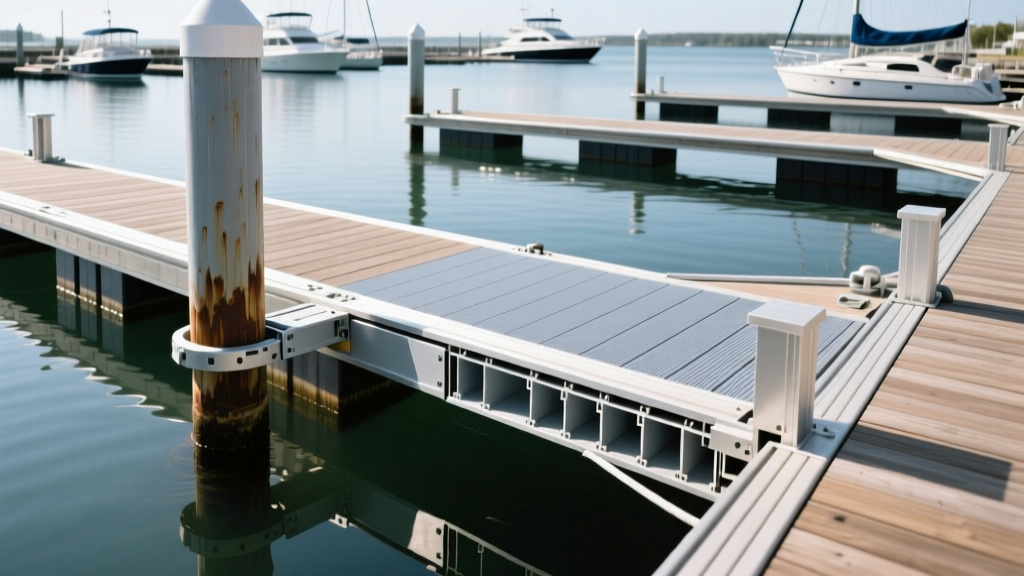
Constructing and maintaining marine infrastructure requires navigating a hostile intersection of biological, chemical, and mechanical stressors. When specifying marinas building materials, engineers and contractors must account for continuous UV exposure, tidal fluctuation, saltwater-induced galvanic corrosion, and the relentless boring activity of marine organisms like Teredo navalis (teredo worms). Unlike terrestrial construction, a material failure in the splash zone or submerged zone can lead to catastrophic structural collapse and severe environmental contamination. This application guide details the exact material specifications, installation parameters, and failure modes for modern marina construction, moving beyond outdated creosote-treated timber to advanced polymers and marine-grade alloys.
Structural Pilings: Moving Beyond Treated Timber
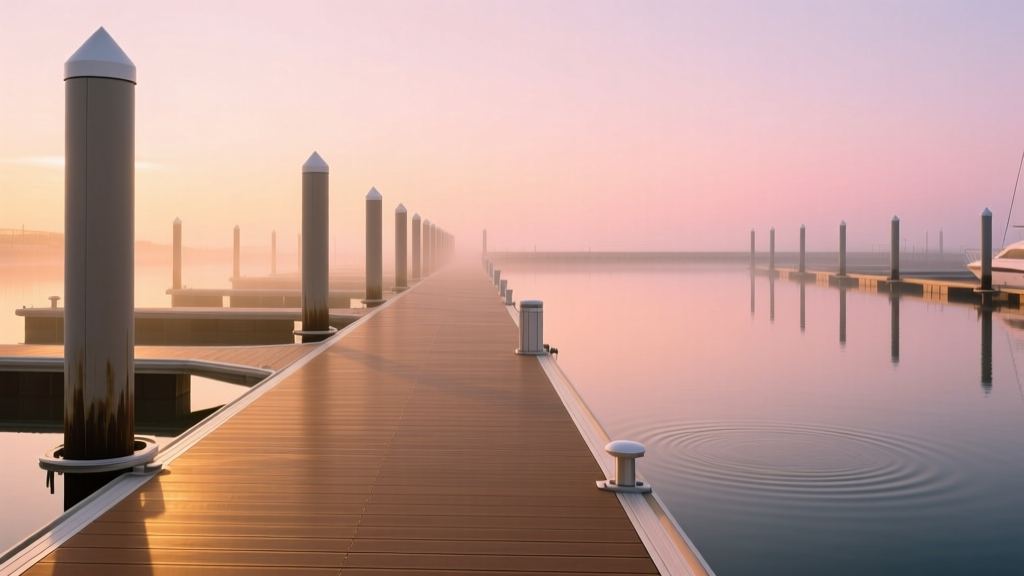
Historically, marine pilings relied on Southern Yellow Pine treated with chromated copper arsenate (CCA) or creosote. However, stringent environmental regulations and the limited lifespan of treated wood (typically 15 to 25 years in warm, borer-active waters) have shifted the industry toward synthetic and composite alternatives. Selecting the right piling material depends heavily on the unbraced length, soil bearing capacity, and impact loads from vessel berthing.
| Material Type | Max Recommended Unbraced Length | Marine Borer Resistance | Est. Installed Cost (per LF) | Expected Lifespan |
|---|---|---|---|---|
| HDPE (High-Density Polyethylene) | 40 feet | 100% Immune | $95 - $130 | 50+ years |
| FRP (Fiberglass Reinforced Polymer) | 80+ feet | 100% Immune | $140 - $190 | 75+ years |
| Marine Aluminum (5083-H321) | 60 feet | 100% Immune | $180 - $240 | 50+ years (with cathodic protection) |
| Treated Timber (Creosote/Penta) | 50 feet | Low to Moderate (degrades) | $70 - $110 | 15 - 25 years |
Application Nuances and Failure Modes
When driving FRP composite pilings, standard vibratory hammers can cause micro-fractures in the outer gel coat if the driving head is not properly cushioned. Always use a high-density urethane drive block to distribute the impact load evenly across the piling head. A compromised gel coat exposes the structural glass fibers to moisture ingress, leading to interlaminar shear failure over time.
For HDPE pilings, the primary limitation is the modulus of elasticity. HDPE is significantly more flexible than timber or steel. In deep-water applications or high-current zones, HDPE pilings will deflect excessively under lateral loads unless heavily braced with structural walers or reinforced with an internal steel pipe core. Never use hollow, uncapped HDPE pilings in freezing climates; trapped water inside the hollow core will freeze, expand, and split the piling from the inside out.
Decking and Walkways: Traction, UV, and Moisture
Marina decking must satisfy two competing demands: high slip resistance for ADA compliance and low moisture absorption to prevent warping and freeze-thaw spalling. Traditional wood decking requires annual sealing and splinters over time, creating liability hazards for barefoot boaters.
Capped Polymer Composites vs. FRP Grating
For main docks and high-traffic walkways, capped polymer composite decking (featuring a high-density polyethylene or PVC outer shell) is the current industry standard. The cap layer must include UV-inhibiting pigments and micro-embossed traction patterns. To meet ADA requirements, the surface must maintain a static coefficient of friction (SCOF) of at least 0.6 under wet conditions. Ensure the composite boards are installed with hidden stainless steel fastening systems that allow for thermal expansion; composite boards can expand up to 1/8 inch per 12-foot span during peak summer heat. Failing to leave proper gapping will result in severe buckling.
For floating docks, gangways, and industrial marina zones, FRP molded grating (typically 1.5 inches thick with a 1.5x1.5 inch mesh) is superior. FRP grating is inherently non-conductive, will not corrode, and features an integral grit top surface that maintains an SCOF above 0.8 even when coated in algae or marine slime. According to coastal development guidelines published by NOAA Sea Grant, utilizing non-porous, non-leaching decking materials is critical for minimizing microplastic and chemical runoff into sensitive estuarine environments.
In northern latitudes, fixed docks must be designed to withstand ice scour. When selecting marinas building materials for these regions, avoid rigid concrete decking on fixed piles. Instead, utilize modular aluminum truss framing with removable FRP decking panels. This allows the decking to be unbolted and stored onshore before the winter freeze, leaving only the streamlined, ice-breaking pilings in the water to resist lateral ice sheet pressures.
Fasteners and Hardware: The Galvanic Corrosion Trap
The most common cause of premature marina failure is not the primary structural material, but the hardware used to connect it. Galvanic corrosion occurs when two dissimilar metals are electrically connected in the presence of an electrolyte (saltwater or even high-humidity fresh water). The less noble metal (the anode) will corrode rapidly to protect the more noble metal (the cathode).
- 316L Stainless Steel: The mandatory baseline for all exposed marina hardware. The 'L' denotes low carbon, which prevents carbide precipitation (weld decay) in heat-affected zones. Never use 304 stainless steel in a marine environment; it lacks sufficient molybdenum and will suffer from severe pitting and crevice corrosion within 12 to 18 months.
- Galvanic Isolation: When fastening aluminum dock structures (such as 6061-T6 marine aluminum trusses) using 316L stainless steel bolts, you are creating a massive galvanic cell where the aluminum will act as the sacrificial anode. You must isolate the metals using UHMW (Ultra-High Molecular Weight) polyethylene washers and nylon shoulder sleeves on every single bolt. Direct contact between stainless steel and aluminum in a wet environment will destroy the aluminum structural member.
- Hot-Dipped Galvanized (HDG): Acceptable for heavy, submerged structural brackets and pile caps where aesthetics are irrelevant. The zinc coating provides sacrificial protection. However, HDG hardware must never be used in direct contact with aluminum or copper alloys.
Environmental Compliance and Permitting
Modern marina construction is heavily regulated to protect water quality and benthic habitats. The EPA Water Research division and local environmental protection agencies strictly monitor the leaching of heavy metals and biocides from building materials. When submitting permit applications to the US Army Corps of Engineers Civil Works division under Section 10/404, specifying inert materials like FRP, HDPE, and untreated aluminum significantly accelerates the approval process. Unlike treated timber, which requires environmental impact statements detailing the potential leaching of copper and arsenic into the water column, synthetic pilings are classified as biologically inert, often qualifying for expedited nationwide permits.
Application Checklist: Pre-Installation Verification
Before breaking ground or driving the first piling, site supervisors must verify the following material specifications against the engineered plans:
- Piling Wall Thickness: Verify FRP and HDPE piling wall thicknesses with ultrasonic calipers upon delivery. Manufacturing tolerances can vary, and a 10% reduction in wall thickness drastically reduces the moment of inertia and bending strength.
- Hardware Alloy Verification: Use a portable XRF (X-ray fluorescence) analyzer or chemical spot test kit to verify that all delivered stainless steel hardware is genuinely 316L and not mislabeled 304 or 201 grade, a common supply chain error.
- Thermal Expansion Gapping: Confirm that composite decking installation crews are using the manufacturer-specified spacer gauges for the exact ambient temperature on the day of installation. Gapping requirements for a 40°F morning installation differ vastly from a 90°F afternoon installation.
- Cathodic Protection Testing: If utilizing aluminum pilings or steel sheet piling, ensure sacrificial zinc or aluminum anodes are properly bonded and test the electrical continuity of the cathodic protection system before submerging the structure.
Written by
Elena RodriguezElena Rodriguez is a civil engineer and technical writer specializing in concrete technology, masonry systems, and ASTM/ACI compliance. She earned her B.S. in Civil Engineering from Texas A&M University and spent a decade at a materials testing laboratory, performing over 2,000 concrete compressive strength tests and masonry prism evaluations. Elena is an ACI-certified Field Testing Technician (Grade I) and a member of ASTM Committee C12 on Natural Building Stone. She currently consults on forensic engineering cases involving concrete failures and moisture intrusion. Based in San Antonio, TX, Elena is a proud member of the Society of Women Engineers (SWE) and coaches her daughter's FIRST Robotics team.
More from Elena Rodriguez
View all
Walls & Panels
Cost Analysis: Light Gauge Steel Framing Advantages and Disadvantages
Evaluate light gauge steel framing advantages and disadvantages through a strict cost analysis lens, comparing material, labor, and lifecycle expenses.
Aug 4, 2026

Walls & Panels
Gypsum Board Types: Exact Specifications, Thickness & Dimensions
Compare standard, Type X, and moisture-resistant gypsum board types. Get exact specifications, thicknesses, dimensions, and ASTM standards for your project.
Aug 4, 2026

Fire Resistance
Best Fire-Resistant Outdoor Decking Materials: 2026 Buyer Guide
Discover the best fire-resistant outdoor decking materials for 2026. Compare Class A PVC, aluminum, and hardwood options for WUI compliance and safety.
Aug 4, 2026