City of Houston Building Materials Reuse Warehouse: A Sourcing Guide
Discover how to source, donate, and navigate the City of Houston building materials reuse warehouse network for sustainable construction and cost savings.

The Architecture of Houston's Material Recovery
Houston's rapid urban expansion and continuous commercial retrofitting generate thousands of tons of construction and demolition (C&D) debris annually. To combat landfill overflow, the municipal and partnered network of salvage facilities has become a critical resource for contractors, architects, and homeowners. Navigating the city of houston building materials reuse warehouse ecosystem requires understanding the distinction between municipal drop-off centers, nonprofit deconstruction hubs, and specialized architectural salvage yards. These facilities collectively divert high-value materials from the waste stream, offering a secondary market for structural lumber, masonry, and architectural fixtures.
According to the EPA's guidelines on C&D debris, building-related construction and demolition debris accounts for nearly 600 million tons of waste in the United States annually. By tapping into Houston's localized reuse infrastructure, project managers can significantly reduce disposal fees while sourcing materials that possess structural integrity and aesthetic qualities unavailable in modern big-box retail supply chains.
Inventory Breakdown: What to Expect on the Warehouse Floor
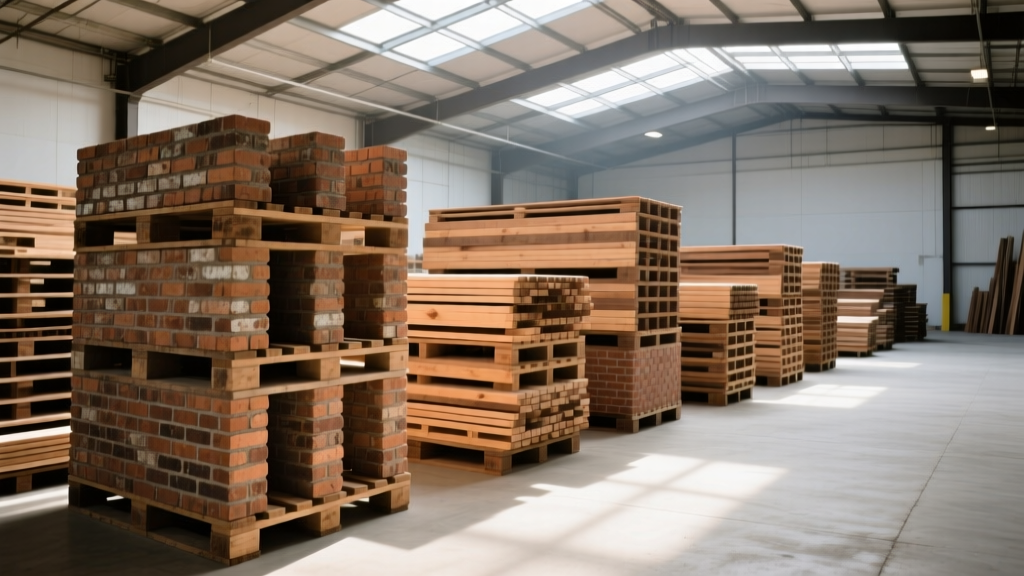
The inventory at a Houston reuse warehouse fluctuates based on local demolition trends, particularly the teardown of mid-century commercial spaces and early 1900s residential properties in the Inner Loop. Sourcing here requires a technical understanding of historical building materials.
Reclaimed Longleaf Pine
Old-growth Longleaf Pine (Pinus palustris) salvaged from 1920s Houston warehouses and industrial facilities is a staple of the reuse market. This timber features a tight grain density (often exceeding 40 rings per inch) and high resin content, making it naturally resistant to rot and insects. When sourcing from the warehouse, verify that the milling facility has kiln-dried the salvaged lumber to an interior moisture content of 8-10%. Using air-dried reclaimed pine with a moisture content above 14% in climate-controlled Houston interiors will result in severe warping and joint failure as the wood acclimates.
Historical Masonry and "Salmon Brick"
Houston's historical architecture frequently utilized locally fired clay bricks. Reuse warehouses often stock "salmon brick"—an under-fired, softer brick historically used for interior wythes. Critical specification: Never use Portland cement-based mortars (Type M or S) with salvaged salmon brick. The rigid cement traps moisture, causing the softer clay to spall and degrade during freeze-thaw cycles or heavy Gulf Coast rain. Always specify a lime-based Type O or Type N mortar for repointing and laying salvaged historical brick.
| Material Type | Reuse Warehouse Avg. Price | New Retail Avg. Price | Cost Variance |
|---|---|---|---|
| Longleaf Pine (2x6, Rough Sawn) | $7.85 / board foot | $14.50 / board foot | -45% Savings |
| Standard Red Clay Brick (Structural) | $0.45 / unit | $0.72 / unit | -37% Savings |
| Solid Core Oak Doors (36" x 80") | $185.00 / unit | $450.00 / unit | -58% Savings |
| Copper Roofing/Flashing (Salvaged) | $9.20 / lb | $14.50 / lb | -36% Savings |
Deconstruction vs. Demolition: City Guidelines
The City of Houston Solid Waste Management Department heavily incentivizes deconstruction over mechanical demolition. Mechanical demolition using excavators and wrecking balls contaminates reusable materials with drywall dust, broken glass, and hazardous particulates, rendering them unfit for the reuse warehouse. Deconstruction involves the systematic "soft-stripping" and reverse-engineering of a structure.
Step-by-Step Donation and Tax Credit Workflow
For general contractors and developers, donating salvaged materials to partnered municipal and nonprofit reuse warehouses offers significant financial offsets via federal tax deductions. The workflow requires strict documentation to satisfy IRS requirements.
- Material Audit and Appraisal: Prior to deconstruction, hire a qualified third-party appraiser to catalog high-value items (e.g., antique heart pine flooring, commercial-grade HVAC units, copper wiring). The IRS requires a qualified appraisal for non-cash charitable contributions exceeding $5,000.
- Soft-Strip Execution: Use pneumatic denailers and reciprocating saws with bi-metal blades to remove framing and trim. Avoid prying with crowbars, which splits the grain and destroys the tenon joints of historical millwork.
- Palletizing and Staging: Warehouse intake docks require materials to be banded and palletized. Loose dimensional lumber or unboxed fixtures are frequently rejected due to intake processing bottlenecks.
- Transfer of Title: Obtain a contemporaneous written acknowledgment from the receiving warehouse. This document must detail the materials received without assigning a dollar value (the IRS prohibits the charity from appraising the gift).
- IRS Form 8283 Filing: Attach the qualified appraisal and the warehouse's acknowledgment letter to your tax return using IRS Form 8283 (Noncash Charitable Contributions).
Quality Control: Testing Reclaimed Materials on Site
When pulling materials directly from the city of houston building materials reuse warehouse loading docks, contractors must perform immediate quality control checks to prevent downstream project failures.
- Moisture Meter Verification: Use a pinless capacitance moisture meter on reclaimed dimensional lumber. Readings above 15% indicate improper warehouse storage or recent exterior exposure. Reject these batches for interior framing to prevent mold proliferation behind drywall.
- Fastener Extraction Checks: Run a heavy-duty rare-earth magnet over reclaimed flooring and siding. Missed cut-nails or hardened steel spikes will instantly destroy $150 planer and jointer blades during site milling.
- Termite Frass Inspection: Examine the mortise joints and end-grains of salvaged structural beams for fine, sawdust-like frass, which indicates active drywood termite infestations that could be introduced to a new job site.
Strategic Sourcing for LEED and ESG Compliance
Commercial projects targeting LEED v4.1 Building Design and Construction certification can leverage the reuse warehouse network to secure critical points. Sourcing materials locally from Houston's reuse facilities directly supports the MR Credit: Construction and Demolition Waste Management. By documenting that 50% to 75% of diverted C&D waste was routed to certified reuse centers rather than landfills, projects secure up to 2 points.
Furthermore, the Building Materials Reuse Association (BMRA) notes that specifying salvaged materials contributes heavily to corporate ESG (Environmental, Social, and Governance) reporting. The embodied carbon of reclaimed structural steel and masonry is effectively zero compared to newly manufactured equivalents, allowing Houston developers to dramatically lower the overall Life Cycle Assessment (LCA) carbon footprint of their builds.
Logistics: Navigating Houston Freight and Weight Limits
Transporting heavy salvage materials from the warehouse to active job sites requires careful logistical planning, particularly regarding Houston's inner-loop road restrictions. A standard pallet of reclaimed clay brick weighs approximately 2,800 pounds. Ensure your flatbed or box truck is rated for the cumulative payload, and verify that the destination site has a forklift with a minimum 3,000-lb lift capacity and pallet forks. For sites in the Houston Heights or Montrose where heavy commercial vehicle restrictions apply during peak hours, schedule warehouse pickups and site deliveries for early morning (before 6:30 AM) or utilize lighter, staged box-truck deliveries to avoid municipal transit citations.
Written by
James ThorntonJames Thornton is a construction industry veteran with 25 years of hands-on experience in wood framing, lumber grading, and residential building codes. He started as a framing carpenter in rural Oregon, earned his ICC Residential Building Inspector certification, and eventually became a senior plan reviewer for the City of Portland Bureau of Development Services. James holds a B.S. in Wood Science & Technology from Oregon State University and is a certified lumber grader through the West Coast Lumber Inspection Bureau (WCLIB). He has inspected over 3,000 residential construction sites and authored the city's internal guide on advanced framing techniques (2x6 at 24" O.C.). James lives in Bend, OR, where he builds custom timber-frame cabins and competes in lumberjack sports.
More from James Thornton
View all
Insulation
Best Home Insulation Materials: Complete 2026 Guide
Compare top home insulation materials for 2026. Find R-values, installed costs per square foot, and best uses for fiberglass, spray foam, and mineral wool.
Aug 4, 2026

Sustainable Building
Certify Your Green Building Material for LEED and WELL
Step-by-step guide to certifying a green building material for LEED v5 and WELL v2. Master EPDs, HPDs, and VOC limits for 2026 project specifications.
Aug 4, 2026

Stone & Masonry
Veneer Stacked Stone Panels: Interior Design & Style Showcase
Discover how veneer stacked stone panels transform interiors. Explore modern design profiles, material pairings, and technical installation specs.
Aug 4, 2026