Peninsula Building Materials Mountain View CA: Cost & Sourcing Guide
Analyze costs for peninsula building materials in Mountain View, CA. Compare local vs. regional sourcing, Title 24 upcharges, and logistics premiums.

The Mountain View Material Premium: Why Costs Run 15-22% Higher
Procuring construction supplies in Silicon Valley requires navigating a unique economic ecosystem. When sourcing peninsula building materials in Mountain View, CA, general contractors and developers face a localized cost premium that typically ranges from 15% to 22% above national averages. This delta is rarely driven by the commodity cost of the raw materials themselves. Instead, it is a compounding result of last-mile delivery friction, high local lumberyard real estate overhead, and strict municipal staging requirements.
Understanding this premium is the first step in accurate project estimating. Contractors who apply a flat national multiplier to their bids frequently face margin erosion by the framing stage. Accurate cost analysis requires breaking down material categories by their specific regional vulnerabilities.
Core Material Cost Breakdown: Mountain View vs. National Average
The following matrix isolates the cost variance for high-volume structural and finish materials commonly used in Peninsula residential and light-commercial infill projects. Pricing reflects Q1 market conditions for bulk contractor tiers.
| Material Specification | National Avg | Mountain View / Peninsula Avg | Delta |
|---|---|---|---|
| 5/8" Type X Gypsum (USG Sheetrock) | $16.50 / sheet | $21.00 / sheet | +27% |
| Fiber Cement Siding (James Hardie HZ10) | $3.50 / sq ft | $4.85 / sq ft | +38% |
| Engineered I-Joists (Weyerhaeuser TJI 210) | $45.00 / ea | $58.50 / ea | +30% |
| Low-E3 Dual Pane Vinyl (Milgard Tuscany) | $450 / unit | $610 / unit | +35% |
| Sulfate-Resistant Ready-Mix (Type V) | $145 / cu yd | $195 / cu yd | +34% |
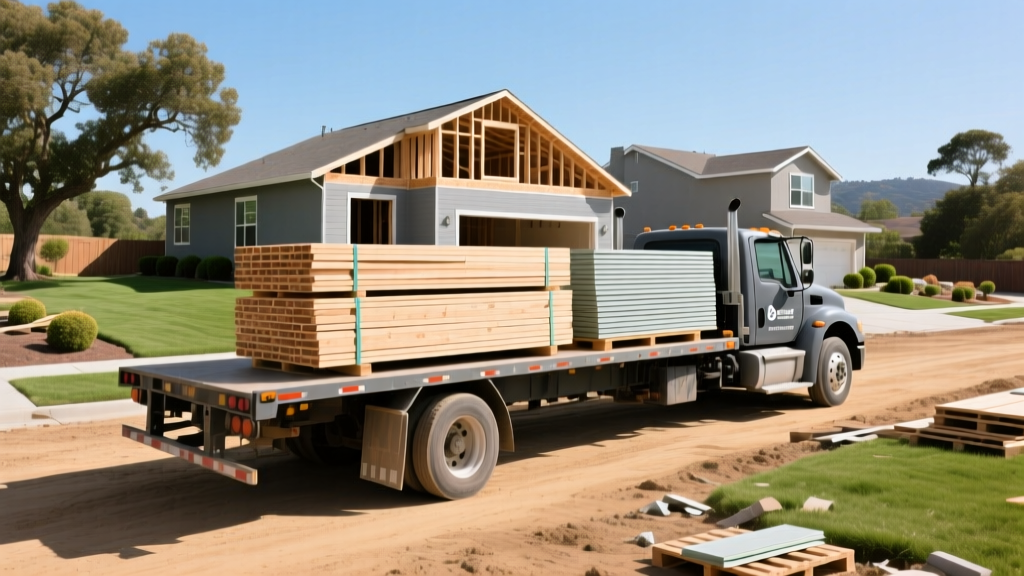
Material costs on the Peninsula are rarely just about the commodity price; they are a reflection of last-mile friction, local yard real estate overhead, and strict municipal staging requirements.
Navigating California Title 24 & Seismic Code Upcharges
Beyond logistics, the regulatory environment in Santa Clara County mandates specific material upgrades that inherently drive up baseline costs. Compliance with the California Energy Commission Title 24 standards and state seismic mandates requires procuring higher-grade, specialized inventory.
Title 24 Energy Compliance Materials
Mountain View's climate zone (Zone 4) requires stringent thermal envelope performance. Standard R-19 fiberglass batts are insufficient for exterior walls. Projects typically require R-21 high-density batts or a combination of R-15 cavity insulation with R-5 continuous exterior rigid foam (e.g., Owens Corning FOAMULAR NGX). This continuous insulation requirement adds approximately $1.85 to $2.40 per square foot to the exterior wall material budget, not including the specialized cap screws and thermal-break washers required to fasten it.
Seismic Hardware & Foundation Chemistry
The proximity to the San Andreas and Hayward fault systems dictates rigorous continuous load-path engineering. The California Department of Housing and Community Development building codes enforce strict hold-down requirements. A standard residential shear wall in Mountain View will utilize heavy-duty holdowns like the Simpson Strong-Tie HDU series, which cost roughly $85 to $140 per unit, compared to $35 for lighter-duty alternatives used in low-seismic regions. Furthermore, Mountain View's high water table and localized soil chemistry often require Type V sulfate-resistant Portland cement for foundations to prevent concrete degradation, carrying a 34% premium over standard Type I/II mixes.
Local Sourcing vs. Regional Freight: A Decision Matrix
Contractors must decide between purchasing from local Peninsula suppliers (located in San Jose, Santa Clara, or Sunnyvale) or routing direct freight from Central Valley distribution hubs (Modesto, Stockton). Each approach carries distinct financial and operational trade-offs.
-
Option A: Local Peninsula Yards
Pros: Same-day will-call availability, localized credit terms, easy return processing for overages, familiar with Mountain View permit staging requirements.
Cons: Highest unit pricing, limited stock on niche architectural finishes, smaller delivery fleets prone to local traffic delays. -
Option B: Central Valley Direct Freight
Pros: 10-15% lower unit costs on bulk commodities (lumber, drywall, concrete), massive inventory depth, dedicated semi-truck routing.
Cons: 48-72 hour lead times, strict minimum order quantities (usually $5,000+), high restocking fees, requires a laydown yard or immediate crane hoisting upon arrival.
Hidden Logistics Costs in Silicon Valley Construction
When analyzing the total landed cost of peninsula building materials in Mountain View, CA, estimators frequently overlook municipal friction costs. These hidden expenses can erode profit margins if not line-itemed during the bidding phase.
Delivery Windows & Traffic Fines
The City of Mountain View enforces strict commercial vehicle restrictions. Heavy trucks are prohibited on many residential streets during peak commute hours (7:00 AM–9:00 AM and 3:30 PM–6:30 PM). If a supplier's driver is ticketed for violating truck-route restrictions near the Charleston or Villa corridors, the supplier will pass that fine (often $350+) directly to the contractor's account via a delivery exception fee.
Crane and Hoisting Permits
For multi-story infill projects or ADUs with zero lot-line setbacks, ground staging is impossible. Materials must be hoisted. Mobile crane permits in Mountain View require right-of-way encroachment applications, which cost approximately $350 per week, plus the requirement for certified flaggers and steel road plates to protect municipal asphalt from outrigger point-loads.
Strategic Procurement Framework for Peninsula Projects
To mitigate the 15-22% regional premium, project managers should implement a phased procurement strategy tailored to the Silicon Valley supply chain.
- Lock Structural Packages Early: Engineered lumber and structural steel are highly susceptible to regional freight spikes. Issue purchase orders to Central Valley fabricators 60 days prior to foundation pour, utilizing a local Peninsula yard strictly for the final-mile delivery contract.
- Consolidate Finish Deliveries: Avoid piecemeal deliveries for drywall, insulation, and siding. Every truck drop incurs a base delivery fee (currently $175-$250 locally). Consolidating finishes into two major drops rather than five minor drops saves up to $1,000 per project in pure logistics fees.
- Negotiate Laydown Agreements: For sites lacking staging space, negotiate off-site laydown agreements with neighboring commercial properties or utilize secure, portable shipping containers placed in approved municipal parking zones to act as secure, weather-proof material buffers.
Accurate cost analysis for Mountain View construction demands looking past the catalog price. By accounting for Title 24 upgrades, seismic hardware requirements, and the realities of Silicon Valley logistics, contractors can build resilient budgets that protect margins from the first pour to the final trim installation.
Written by
Elena RodriguezElena Rodriguez is a civil engineer and technical writer specializing in concrete technology, masonry systems, and ASTM/ACI compliance. She earned her B.S. in Civil Engineering from Texas A&M University and spent a decade at a materials testing laboratory, performing over 2,000 concrete compressive strength tests and masonry prism evaluations. Elena is an ACI-certified Field Testing Technician (Grade I) and a member of ASTM Committee C12 on Natural Building Stone. She currently consults on forensic engineering cases involving concrete failures and moisture intrusion. Based in San Antonio, TX, Elena is a proud member of the Society of Women Engineers (SWE) and coaches her daughter's FIRST Robotics team.
More from Elena Rodriguez
View all
Walls & Panels
Cost Analysis: Light Gauge Steel Framing Advantages and Disadvantages
Evaluate light gauge steel framing advantages and disadvantages through a strict cost analysis lens, comparing material, labor, and lifecycle expenses.
Aug 4, 2026

Walls & Panels
Gypsum Board Types: Exact Specifications, Thickness & Dimensions
Compare standard, Type X, and moisture-resistant gypsum board types. Get exact specifications, thicknesses, dimensions, and ASTM standards for your project.
Aug 4, 2026

Fire Resistance
Best Fire-Resistant Outdoor Decking Materials: 2026 Buyer Guide
Discover the best fire-resistant outdoor decking materials for 2026. Compare Class A PVC, aluminum, and hardwood options for WUI compliance and safety.
Aug 4, 2026