Trending Swimming Pool Building Materials for 2026 Builds
Discover the top swimming pool building materials trending in 2026, from nano-ceramic finishes to advanced shotcrete mixes and VIP insulation.
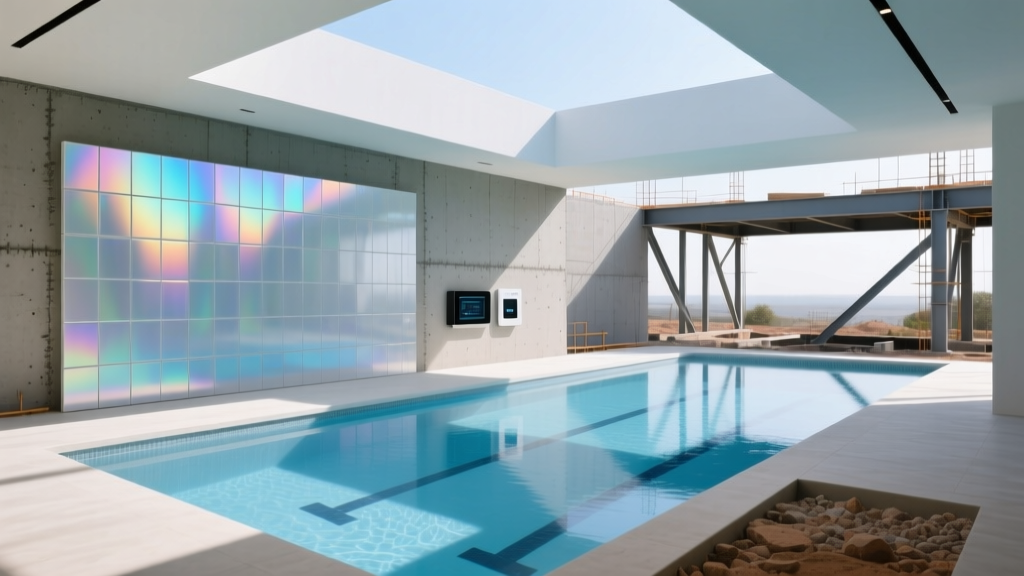
The Shift in Aquatic Construction: Beyond Standard Gunite and Vinyl
The residential and commercial aquatic construction sector has undergone a radical material science evolution. While traditional steel-reinforced gunite and standard vinyl liners remain baseline options, the most sought-after swimming pool building materials in 2026 prioritize thermal efficiency, extended lifecycle durability, and reduced chemical dependency. Builders and architects are now specifying advanced composites, nano-engineered surfaces, and high-performance thermal barriers to meet stringent energy codes and elevated client expectations.
2026 Market Snapshot: Aquatic Materials
- Thermal Retention: Up to 75% reduction in heat loss using Vacuum Insulation Panels (VIPs) versus traditional EPS foam.
- Shell Longevity: Carbon-infused shotcrete mixes extending structural lifespans past 75 years.
- Surface Maintenance: Photocatalytic nano-ceramics reducing algaecide chemical usage by up to 40%.
1. Carbon-Infused Shotcrete and 3D-Printed Formworks
The structural shell of a concrete pool is its most critical component. The industry standard has long been a 4,000 PSI gunite or shotcrete mix. However, leading contractors are now specifying 5,000 to 6,000 PSI shotcrete blends augmented with micro-synthetic fibers and silica fume. According to guidelines maintained by the American Concrete Institute (ACI), the addition of silica fume drastically reduces the water-cement ratio, resulting in a denser, virtually impermeable matrix that resists chloride ion penetration from salt-water sanitation systems.
Furthermore, the forming process for complex freeform pools has shifted from manual rebar tying and hand-carved foam to 3D-printed expanded polystyrene (EPS) formworks. These precision-milled forms ensure exact hydraulic profiles, eliminating the structural weak points often caused by human error in traditional rebar bending. When paired with carbon-fiber reinforced polymer (CFRP) rebar instead of traditional epoxy-coated steel, builders completely eliminate the risk of rebar oxidation and subsequent concrete spalling, a failure mode that typically manifests in standard pools after 20 to 25 years.
2. Nano-Ceramic and Photocatalytic Interior Finishes
Traditional white marcite (plaster) is rapidly losing market share due to its porous nature and 7-to-10-year lifespan. While exposed aggregate finishes like PebbleTec remain popular, the cutting-edge trend for 2026 is nano-ceramic and photocatalytic coatings. These materials are engineered at the molecular level to create a non-porous, glass-like surface that prevents calcium scaling and inhibits algae adhesion.
Interior Finish Comparison Matrix
| Material Type | Est. Cost (per sq. ft.) | Expected Lifespan | Chemical/Algae Resistance |
|---|---|---|---|
| Standard Marcite (Plaster) | $4.00 - $6.00 | 7 - 12 Years | Low (Highly Porous) |
| Exposed Quartz Aggregate | $6.50 - $8.50 | 12 - 15 Years | Moderate |
| Pebble / Exposed Aggregate | $9.00 - $13.00 | 15 - 20+ Years | High |
| Nano-Ceramic Composite | $14.00 - $18.00 | 25+ Years | Exceptional (Non-Porous) |
Photocatalytic finishes utilize titanium dioxide (TiO2) nanoparticles. When exposed to UV sunlight, these particles trigger an oxidation-reduction reaction that actively breaks down organic matter and bacteria on the pool floor. For commercial installations and high-end residential builds, this translates to significantly lower chlorine demand and reduced filtration run-times.
3. Vacuum Insulation Panels (VIPs) for Thermal Envelopes
Heating a swimming pool represents the largest ongoing energy expense in aquatic ownership. Historically, builders relied on 1-inch to 2-inch rigid EPS (expanded polystyrene) foam boards applied to the exterior of the shotcrete shell. EPS provides an R-value of roughly R-5 per inch. In 2026, the premium standard is the integration of Vacuum Insulation Panels (VIPs).
"Transitioning from standard EPS foam to VIPs in the pool shell envelope increases the thermal resistance from R-5 to upwards of R-40 per inch. This effectively turns the pool structure into a thermos, retaining solar heat and heat-pump energy with minimal loss to the surrounding soil."
VIPs consist of a gas-tight enclosure surrounding a rigid core, from which the air has been evacuated. While the upfront material cost for VIPs is approximately 4 to 5 times higher than rigid foam, the return on investment is realized within 3 to 5 years through drastically reduced natural gas or electrical heat pump usage. Builders must exercise extreme care during installation; unlike EPS, a VIP cannot be cut or punctured on-site without destroying its vacuum seal and insulating properties.

4. Sustainable Coping and Permeable Decking Aggregates
The materials surrounding the pool are undergoing a sustainability overhaul. Natural stone coping, such as travertine or bluestone, requires intensive quarrying and is highly susceptible to etching from salt-chlorine generator splashes. The current trend favors engineered recycled-glass concrete coping and modified bamboo-composite decking.
Material Selection Framework: Coping & Decking
- Recycled Glass Aggregate Concrete: Utilizes post-consumer glass bound in a high-performance cementitious matrix. It offers a slip-resistant surface, remains cooler under direct sunlight than natural dark stone, and diverts waste from landfills. Cost: $12 - $16 per linear foot.
- Modified Bamboo Composites: Unlike early-generation wood-plastic composites that warped near constant moisture, 2026-era bamboo composites are capped with a proprietary polymer shield that resists UV fading and moisture absorption. Cost: $9 - $14 per square foot.
- Permeable Interlocking Pavers: Essential for municipalities enforcing strict stormwater runoff limits. These pavers allow water to percolate through joints filled with crushed aggregate rather than flowing into municipal drains. Cost: $15 - $22 per square foot installed.
Sourcing and Supply Chain Realities for Builders
Procuring these advanced swimming pool building materials requires proactive supply chain management. Nano-ceramic finishes and VIPs are often manufactured in specialized facilities and require lead times of 8 to 12 weeks. Builders must finalize hydraulic engineering and material specifications during the design phase, rather than making substitutions mid-dig. Furthermore, the Pool & Hot Tub Alliance (PHTA) strongly recommends that contractors undergo specific manufacturer-certified training for the application of nano-ceramics and VIP integration, as improper troweling techniques or panel punctures will void extensive material warranties.
Expert FAQ: Material Compatibility and Curing
Q: Can I use natural limestone coping with a salt-water chlorine generator?
A: It is highly discouraged unless the stone is treated with a high-quality, breathable siloxane-based sealer. Salt water is inherently corrosive to calcium carbonate-based stones (limestone, travertine, marble). Over time, salt splash will cause severe pitting and spalling. Engineered composites or dense granite are vastly superior choices for salt-sanitized environments.
Q: What is the required curing time for carbon-infused shotcrete before applying a nano-ceramic finish?
A: While standard shotcrete requires a 28-day wet cure, advanced mixes with accelerating admixtures and silica fume can achieve the necessary structural strength and moisture equilibrium in 14 to 21 days. However, the shell must be tested with a moisture meter to ensure readings are below 4% before the nano-ceramic bonding agent is applied, otherwise, hydrostatic vapor pressure will cause the finish to delaminate.
Q: Are 3D-printed EPS forms structurally sound enough to hold wet shotcrete?
A: Yes, when engineered correctly. The 3D-printed EPS is typically reinforced with an internal lattice structure and backed by traditional steel or CFRP rebar. The EPS acts strictly as a stay-in-place formwork and insulation layer; the structural load is entirely borne by the reinforced shotcrete matrix injected into the cavity.
Written by
Marcus ChenMarcus Chen is a licensed structural engineer (PE) and building materials analyst with over 12 years of experience across residential, commercial, and industrial construction. He holds a Master of Science in Civil Engineering from UC Berkeley and spent six years at Thornton Tomasetti before transitioning to independent consulting and technical writing. Marcus specializes in material selection for seismic-prone regions, concrete reinforcement strategies, and lifecycle cost analysis. His work has been cited by the American Concrete Institute (ACI) and the Structural Engineers Association of California (SEAOC). When he is not on a job site or at his desk, you will find him hiking the Sierra Nevada or restoring a 1920s craftsman bungalow in Oakland, CA.
More from Marcus Chen
View all
Construction Cost
How Much Did the Eiffel Tower Cost to Build?
How much did the Eiffel Tower cost to build in 1889? We adjust for inflation and compare its budget to modern skyscraper construction.
Aug 4, 2026

Fire Resistance
What Is a Fire Resistant Material? Testing & Certification Guide
Discover what is a fire resistant material through ASTM and UL testing. Learn how fire ratings, certifications, and assemblies work in construction.
Aug 4, 2026

Construction Cost
How Much Did the Burj Khalifa Cost to Build?
How much did the Burj Khalifa cost to build? We break down the $1.5B project and extract 5 money-saving strategies for your next build.
Jul 30, 2026