Building Materials Market Research Report 2024: 2026 Sourcing Guide
Leverage the building materials market research report 2024 to optimize 2026 procurement. Discover pricing baselines, material volatility strategies, and EPD mandates.
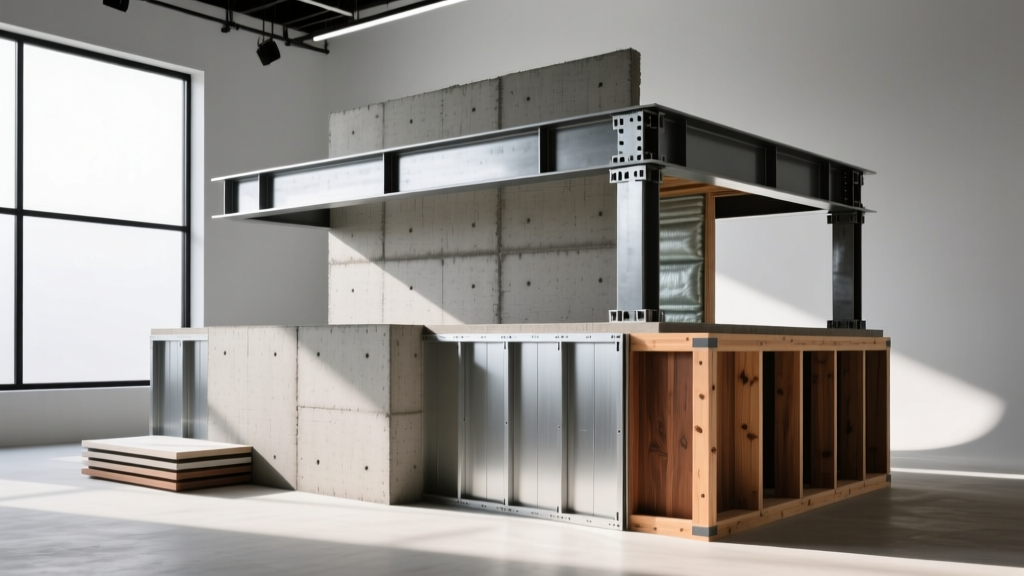
Decoding the Building Materials Market Research Report 2024 for 2026 Procurement
When procurement teams and chief estimators first analyzed the building materials market research report 2024, the primary focus was navigating post-inflation supply chain bottlenecks and sudden price spikes. Today, operating in the 2026 construction landscape, that foundational document serves a vastly different, highly strategic purpose. Rather than a snapshot of past volatility, the 2024 report now functions as the definitive baseline for measuring long-term market stabilization, predicting regional material deficits, and structuring complex guaranteed maximum price (GMP) contracts.
Smart general contractors and developer procurement teams are no longer using market research merely to track what materials cost. They are using historical variance data to build predictive sourcing models. By comparing the forecasts published in the building materials market research report 2024 against actual 2026 mill output and freight indices, estimators can identify which material categories have achieved price equilibrium and which remain susceptible to geopolitical or regulatory shocks. This guide details how to translate those specific 2024 baselines into actionable 2026 material selection and contracting strategies.
Core Market Shifts: 2024 Baselines vs. 2026 Realities
The most critical error in modern construction estimating is treating material pricing as a linear progression. The transition from 2024 to 2026 has been defined by non-linear regulatory impacts, specifically carbon taxation and localized 'Buy Clean' mandates. Below is a comparative matrix demonstrating how the baselines established in the 2024 research reports have evolved, and the specific procurement strategies required to mitigate margin erosion today.
| Material Category | 2024 Report Baseline | 2026 Market Reality | 2026 Procurement Strategy |
|---|---|---|---|
| Type I/II Portland Cement | $145 / ton | $168 / ton (Carbon fee impact) | Specify ASTM C595 blended cements (slag/fly ash) to bypass pure clinker premiums and meet embodied carbon limits. |
| Structural Steel (W-Shapes) | $1,150 / ton | $1,090 / ton (Stabilized domestic) | Utilize just-in-time delivery from regional mini-mills; avoid long-term stockpiling to reduce yard carrying costs. |
| Cross-Laminated Timber (CLT) | $8.50 / board foot | $9.85 / board foot (High demand) | Book mill slots 14 months pre-construction; specify alternate ply-layups to utilize secondary species like Southern Pine. |
| Copper Wire (Building Grade) | $4.10 / lb | $4.65 / lb (EV market competition) | Lock in pricing via direct-owner purchase agreements; explore aluminum feeder alternatives for non-critical runs. |
Strategic Material Selection Framework
Relying on the volatility indices identified in late 2024, procurement managers must categorize every line item in a project's bill of materials (BOM) into distinct risk buckets. This decision matrix dictates whether a material should be spot-purchased, hedged, or procured via early-allowance contracts.
1. Low Volatility / High Availability (e.g., Standard Gypsum Board, Fiberglass Insulation)
These materials experienced minimal deviation between the 2024 forecasts and 2026 actuals. Domestic manufacturing capacity remains robust, and raw material inputs are stable.
- Action: Spot buy or negotiate standard 90-day pricing locks with local distributors.
- Storage: Do not pay for off-site climate-controlled storage; rely on phased just-in-time delivery to the job site.
2. High Volatility / Constrained Supply (e.g., Electrical Switchgear, HVAC Chillers)
The building materials market research report 2024 highlighted the severe strain on electrical infrastructure components due to data center proliferation. In 2026, lead times for custom switchgear still routinely exceed 75 weeks.
- Action: Implement Early Procurement Allowances (EPAs) in the GMP contract. The owner must purchase and store these items prior to the main contract award.
- Design Flexibility: Mandate that the MEP engineer design systems that can accommodate multiple manufacturer footprints, preventing a single-source bottleneck.
3. Regulatory Impact Materials (e.g., Flat Glass, Extruded Aluminum)
Materials heavily dependent on international supply chains and subject to new 2026 cross-border carbon adjustment mechanisms.
- Action: Require suppliers to submit EN 15804 compliant EPDs during the submittal phase. If a supplier cannot provide verified data, their bid must be disqualified to prevent project delays during municipal green-building audits.
Navigating Embodied Carbon and EPD Requirements
One of the most prescient sections of the building materials market research report 2024 was the forecasted rise of 'Buy Clean' legislation. What was considered a niche LEED requirement in 2024 is now a baseline municipal code in major commercial hubs. According to the U.S. Environmental Protection Agency, the push to limit embodied carbon in federally funded projects has cascaded into private commercial development, fundamentally altering how materials are selected.
To maintain compliance and avoid costly material substitutions mid-project, estimators must integrate carbon tracking directly into their selection process:
- Specify Blended Cements: Transitioning from ASTM C150 (pure Portland) to ASTM C595 (blended hydraulic cements utilizing slag or fly ash) can reduce the carbon footprint of concrete mixes by up to 30% while maintaining required 28-day compressive strengths (typically 4,000 PSI for standard structural elements).
- Mass Timber Substitutions: Where fire ratings and structural loads permit, substituting steel decking with Cross-Laminated Timber (CLT) or Nail-Laminated Timber (NLT) drastically lowers the project's global warming potential (GWP). However, as noted in 2024 forecasts, CLT procurement requires aggressive early engagement with mills in the Pacific Northwest or Central Europe.
- Recycled Content Steel: Specify structural steel produced via Electric Arc Furnace (EAF) rather than Basic Oxygen Furnace (BOF). EAF steel routinely contains over 90% recycled scrap, offering a significantly lower embodied carbon profile that satisfies strict 2026 municipal mandates.
Contracting and Escalation Clauses in 2026
The days of contractors absorbing all material price risk are over. The volatility documented in the 2024 market reports forced the industry to adopt sophisticated material escalation clauses. When drafting or reviewing contracts in 2026, rely on the following frameworks to protect project margins:
Furthermore, establish a 'deadband' or threshold (typically 3% to 5%) before an escalation clause triggers. This ensures that minor market fluctuations are absorbed as standard cost-of-doing-business, while protecting the contractor from catastrophic spikes caused by sudden tariff implementations or raw material shortages. Ensure the contract explicitly defines the baseline date for material pricing—usually the date of the final bid submission—and requires documented supplier quotes to validate any claimed increases.

Integrating Research into Your 2026 Bidding Pipeline
Ultimately, the value of the building materials market research report 2024 lies in its utility as a calibration tool. By comparing past predictions with current market behavior, construction firms can refine their internal estimating databases. Firms that utilize platforms like Dodge Construction Network to layer real-time project starts data over historical material pricing reports gain a distinct competitive advantage. They know not just what a material costs today, but exactly how regional demand will stress local supply chains over the next 18 months.
Stop treating market research as retrospective reading. Use the 2024 baselines to audit your current vendor agreements, force EPD compliance in your subcontracts, and structure GMP agreements that reflect the true, nuanced volatility of the 2026 building materials landscape. Precision in procurement is no longer just about finding the lowest initial price; it is about engineering supply chain resilience from the first estimate to the final punch list.
Written by
Marcus ChenMarcus Chen is a licensed structural engineer (PE) and building materials analyst with over 12 years of experience across residential, commercial, and industrial construction. He holds a Master of Science in Civil Engineering from UC Berkeley and spent six years at Thornton Tomasetti before transitioning to independent consulting and technical writing. Marcus specializes in material selection for seismic-prone regions, concrete reinforcement strategies, and lifecycle cost analysis. His work has been cited by the American Concrete Institute (ACI) and the Structural Engineers Association of California (SEAOC). When he is not on a job site or at his desk, you will find him hiking the Sierra Nevada or restoring a 1920s craftsman bungalow in Oakland, CA.
More from Marcus Chen
View all
Construction Cost
How Much Did the Eiffel Tower Cost to Build?
How much did the Eiffel Tower cost to build in 1889? We adjust for inflation and compare its budget to modern skyscraper construction.
Aug 4, 2026

Fire Resistance
What Is a Fire Resistant Material? Testing & Certification Guide
Discover what is a fire resistant material through ASTM and UL testing. Learn how fire ratings, certifications, and assemblies work in construction.
Aug 4, 2026

Construction Cost
How Much Did the Burj Khalifa Cost to Build?
How much did the Burj Khalifa cost to build? We break down the $1.5B project and extract 5 money-saving strategies for your next build.
Jul 30, 2026