Western Pacific Building Materials Portland: Product Selection Guide
Discover how to select commercial roofing, cladding, and waterproofing products from Western Pacific Building Materials Portland for PNW construction projects.

The Pacific Northwest Climate Mandate
Sourcing commercial building materials in the Pacific Northwest requires a fundamental shift in how general contractors and architects approach moisture management. Portland, Oregon, sits in IECC Climate Zone 4C—a marine climate characterized by mild, wet winters and dry summers, with annual precipitation frequently exceeding 37 inches. When procuring supplies from Western Pacific Building Materials (WPBM) in Portland, selection must prioritize vapor permeability, hydrostatic resistance, and long-term UV stability over simple upfront cost metrics.
This guide provides a technical breakdown of how to select the right commercial roofing, exterior cladding, and below-grade waterproofing systems from WPBM’s Portland inventory, specifically tailored to the structural demands of Oregon’s stringent building codes and the region's unique hygrothermal profile.
Core Inventory Breakdown: Roofing and Waterproofing
WPBM’s Portland facility, strategically located near NE Alderwood Road and the I-84 freight corridor, maintains deep stock of commercial envelope systems. Selecting the correct assembly requires understanding the failure modes common in the Willamette Valley.
Single-Ply Commercial Roofing Membranes
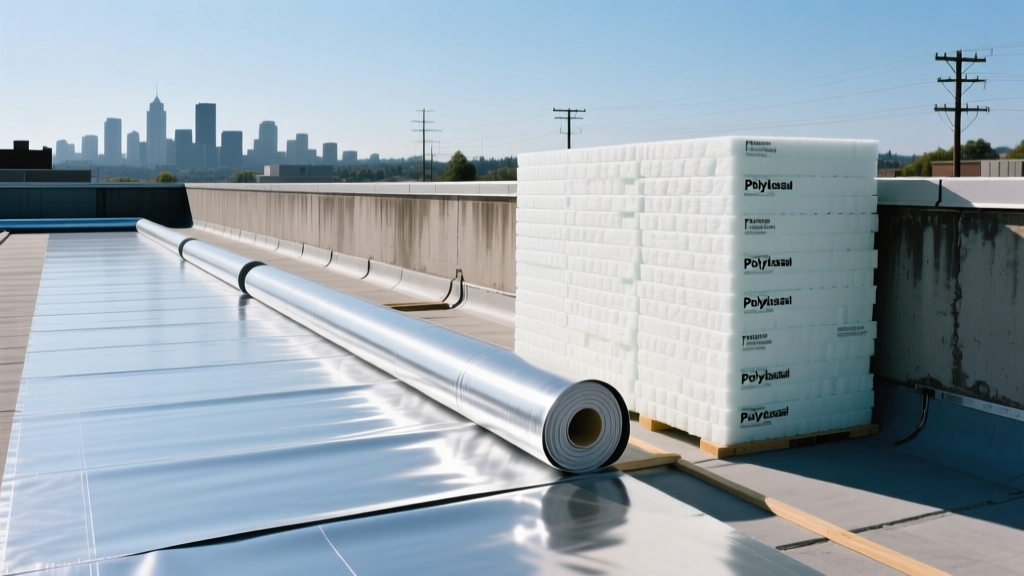
For low-slope commercial roofs, the primary contenders in WPBM’s catalog are Thermoplastic Polyolefin (TPO) and Polyvinyl Chloride (PVC). While TPO dominates the national market due to cost, Portland’s specific environmental factors often shift the calculus toward PVC or reinforced TPO.
- Carlisle Sure-Weld TPO (60-mil): The standard for cost-effective commercial roofing. At $1.60 to $2.10 per square foot (material only), it offers excellent solar reflectivity. However, in high-ponding areas common on older Portland warehouse roofs, standard TPO can suffer from premature seam degradation if not fully adhered.
- Sika Sarnafil PVC (50-mil and 60-mil): Priced higher at $2.80 to $3.50 per square foot, PVC is inherently resistant to standing water, animal fats, and chemical exhaust—making it the mandatory choice for Portland’s numerous food processing facilities and restaurants along the Pearl District and Central Eastside.
Insulation and Vapor Retarder Strategy
According to the Oregon Building Codes Division, commercial roof assemblies must meet strict continuous insulation (ci) R-value requirements. WPBM stocks Johns Manville ENRGY 3 polyiso boards. For Portland’s climate, selecting the correct facer is critical. Opt for fiberglass-faced polyiso rather than foil-faced when installing above-deck vapor retarders, as foil facers can trap moisture within the assembly during the wet winter months, leading to concealed condensation and membrane blistering.
Material Performance Comparison Matrix
Use the following data table to evaluate single-ply membrane options available through WPBM Portland for your specific project scope.
| Membrane Type | Standard Thickness | Puncture Resistance | Weldability in Damp Conditions | Est. Material Cost (Sq. Ft.) |
|---|---|---|---|---|
| TPO (Reinforced) | 60-mil | Moderate | Poor (Requires dry substrate) | $1.60 - $2.10 |
| PVC (Sarnafil) | 50-mil | High | Excellent (Hot-air welding) | $2.80 - $3.50 |
| EPDM (Carlisle) | 60-mil | High | Moderate (Tape/Adhesive) | $1.40 - $1.90 |
| TPO (Fleece-Back) | 80-mil | Very High | Poor (Requires dry substrate) | $2.50 - $3.10 |
Architectural Cladding and Rainscreen Systems
The National Roofing Contractors Association (NRCA) and building envelope scientists universally agree that driving rain is the primary enemy of commercial wall assemblies. Portland experiences frequent wind-driven rain events that can force water through microscopic cladding breaches.
Sourcing Rainscreen Subframing and Air Barriers
WPBM Portland supplies advanced rainscreen technologies, including Knight Wall subframing systems and PROSOCO R-Guard fluid-applied air barriers. When selecting a cladding support system, specify aluminum or thermally broken steel subframing to eliminate thermal bridging, which is heavily penalized under Oregon’s commercial energy codes.
Terra Cotta and Fiber Cement Panels
For exterior facades, WPBM carries high-density fiber cement and architectural terra cotta. In the Pacific Northwest, specify fiber cement panels with a minimum density of 85 lbs/cubic foot to resist moisture absorption and subsequent freeze-thaw spalling during rare but damaging Portland cold snaps. Always pair these panels with a minimum 1-inch ventilated air cavity to ensure rapid drainage and drying.
Logistics and Sourcing Strategy for 2026 Projects
Procuring from Western Pacific Building Materials Portland involves more than just selecting the right SKU; it requires mastering local logistics. The Portland branch’s proximity to Portland International Airport (PDX) and major freight arterials offers distinct advantages, but also requires careful planning.
- Flatbed Access: The NE Alderwood facility is equipped to handle 53-foot flatbed trailers. However, if your job site is located in the dense urban core (e.g., South Waterfront or Downtown), you must coordinate crane lifts or specify smaller box-truck deliveries, as full flatbeds cannot navigate tight municipal staging zones.
- Lead Time Management: While standard polyiso and 60-mil TPO are stocked locally, specialty architectural metals, custom-colored PVC, and specialized below-grade bentonite waterproofing sheets often ship from regional distribution hubs in Tacoma or Sacramento. Factor a 10-to-14-day lead time for non-stock specialty envelope products into your 2026 critical path schedule.
- Willamette River Freight Constraints: For projects located west of the river, factor in potential bridge crossing delays during peak commercial transit hours when scheduling just-in-time material drops.
Decision Framework: Matching Material to Project Scope
Use this rapid decision matrix to finalize your material selections before submitting your purchase order to WPBM Portland:
- Project Type: Food Service / Chemical Processing
Action: Bypass TPO entirely. Specify 60-mil PVC with hot-air welded seams to resist lipid and chemical degradation. - Project Type: High-Traffic Retail with Roof HVAC Maintenance
Action: Upgrade to 80-mil fleece-back TPO or a multi-ply modified bitumen system to withstand heavy foot traffic and dropped tools. - Project Type: Multi-Story Wood-Frame Residential (Type V)
Action: Prioritize fluid-applied air barriers (PROSOCO) and ventilated rainscreen clips to manage the high moisture load generated by occupant activities and the exterior marine climate.
Frequently Asked Questions
Does WPBM Portland provide technical submittal support for local permits?
Yes. WPBM’s commercial representatives can generate localized submittal packages, including Portland-specific wind uplift calculations (based on ASCE 7-22 exposure categories) and thermal bridging analyses required by the Oregon Structural Specialty Code (OSSC).
Can I source below-grade waterproofing for high-water-table sites?
Absolutely. For sites near the Willamette River or in areas with perched water tables, WPBM supplies bentonite clay panels and blind-side waterproofing membranes (like Tremco Securedraft) specifically engineered for hydrostatic pressure resistance in deep foundation excavations.
What is the minimum order for local job-site delivery?
While WPBM accommodates will-call pickups for small commercial repair orders, standard job-site delivery via flatbed or boom truck typically requires a minimum material threshold, often tied to pallet quantities of insulation or full rolls of membrane. Always confirm current freight minimums with your dedicated territory manager during the estimating phase.
Written by
Sarah WhitfieldSarah Whitfield is a chartered quantity surveyor (MRICS) and construction cost analyst with 15 years of experience in material pricing, procurement strategy, and project budgeting. She earned her degree in Construction Management from the University of Reading (UK) and has worked on projects ranging from $2M custom homes to $180M mixed-use developments across North America and Europe. Sarah currently leads cost estimating for BuildMat Insight, maintaining a proprietary database of 4,000+ material price points updated quarterly. She is a frequent contributor to RSMeans cost data panels and has presented at the International Cost Engineering Council (ICEC) congress. Based in Denver, CO, Sarah is an avid trail runner and volunteer mentor for Women in Construction.
More from Sarah Whitfield
View all
Wood & Lumber
What Are the Different Types of Wood? A Builder's Guide
Compare structural softwoods, finish hardwoods, and engineered lumber. Analyze Janka ratings, MOE values, and 2026 pricing for construction.
Aug 4, 2026

Walls & Panels
Steel Framing vs Wood Framing: Corrosion and Moisture Defense
Compare steel framing vs wood framing for moisture resistance. Learn about galvanized coatings, condensation risks, and corrosion protection strategies.
Jul 21, 2026

Stone & Masonry
How to Cut Stone Veneer: Wet Saw vs Grinder Comparison
Compare the best tools for cutting stone veneer. We review wet saws, angle grinders, and chop saws to help you achieve clean, chip-free cuts.
Jul 21, 2026