Building Materials Industry Challenges and Trends: 2024 to 2026
Analyze building materials industry challenges and trends from 2024 to 2026, covering supply chain shifts, EPD mandates, and next-gen material costs.
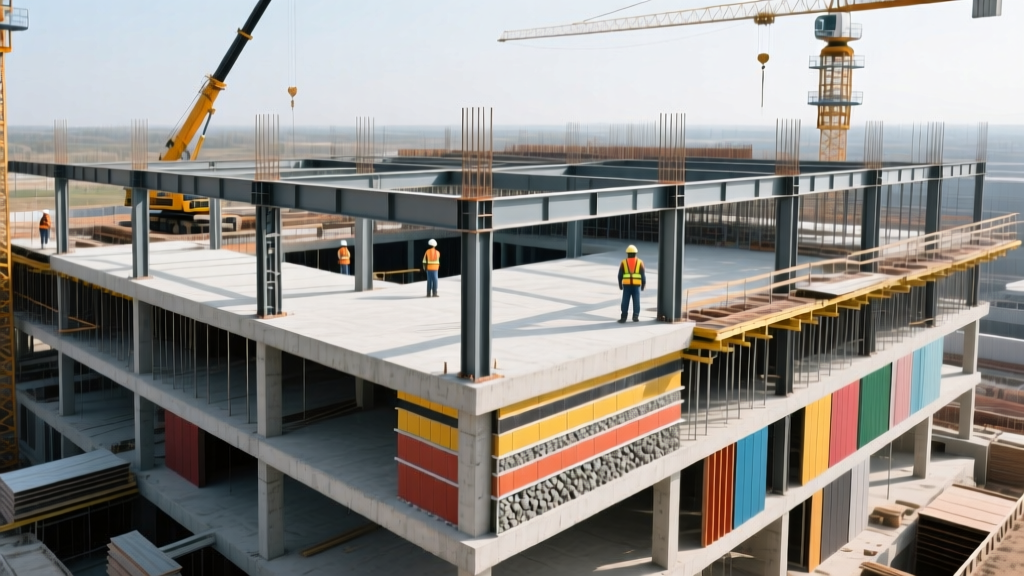
The Post-2024 Supply Chain Reality: From Fragility to Regionalization
The building materials industry challenges and trends of 2024 served as a crucible for global construction supply chains. During that period, geopolitical friction, localized port strikes, and sudden resin shortages exposed the fatal flaws of Just-In-Time (JIT) procurement. As we navigate 2026, the industry has fundamentally abandoned JIT in favor of Just-In-Case (JIC) regionalized buffering. General contractors and developers are no longer sourcing structural steel from transoceanic routes; instead, nearshoring to Mexico and domestic electric arc furnace (EAF) expansions in the US South have redefined lead times.
According to analysis by McKinsey & Company, capital projects that integrate regional supply mapping and digital twin procurement models are seeing a 22% reduction in material delay penalties compared to 2024 baselines. The challenge in 2026 is no longer finding materials, but managing the premium costs associated with domestic manufacturing and the strict environmental compliance required to utilize them.
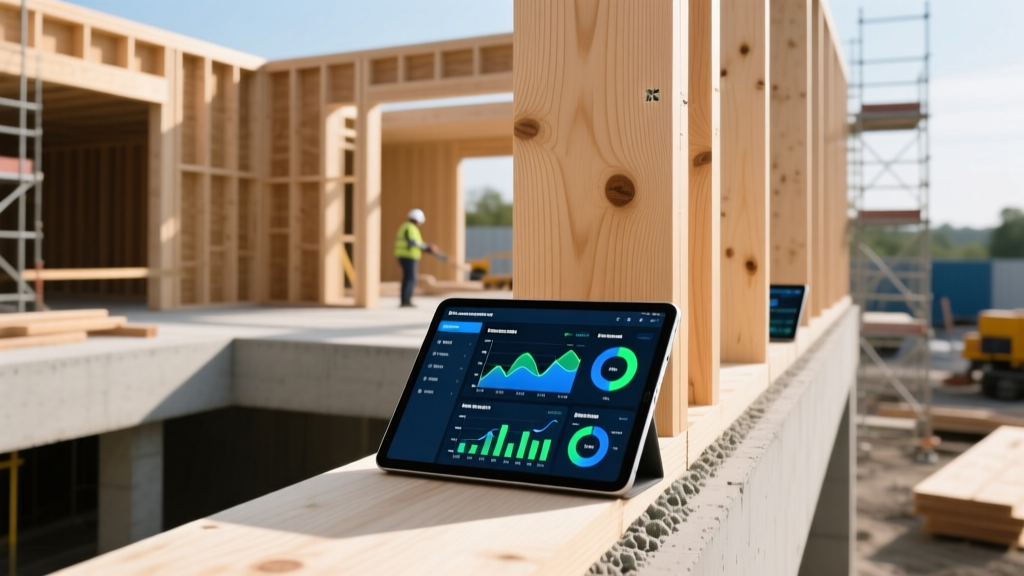
Material Cost Volatility and the 2026 Pricing Matrix
While the hyper-inflation of the early 2020s has stabilized, structural price floors have permanently shifted. Energy-intensive materials like Portland cement and extruded polystyrene (XPS) insulation remain tethered to regional energy grids and carbon taxation frameworks. Below is a comparative matrix illustrating the shift from the 2024 baseline to current 2026 market realities for core structural and envelope materials.
| Material Category | 2024 Baseline Cost | 2026 Current Cost | Avg. Lead Time Shift | Primary Volatility Driver |
|---|---|---|---|---|
| Type I/II Portland Cement | $128 / ton | $146 / ton | -12 days (Faster) | Kiln energy costs, EPA emission caps |
| SPF Lumber (2x4, 8ft) | $3.65 / bf | $4.10 / bf | +5 days (Slower) | Canadian softwood tariffs, wildfire yield loss |
| Structural Steel (W-Shapes) | $1,150 / ton | $1,110 / ton | -18 days (Faster) | Domestic EAF overcapacity, scrap metal stabilization |
| PIR Insulation Board (4-inch) | $2.85 / sq ft | $3.30 / sq ft | +8 days (Slower) | MDI chemical resin supply constraints |
The EPD Mandate: How 'Buy Clean' Policies Are Reshaping Procurement
The most disruptive trend separating the 2024 landscape from 2026 is the aggressive enforcement of Environmental Product Declarations (EPDs). Driven by the Federal Buy Clean Initiative and mirrored by state-level mandates in California, New York, and Colorado, procuring materials without verified Global Warming Potential (GWP) data is now a disqualifying factor for public and heavily subsidized private projects.
Data from Dodge Construction Network indicates that 68% of top-tier general contractors now require subcontractors to submit EPD documentation during the sub-bid phase, rather than waiting for the submittal phase. This shifts the administrative burden upstream and forces material suppliers to invest heavily in lifecycle assessment (LCA) software. For procurement teams, the challenge is filtering out "greenwashed" EPDs that rely on industry-average data rather than facility-specific, cradle-to-gate measurements.
Next-Gen Material Adoption: Mass Timber and LC3 Concrete
To meet these stringent GWP thresholds without sacrificing structural integrity or blowing up project budgets, the industry has accelerated the adoption of two specific material categories that were considered niche in 2024 but are now mainstream specifications in 2026.
Limestone Calcined Clay Cement (LC3)
LC3 represents a massive leap in low-carbon concrete technology. By substituting up to 50% of the highly emissions-intensive Portland clinker with a blend of calcined clay and ground limestone, LC3 reduces the carbon footprint of the binder by approximately 40%.
- Performance: Modern LC3 blends reliably achieve 4,000 to 5,000 psi compressive strength at 28 days, matching traditional OPC (Ordinary Portland Cement) specifications.
- Workability: The fine particle size of the calcined clay improves rheology, reducing the need for superplasticizers, though it requires strict moisture control during batching.
- Cost Factor: While the raw material cost is 5-8% lower than OPC due to reduced clinker, the lack of widespread calcination facilities in the US Midwest currently adds a 12% logistical premium. This premium is entirely offset when factoring in the carbon tax credits available under current state-level green building codes.
Cross-Laminated Timber (CLT) and Mass Timber
Mass timber has moved past the "pilot project" phase. Governed by the ANSI/APA PRG 320 standard, CLT panels are now routinely specified for commercial structures up to 18 stories under the 2024 and 2026 IBC (International Building Code) Type IV-A and IV-B allowances.
- Fire Resistance: 5-ply CLT (approx. 6.875 inches thick) inherently achieves a 2-hour fire resistance rating without the need for gypsum encapsulation, as the outer char layer insulates the structural core.
- Procurement Bottleneck: The primary challenge in 2026 is not the timber itself, but the specialized steel connection hardware (e.g., self-tapping screws, concealed shear connectors). Lead times for European-engineered mass timber connectors remain volatile, prompting a shift toward domestically fabricated, code-listed alternative connection systems.
Strategic Procurement Framework for General Contractors
Navigating the building materials industry challenges and trends of 2026 requires a departure from reactive purchasing. Leading firms are implementing the following four-step procurement framework to insulate their projects from margin erosion:
- Pre-Bid GWP Auditing: Do not wait for the contract award. During the estimating phase, utilize software integrations (like EC3 or similar LCA databases) to model the embodied carbon of your baseline material list. Identify the top three high-GWP materials and source alternative suppliers with facility-specific EPDs before the bid is submitted.
- Tier-2 Supplier Diversification: Relying solely on primary distributors is a 2024 mistake. Map your supply chain to the Tier-2 (manufacturer) and Tier-3 (raw material) levels. Establish direct relationships with regional EAF steel mills and independent batch plants to secure allocation priority during localized shortages.
- Dynamic Buffering via AI: Implement predictive analytics tools that monitor regional weather patterns, port congestion, and raw material futures (like lumber and resin indices). Use these insights to dynamically adjust your on-site material buffers, holding 15% more inventory for materials flagged as "high-risk" while reducing on-site storage for stable commodities.
- Contractual Risk Shifting: Update your subcontractor agreements to include explicit EPD delivery milestones. Tie final material retainage to the successful submission and verification of all required Buy Clean documentation, ensuring that the administrative burden of compliance is contractually bound to the supply chain partner.
For deeper insights into sustainable material specifications and compliance tracking, resources provided by the U.S. Green Building Council (USGBC) remain essential for aligning procurement strategies with LEED v5 material credit requirements. The transition from the volatile 2024 market to the regulated, data-driven 2026 landscape rewards contractors who treat material science and carbon accounting with the same rigor as structural engineering and cost estimation.
Written by
Elena RodriguezElena Rodriguez is a civil engineer and technical writer specializing in concrete technology, masonry systems, and ASTM/ACI compliance. She earned her B.S. in Civil Engineering from Texas A&M University and spent a decade at a materials testing laboratory, performing over 2,000 concrete compressive strength tests and masonry prism evaluations. Elena is an ACI-certified Field Testing Technician (Grade I) and a member of ASTM Committee C12 on Natural Building Stone. She currently consults on forensic engineering cases involving concrete failures and moisture intrusion. Based in San Antonio, TX, Elena is a proud member of the Society of Women Engineers (SWE) and coaches her daughter's FIRST Robotics team.
More from Elena Rodriguez
View all
Walls & Panels
Cost Analysis: Light Gauge Steel Framing Advantages and Disadvantages
Evaluate light gauge steel framing advantages and disadvantages through a strict cost analysis lens, comparing material, labor, and lifecycle expenses.
Aug 4, 2026

Walls & Panels
Gypsum Board Types: Exact Specifications, Thickness & Dimensions
Compare standard, Type X, and moisture-resistant gypsum board types. Get exact specifications, thicknesses, dimensions, and ASTM standards for your project.
Aug 4, 2026

Fire Resistance
Best Fire-Resistant Outdoor Decking Materials: 2026 Buyer Guide
Discover the best fire-resistant outdoor decking materials for 2026. Compare Class A PVC, aluminum, and hardwood options for WUI compliance and safety.
Aug 4, 2026