What Building Materials Contain Asbestos: Identification Guide
Discover what building materials contain asbestos. This application guide covers identification, testing protocols, and safe abatement strategies.

The 1% Threshold and Friability Dynamics
When planning a demolition, retrofit, or structural repair, determining what building materials contain asbestos is the critical first step in regulatory compliance and site safety. The Environmental Protection Agency (EPA) defines an Asbestos-Containing Material (ACM) as any building product containing more than 1% asbestos by weight. However, the mere presence of asbestos does not dictate the immediate danger level; the primary risk vector is friability.
Friable materials can be crumbled, pulverized, or reduced to powder by hand pressure, releasing microscopic amphibole or serpentine fibers into the ambient air. Non-friable materials lock these fibers within a cementitious or resin matrix. They only become hazardous when subjected to aggressive mechanical forces, such as high-speed sawing, aggressive sanding, or heavy demolition impacts.
What Building Materials Contain Asbestos? The Core Matrix
Asbestos was utilized in over 3,000 distinct construction products between the 1930s and the late 1980s due to its high tensile strength, thermal resistance, and chemical inertness. Below is a breakdown of the most common ACMs encountered in modern renovation projects.
| Material Category | Specific Product Examples | Common Asbestos Type | Friability Risk |
|---|---|---|---|
| Thermal System Insulation (TSI) | Corrugated air-cell pipe wrap, boiler lagging, duct tape | Amosite, Chrysotile | High (Friable) |
| Surfacing Materials | Acoustic 'popcorn' ceilings, spray-on fireproofing | Chrysotile, Amosite | High (Friable) |
| Resilient Flooring | 9x9 inch Vinyl Asbestos Tile (VAT), black cutback mastic | Chrysotile | Low (Non-Friable) |
| Cementitious Products | Transite siding, corrugated roofing, HVAC flue pipes | Chrysotile, Crocidolite | Low (Non-Friable) |
| Joint Compounds & Textures | Drywall mud (pre-1978), wall plasters, textured paints | Chrysotile | Moderate |
High-Risk Application Zones in the Built Environment
Identifying suspect materials requires understanding where asbestos was specified for its functional properties. The following zones demand rigorous scrutiny during the planning phase of any application or demolition.
1. Mechanical and Plumbing Chases
Thermal System Insulation (TSI) represents the most severe inhalation hazard on a job site. Pre-1980 boiler rooms and steam tunnels frequently feature corrugated air-cell paper wrapped around pipes, containing up to 15% amosite asbestos. Because this material degrades over time due to thermal cycling and vibration, it often becomes highly friable. If water damage has occurred, the binder breaks down, and the material must be treated as a severe hazard requiring immediate negative-pressure containment.
2. Structural Fireproofing and Acoustic Plasters
Between 1950 and 1973, spray-applied fireproofing was standard on steel I-beams and concrete decks to achieve 2-hour fire ratings. These coatings often contained between 10% and 40% asbestos. Similarly, acoustic 'popcorn' ceilings applied before 1978 frequently contain 1% to 10% chrysotile. Mechanical abrasion from running new electrical conduit or HVAC ductwork through these plenums will aerosolize fibers instantly.
3. Exterior Envelope and Roofing Systems
Transite (asbestos-cement) boards were heavily used for exterior siding, roofing shingles, and downspouts. While the cement matrix tightly binds the fibers, roofers and demolition crews often trigger exposure by using abrasive power tools, such as circular saws or grinders, to cut the material. OSHA strictly prohibits the use of high-speed abrasive saws on asbestos-cement products without specialized HEPA-local exhaust ventilation (LEV) systems.
Sampling and Verification Protocols
Visual identification is insufficient and legally indefensible. Suspect materials must be sampled and analyzed by an NVLAP-accredited (National Voluntary Laboratory Accreditation Program) laboratory.
For homogeneous surfacing materials (like drywall joint compound or popcorn ceilings) under 1,000 square feet, EPA and most state regulations mandate a minimum of three spatially separated samples. For flooring and TSI, three samples are also required per distinct installation area. Always mist the sampling area with amended water (water mixed with a few drops of surfactant) to suppress fiber release during extraction.
Analytical Methods: PLM vs. TEM
- Polarized Light Microscopy (PLM): The standard EPA Method 600 protocol. PLM uses light dispersion and refractive indices to identify asbestos fibers. It is highly effective for materials containing >1% asbestos and generally costs between $40 and $80 per sample with a 24-to-48-hour turnaround.
- Transmission Electron Microscopy (TEM): Required for testing vinyl floor tiles, mastics, and highly composite materials where the asbestos fibers are too small for PLM resolution. TEM can detect fibers down to the nanometer scale. Expect costs of $120 to $180 per sample.
Abatement vs. Encapsulation: Application Strategies
Once an ACM is confirmed, project managers must decide between removal and encapsulation. The decision hinges on the material's condition, the scope of the renovation, and budget constraints. For comprehensive guidance on regulatory standards, refer to the EPA Asbestos guidelines and OSHA's occupational safety frameworks.
| Strategy | Application Method | Estimated Cost (2026) | Best Use Case |
|---|---|---|---|
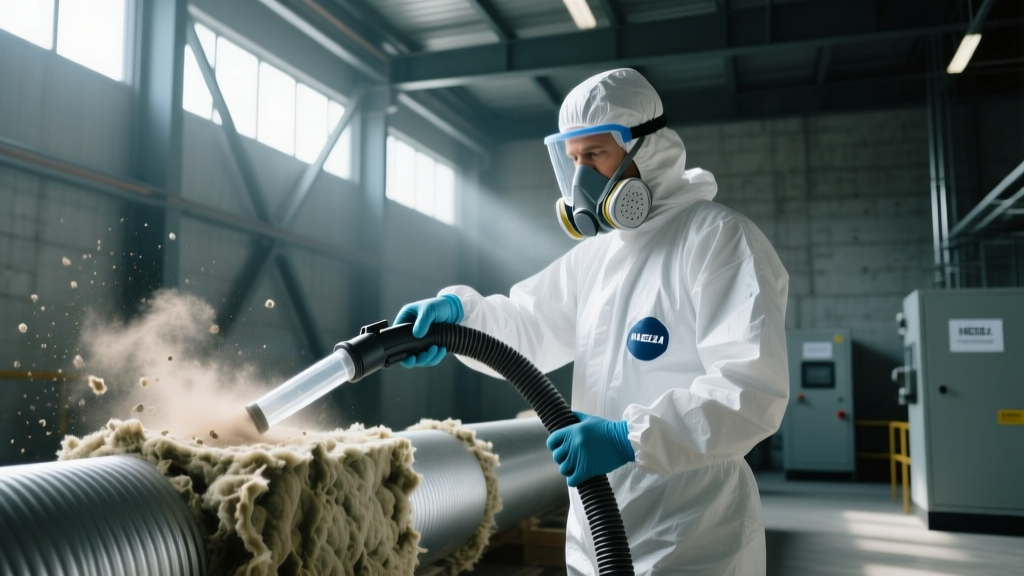
| Full Removal | Wetting, manual scraping, HEPA vacuuming, sealed disposal | $15 - $35 / sq. ft. | Major demolitions, heavily damaged TSI, or areas requiring extensive new utility routing. |
| Bridging Encapsulation | Applying a heavy-duty, Class-A fire-rated elastomeric coating over the ACM | $4 - $8 / sq. ft. | Intact pipe insulation or fireproofing in concealed plenums where removal is cost-prohibitive. |
| Penetrating Encapsulation | Injecting a low-viscosity resin that soaks into the ACM and hardens the binder | $6 - $12 / sq. ft. | Slightly degraded acoustic ceilings or sprayed fireproofing that needs structural stabilization. |
Regulatory Compliance and Documentation
Managing ACMs requires strict adherence to a web of federal, state, and local regulations. The Consumer Product Safety Commission (CPSC) provides essential baselines for residential applications, but commercial contractors must navigate OSHA standard 29 CFR 1926.1101. This mandate requires specific engineering controls, such as negative air pressure machines (NAMs) equipped with HEPA filtration, maintaining a minimum of -0.02 inches of water column pressure within the containment zone.
Furthermore, all removed ACM must be transported in leak-tight, 6-mil thick plastic bags, clearly labeled with OSHA-mandated warning signs, and disposed of at a landfill specifically permitted to accept hazardous asbestos waste. Maintaining an unbroken chain of custody via waste shipment records (WSRs) is non-negotiable; facility owners can be held liable for illegal dumping years after the initial contractor has completed the work. Always secure and verify the abatement contractor's state-specific licensing, air monitoring logs, and final clearance certificates before authorizing final payment.
Written by
James ThorntonJames Thornton is a construction industry veteran with 25 years of hands-on experience in wood framing, lumber grading, and residential building codes. He started as a framing carpenter in rural Oregon, earned his ICC Residential Building Inspector certification, and eventually became a senior plan reviewer for the City of Portland Bureau of Development Services. James holds a B.S. in Wood Science & Technology from Oregon State University and is a certified lumber grader through the West Coast Lumber Inspection Bureau (WCLIB). He has inspected over 3,000 residential construction sites and authored the city's internal guide on advanced framing techniques (2x6 at 24" O.C.). James lives in Bend, OR, where he builds custom timber-frame cabins and competes in lumberjack sports.
More from James Thornton
View all
Insulation
Best Home Insulation Materials: Complete 2026 Guide
Compare top home insulation materials for 2026. Find R-values, installed costs per square foot, and best uses for fiberglass, spray foam, and mineral wool.
Aug 4, 2026

Sustainable Building
Certify Your Green Building Material for LEED and WELL
Step-by-step guide to certifying a green building material for LEED v5 and WELL v2. Master EPDs, HPDs, and VOC limits for 2026 project specifications.
Aug 4, 2026

Stone & Masonry
Veneer Stacked Stone Panels: Interior Design & Style Showcase
Discover how veneer stacked stone panels transform interiors. Explore modern design profiles, material pairings, and technical installation specs.
Aug 4, 2026